Litter box meets smart home
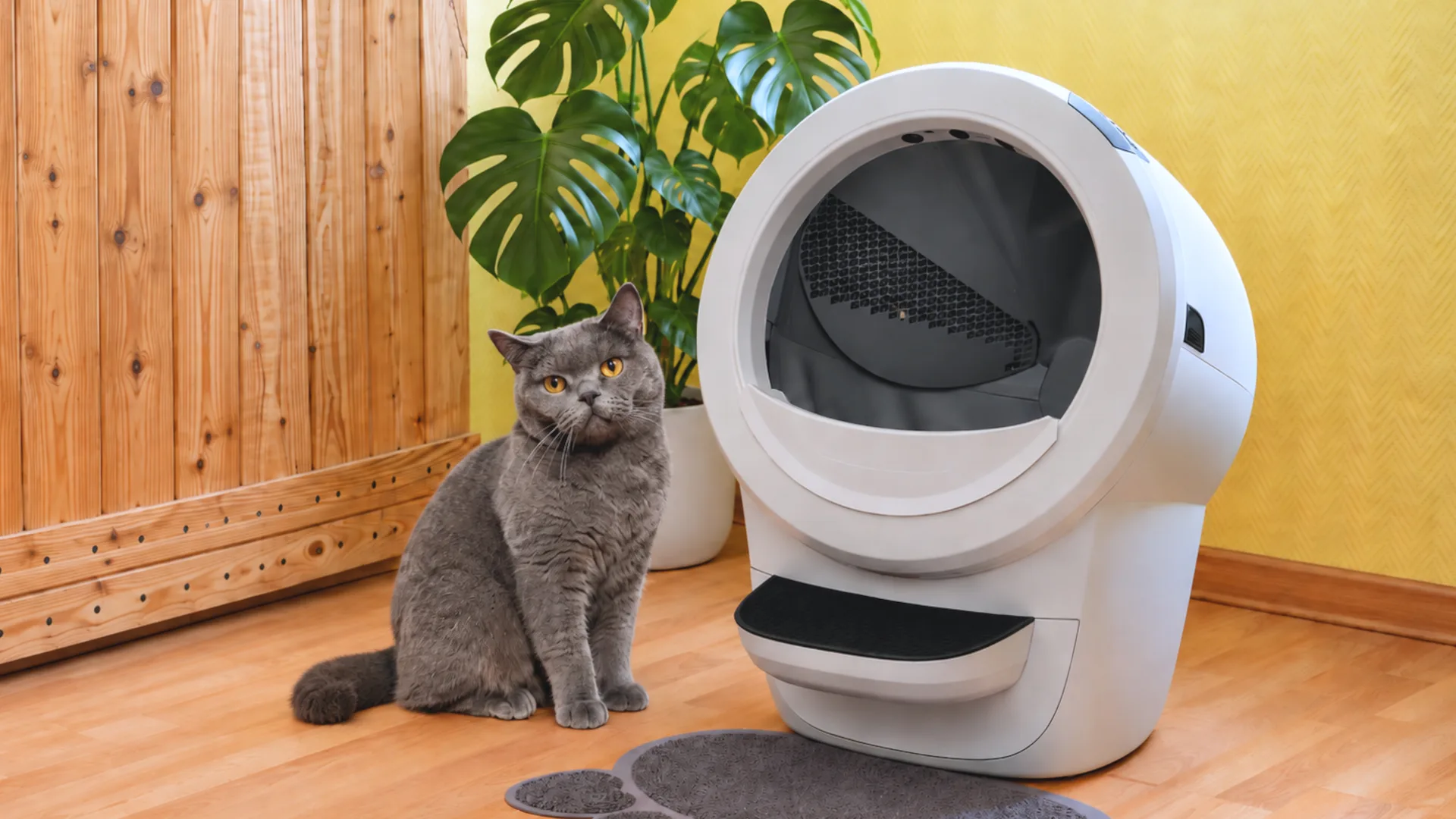
There are now several automatic litter boxes available. However, the Whisker Litter-Robot 4 is one of the more technologically advanced models. Instead of using a rake to remove waste from the litter, the entire drum rotates after each use. Clean litter is sifted out, while clumps and feces are automatically removed from the litter box area.
It also includes sensors, Wi-Fi, an app, weight tracking, and various automatic functions. Quite a lot of technology for something that previously worked just fine with a plastic tub and a shovel.
I had the opportunity to test the Litter-Robot 4 for over two months. However, it quickly became apparent that the technology is only half the story. The other half is the cat, and she can definitely have a mind of her own when it comes to this.
Large and hard to miss
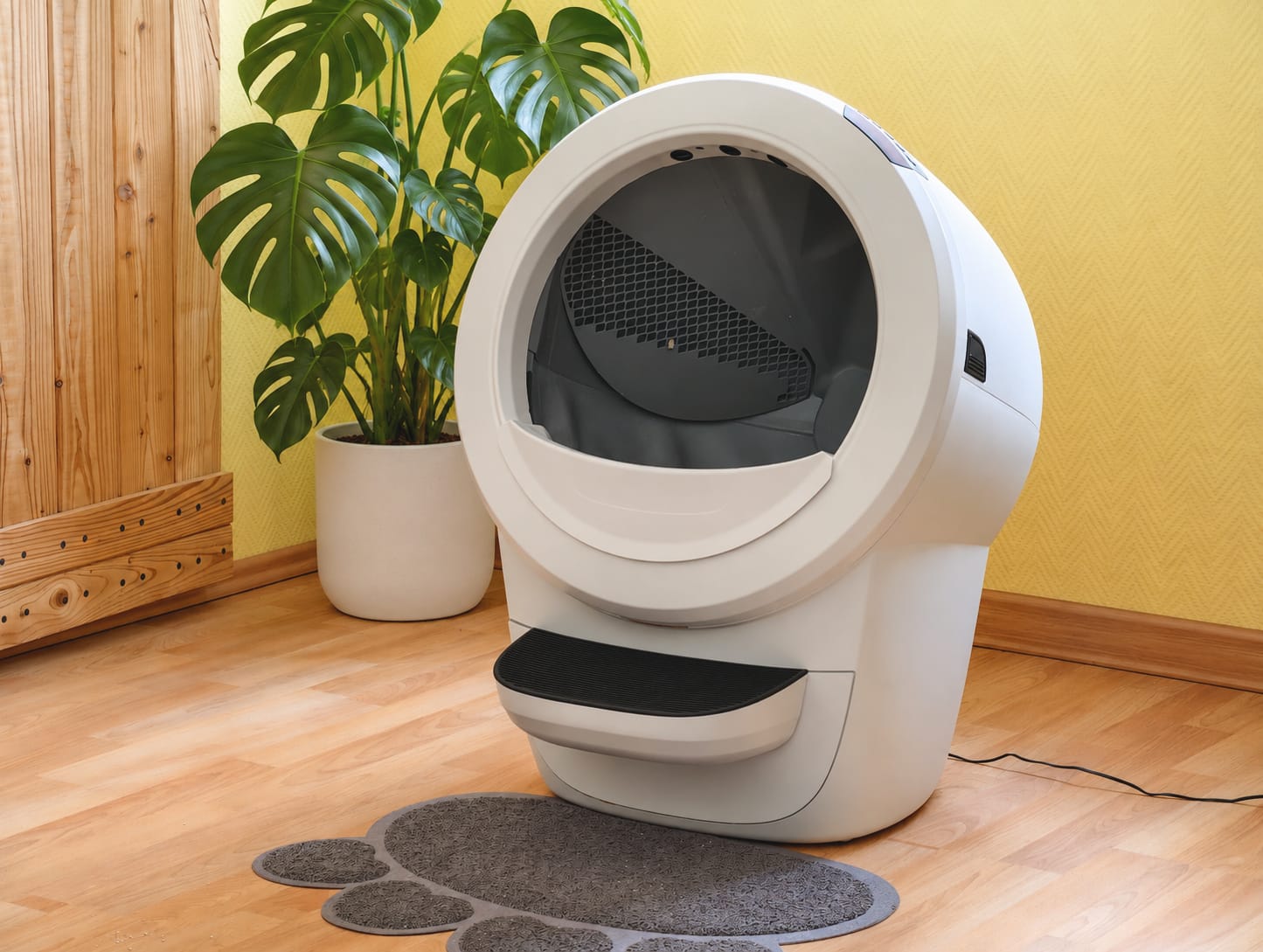
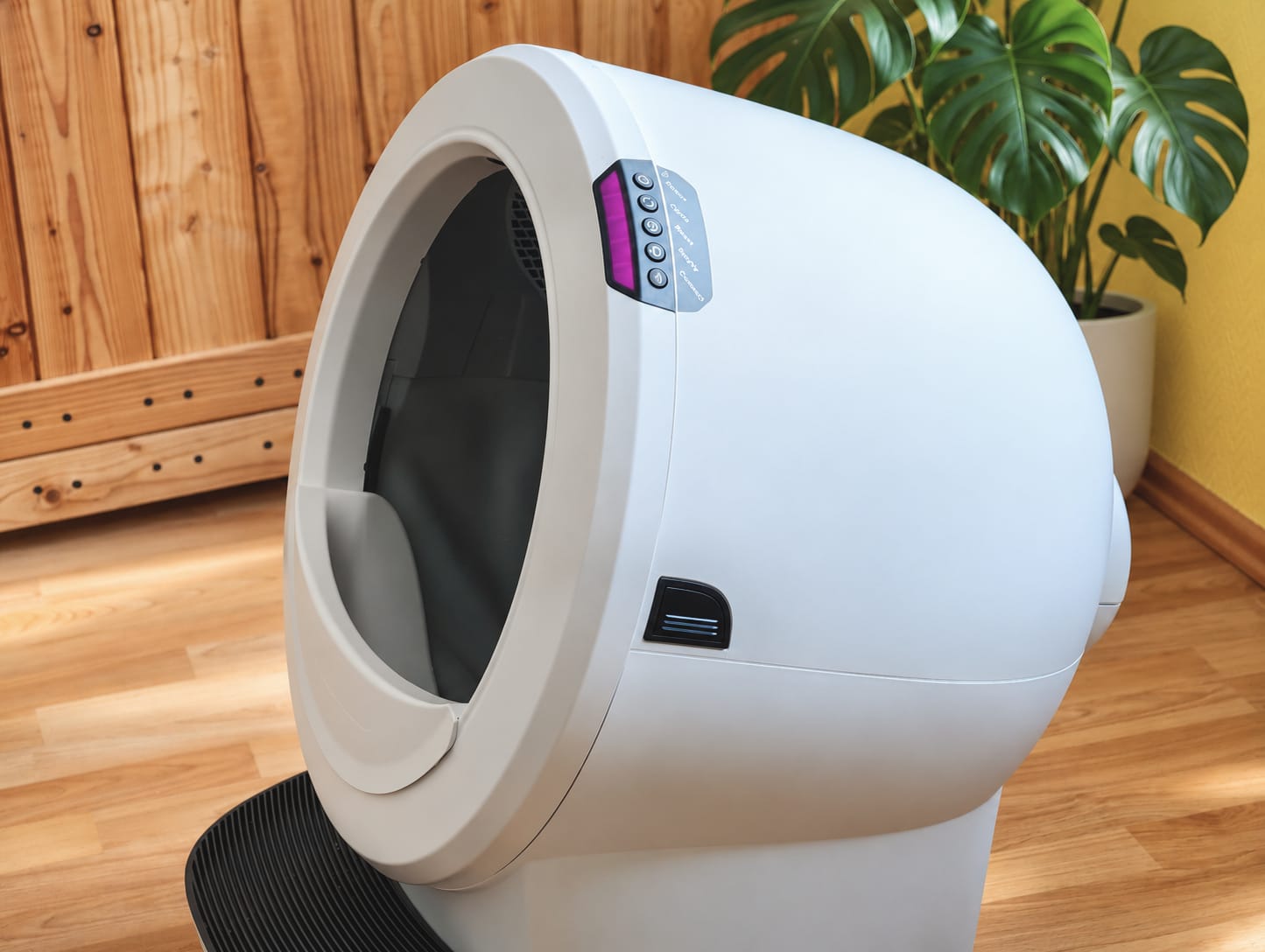
Before discussing its actual function, it should be noted that the Litter-Robot 4 is quite large, measuring approximately 56 centimeters wide, 69 centimeters deep, and almost 75 centimeters high, and takes up a considerable amount of space.
It requires a power connection and should ideally be placed on a firm, level surface. Therefore, it is essential to measure the intended location before purchasing.
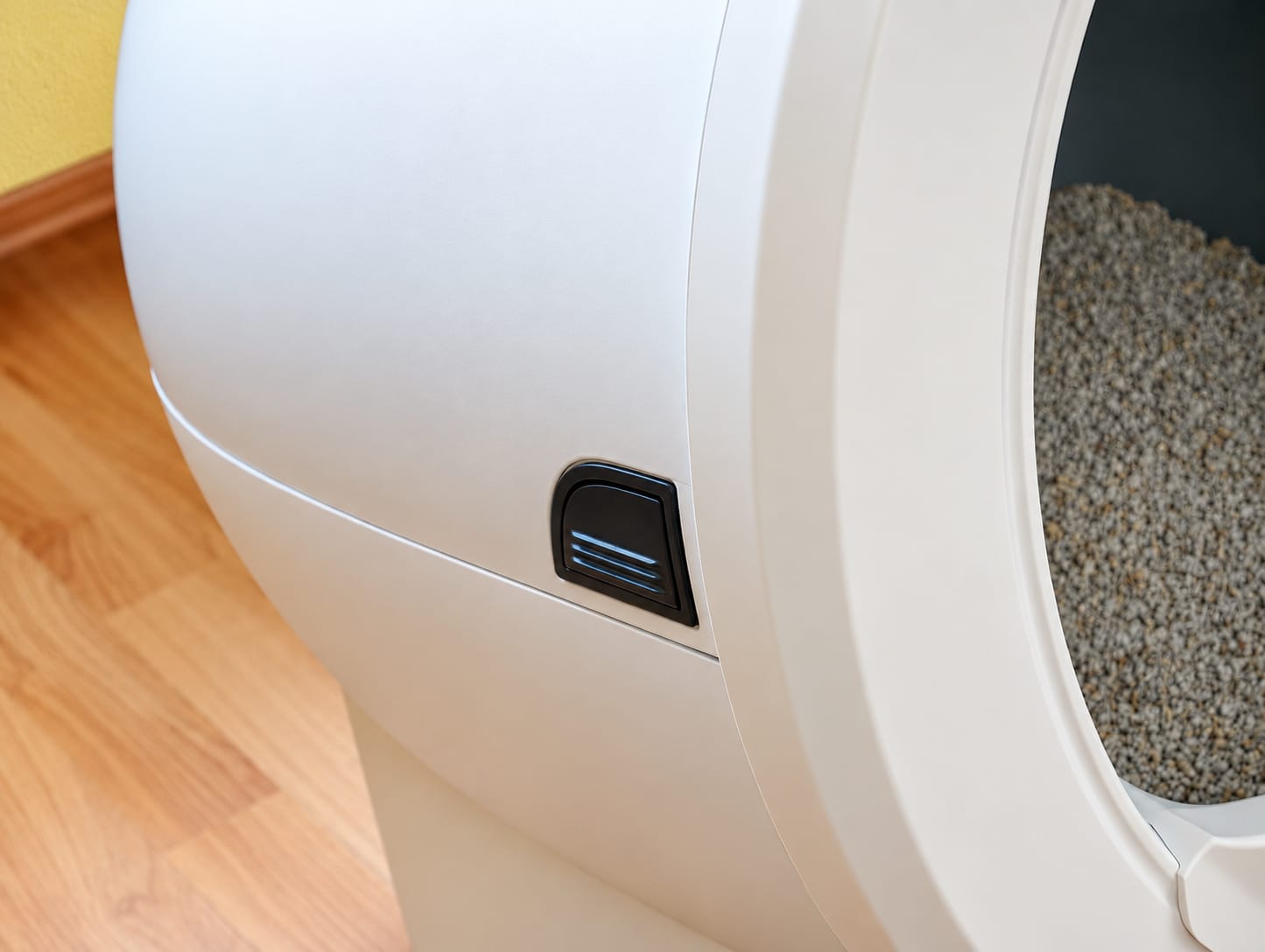
Visually, Whisker has done a pretty good job in my opinion. Thanks to the round opening and the largely enclosed housing, the Litter-Robot looks more like a modern household appliance than an oversized litter box.
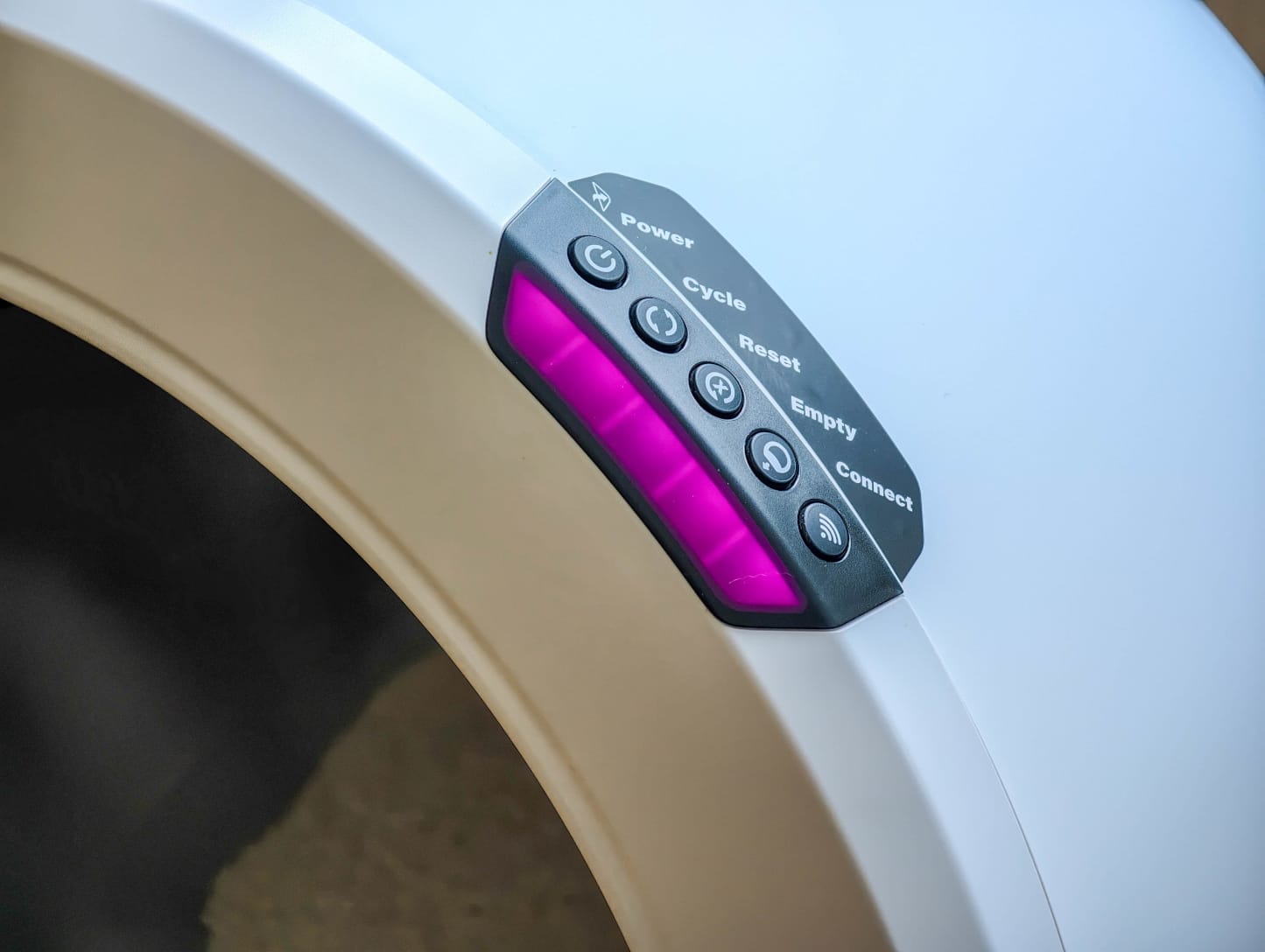
The control buttons are conveniently located on the top. They can be used to start cleaning cycles, completely empty the litter box, control Wi-Fi and other functions, among other things.
There's not much assembly required. The Litter-Robot comes largely ready to use right out of the box. Simply fill it with litter, plug it in, and optionally connect it to the Whisker app, and you're basically good to go.
The bigger problem, however, is the cat.
Malu was curious, but not convinced.
My test cat Malu is an eight-year-old British Shorthair and a strictly indoor cat. Until the Litter-Robot, she had only ever known a traditional litter box.
The start was initially promising. Malu was curious, examined the new device, and actually used it once or twice in the beginning. At that point, it still seemed as if the transition might be surprisingly straightforward.
In retrospect, that was probably more curiosity than genuine acceptance.
As soon as she had the choice, Malu still preferred to use her usual litter box. So I left both litter boxes out for several weeks, hoping that the Litter-Robot would become more interesting over time.
However, that didn't happen.
After a few weeks, the attempt was finally made to remove the traditional litter box completely. At some point, a decision had to be made; after all, a self-cleaning litter box makes little sense if the regular litter box still has to be permanently present next to it.
That didn't work either.
After two days, it was clear that Malu would not accept the Litter-Robot as her sole toilet. The traditional litter box was returned and used almost immediately.
This meant that the Litter-Robot 4 experiment with Malu had failed.
For me, this is also one of the most important findings of this test, because a technically well-functioning automatic litter box is of little use if your cat simply doesn't want to use it.
Second attempt with Baloo and Nala
The test could have ended there. Instead, the litter-collecting robot then went to live with friends who have two British Shorthair cats.
Balu the tomcat and Nala the cat live there, and the difference to Malu could hardly have been greater.
While Malu remained skeptical of the new litter box even after weeks, Balu and Nala were interested practically from the first minute. Both went inside, examined the drum, and immediately accepted the Litter-Robot as a litter box.
No weeks-long approach phase, no persuasion, and no resorting to the familiar model.
This clearly demonstrated how individual the acceptance of an automatic litter box is. Even with cats of the same breed, it is almost impossible to predict how they will react to it.
Malu wanted her usual litter box back. Balu and Nala, on the other hand, had absolutely no problem with the litter robot.
Anyone considering buying one should therefore definitely factor in a possible adjustment period and also expect that, in the worst case, it might not be successful at all.
This is how automatic cleaning works
Once a cat has done its business and left the Litter-Robot, nothing happens initially. This is intentional, as the litter needs some time for the urine to clump properly.
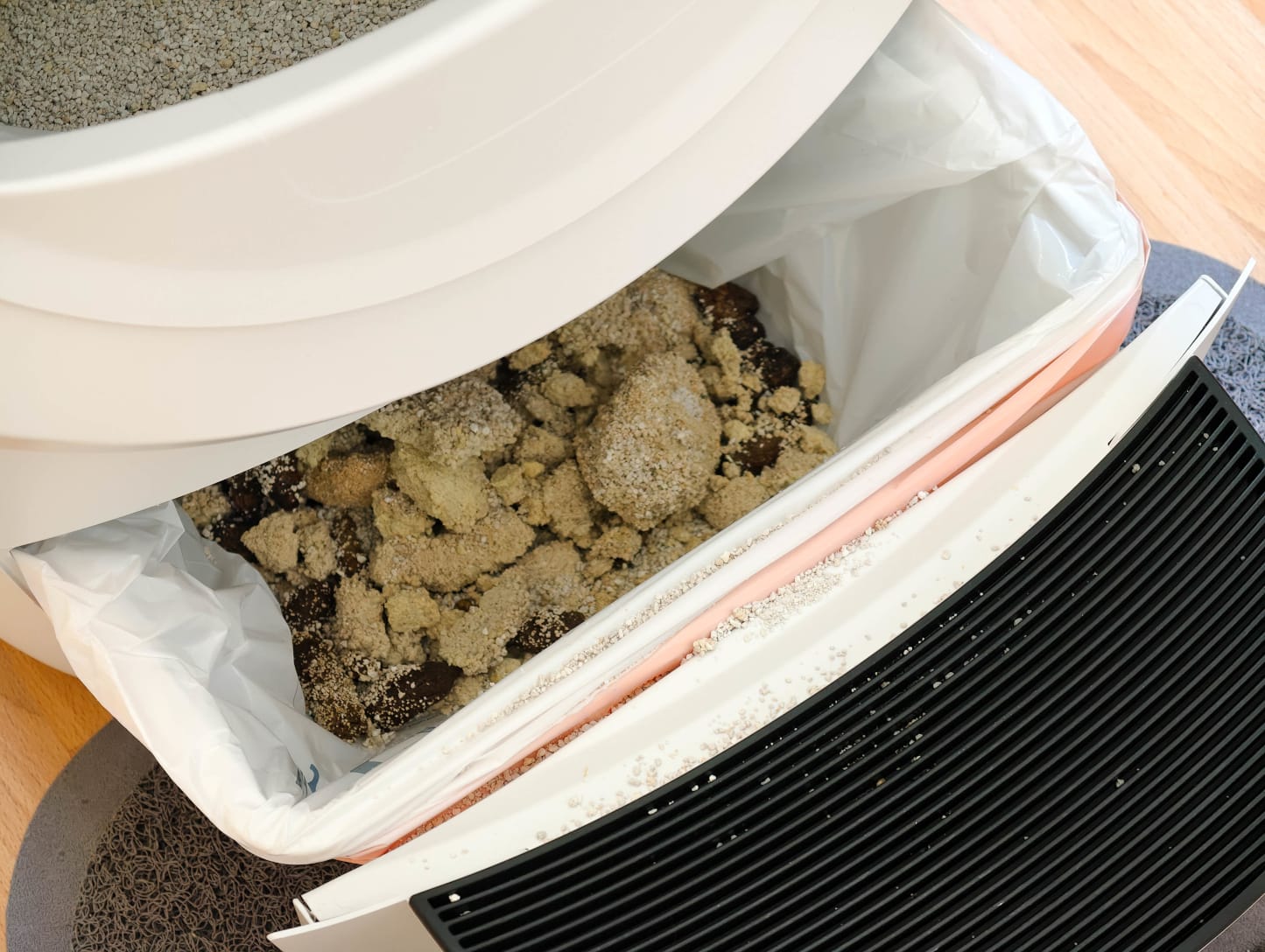
After the set waiting time, the drum begins to rotate slowly. The clean litter passes through a sieve, separating it from larger clumps and feces. The waste falls into the lower part of the device, then the drum rotates back, and the clean litter ends up back where it was originally placed.
The principle is simple, but it works extremely reliably.
During the test, the mechanism never jammed or a cleaning cycle failed to work at all.
However, the right type of litter is crucial. The Litter-Robot is designed for clumping litter. Non-clumping varieties or, for example, coarse wood pellets are not suitable for the sifting system.
When filling, more is not necessarily better. There is a fill line inside indicating the intended fill level. If too much is added, excess clean litter may be unnecessarily sorted out during the next cleaning.
Surprisingly quiet and low-odor
Before the test, I expected a motorized litter box to be quite disruptive, especially at night. The opposite is true, as the motor itself is very quiet. The most noticeable sound is the noise of the litter trickling through the sieve as it rotates.
Unless the Litter-Robot is positioned directly next to the bed, the cleaning process should hardly be disruptive in most apartments.
The movement itself is also slow. Several sensors monitor the entry area and the interior. If a cat approaches or enters the Litter-Robot during a running cycle, the movement stops.
This makes perfect sense during the first few days. After all, a moving litter box isn't just interesting for humans. Malu also watched the drum with curiosity at first, although she later didn't quite grasp its actual purpose.
The Litter-Robot 4 effectively keeps unpleasant odors under control. Feces and urine clumps are quickly removed from the clean litter, while an activated carbon filter further helps prevent odor formation.
While it won't be completely odor-free, in everyday use the Litter-Robot performs significantly better than a classic open litter box.
Huge on the outside, surprisingly cramped on the inside
One thing that increasingly bothered me during the test, however, is that while the Litter-Robot looks large from the outside, the actual space for the cat inside is quite limited.
Although the round entry opening is generously sized, the actual scattering area is significantly smaller due to the drum design.
Malu had enough space. Nevertheless, it quickly becomes cramped when she turns around and scratches extensively.
Balu, being a male cat, is also somewhat more robustly built and confirms this impression. While he manages with the litter-robot, the toilet doesn't seem particularly spacious to him.
Therefore, I would recommend the Litter-Robot 4 for small to medium-sized cats.
Large cats, and especially strong tomcats that turn around several times before doing their business or like to scratch extensively, have comparatively little freedom of movement.
This is somewhat paradoxical, because on the one hand you need quite a lot of space in the apartment, but you don't automatically get a lot of space for the cat.
Something went wrong once
The short usage phase with Malu didn't go entirely smoothly either.
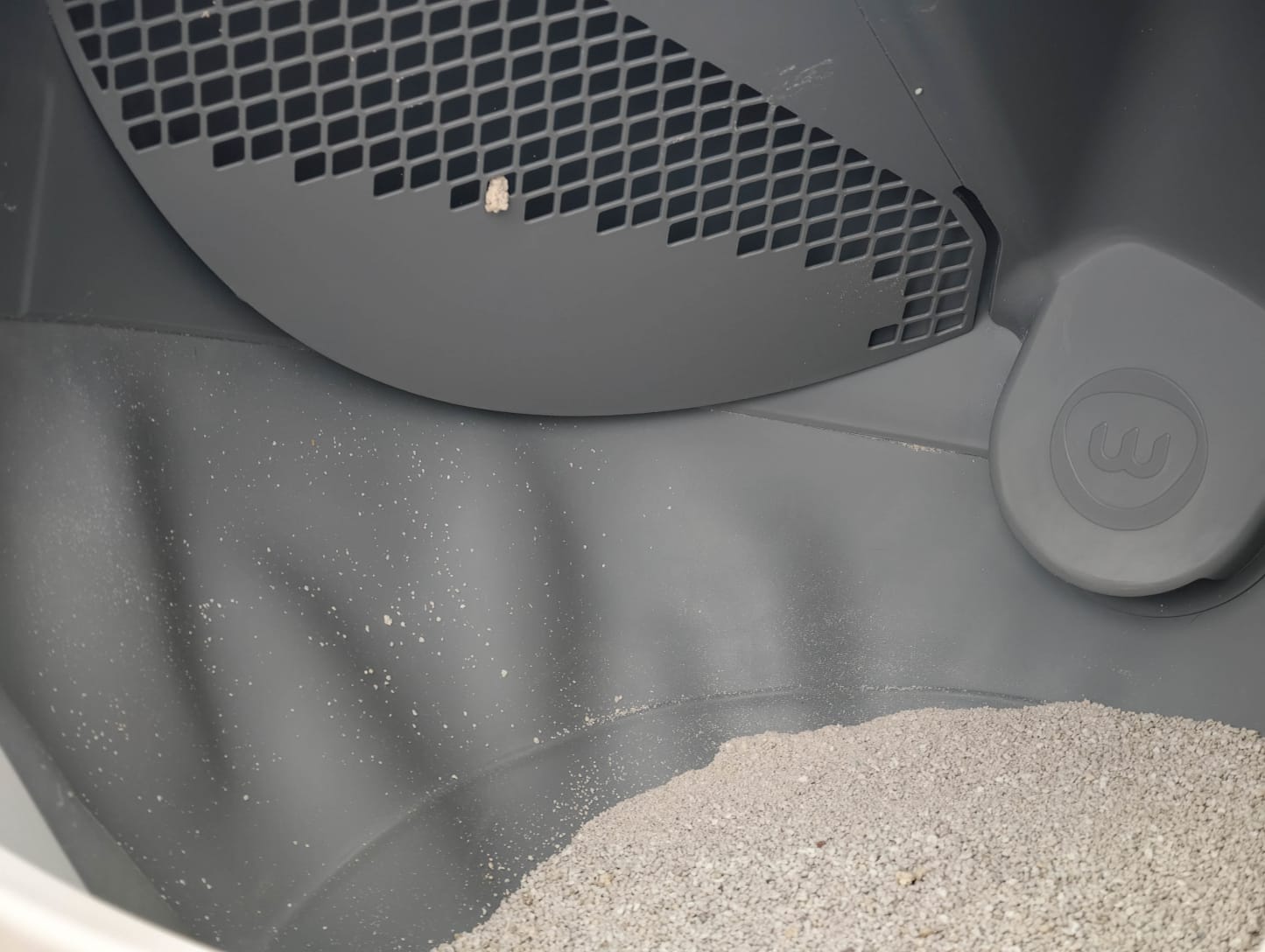
During one of her first attempts, she urinated so awkwardly at the front that some fluid leaked past the opening. Some of it got between the footboard and the casing and eventually collected further down inside the device.
With a normal litter box, this would have been done with a single wipe. With the Litter-Robot, it meant a somewhat more extensive cleaning operation.
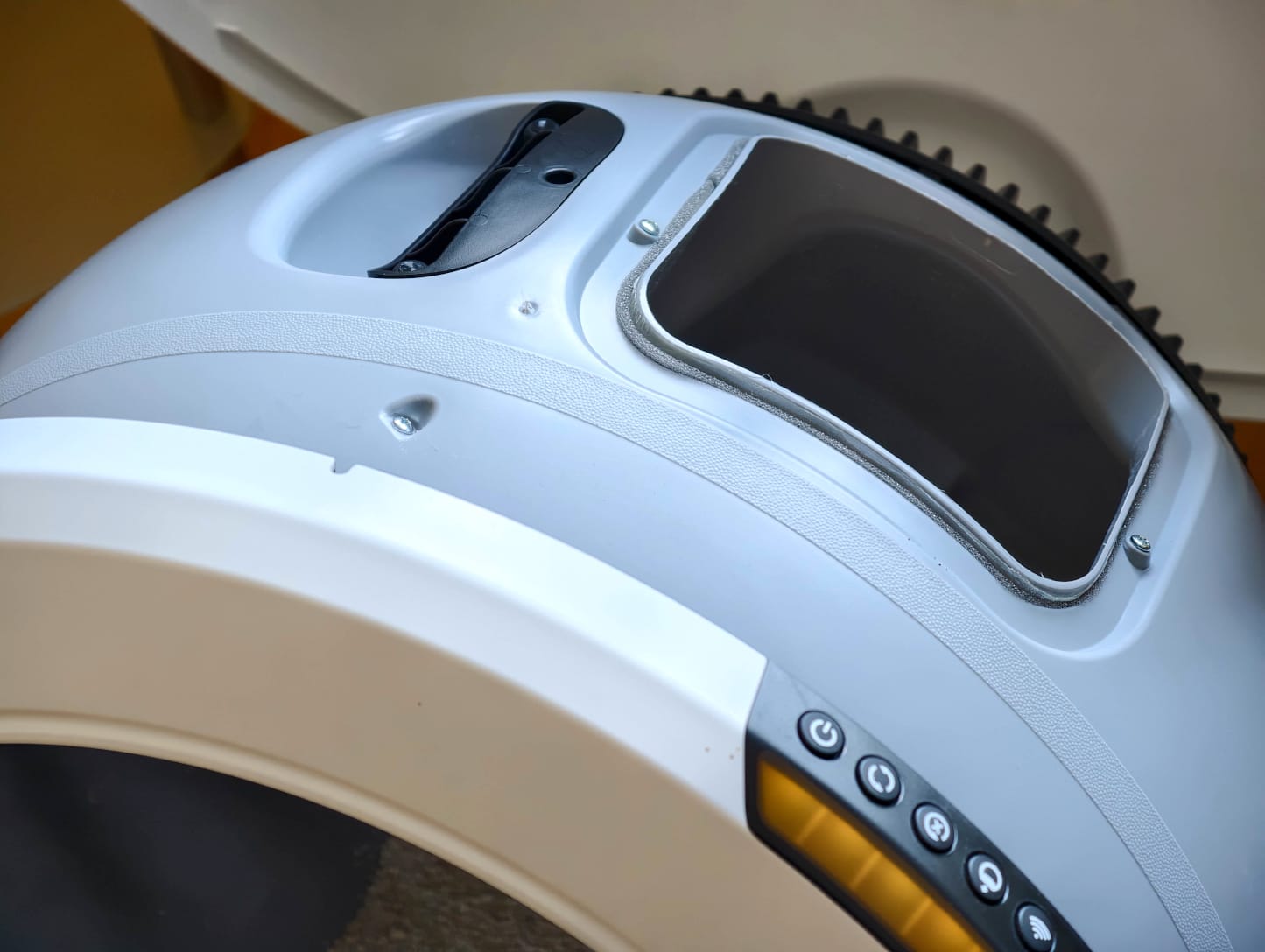
On the plus side, the appliance can be disassembled quite extensively. The drum can be removed from the base, and other casing parts can also be taken off. This allowed me to access the affected areas and clean everything thoroughly.
For cats that tend to urinate very far forward or with their rear end pointing towards the entrance, this is something to keep in mind. Whisker offers various screens and other accessories for the entrance area designed to better prevent such situations.
Even aside from such mishaps, the Litter-Robot isn't completely maintenance-free. Dust, hair, and small debris accumulate over time, which is why the rubber lining inside and the sensor areas should be cleaned occasionally. This makes basic cleaning a bit more involved than with a simple plastic tray, but it's required much less frequently.
Whisker app with surprisingly useful data
Of course, a smart litter box also needs an app, which Whisker offers for Android and iOS.
The homepage shows, among other things, how much litter is still in the device, when the litter box was last used, and when it needs to be emptied.
The Litter-Robot also records the cat's weight. This can be particularly useful with regular use, as changes can be tracked over a longer period. Of course, this doesn't replace a veterinarian, but noticeable weight fluctuations can at least provide an additional clue.
I also find the usage history useful. For example, with a single house cat, you can quickly see if and how regularly the litter box has been used.
When there are multiple cats, the SmartScale function attempts to distinguish them based on their weight. Naturally, this works best when the cats differ significantly in weight.
The app also allows you to set how long the device waits after a litter box use before starting the cleaning cycle. Depending on the type of litter used, a slightly longer waiting time is advisable to allow the urine to clump together properly.
Night light, sleep mode, manual cleaning and notifications are also included in the range of functions.