Headphone (1) Pros: Design, build quality and comfort
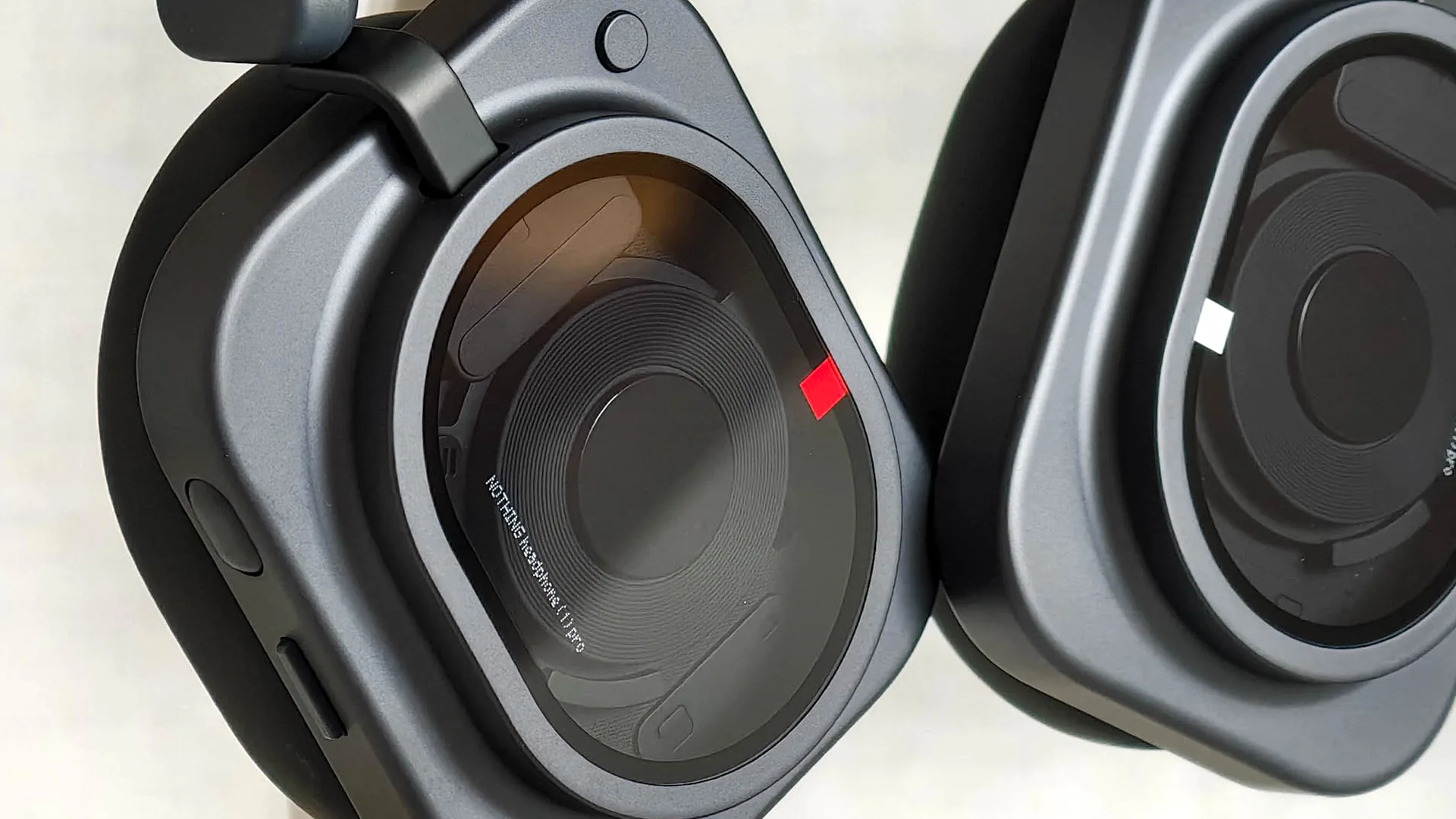
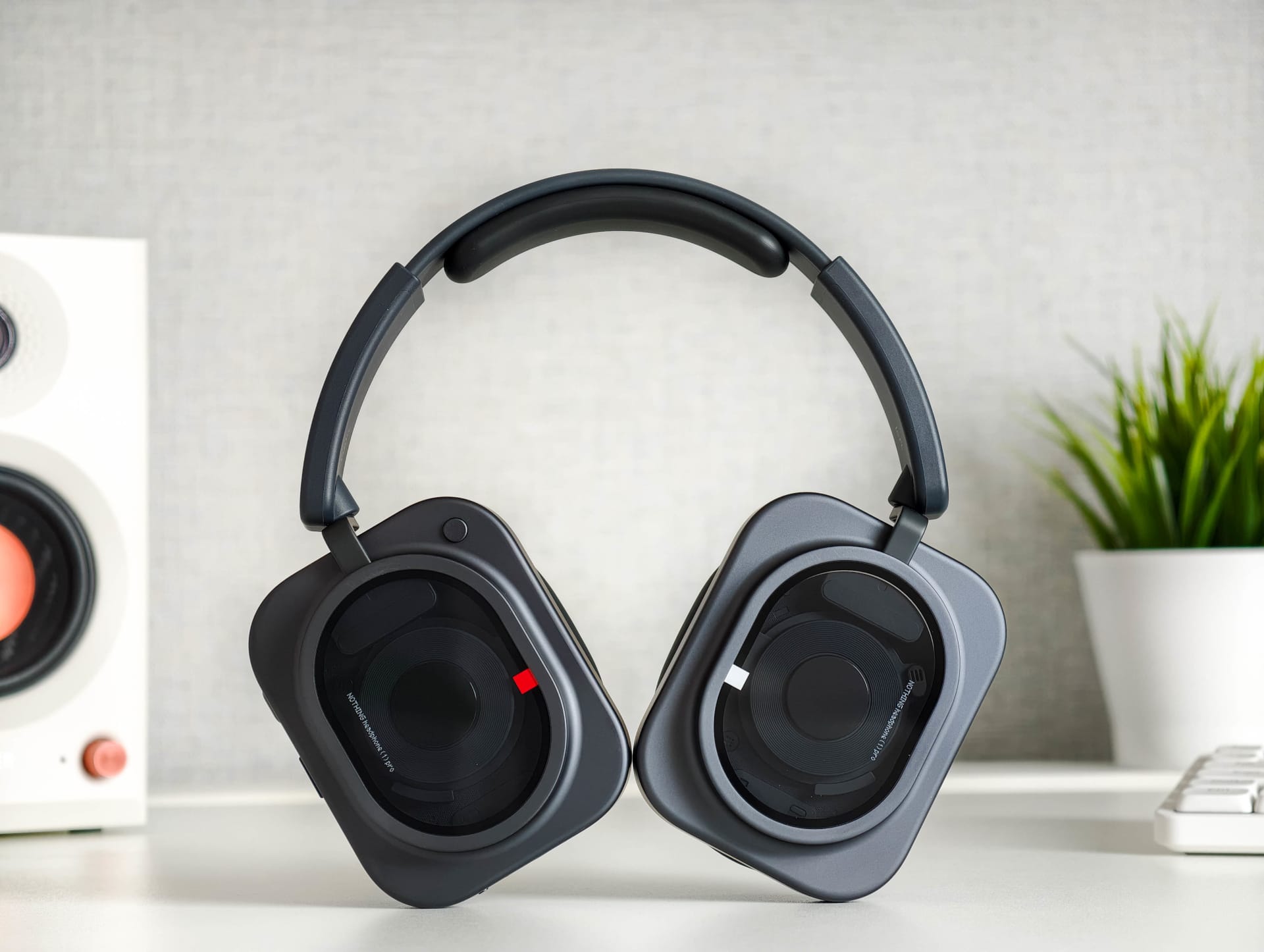
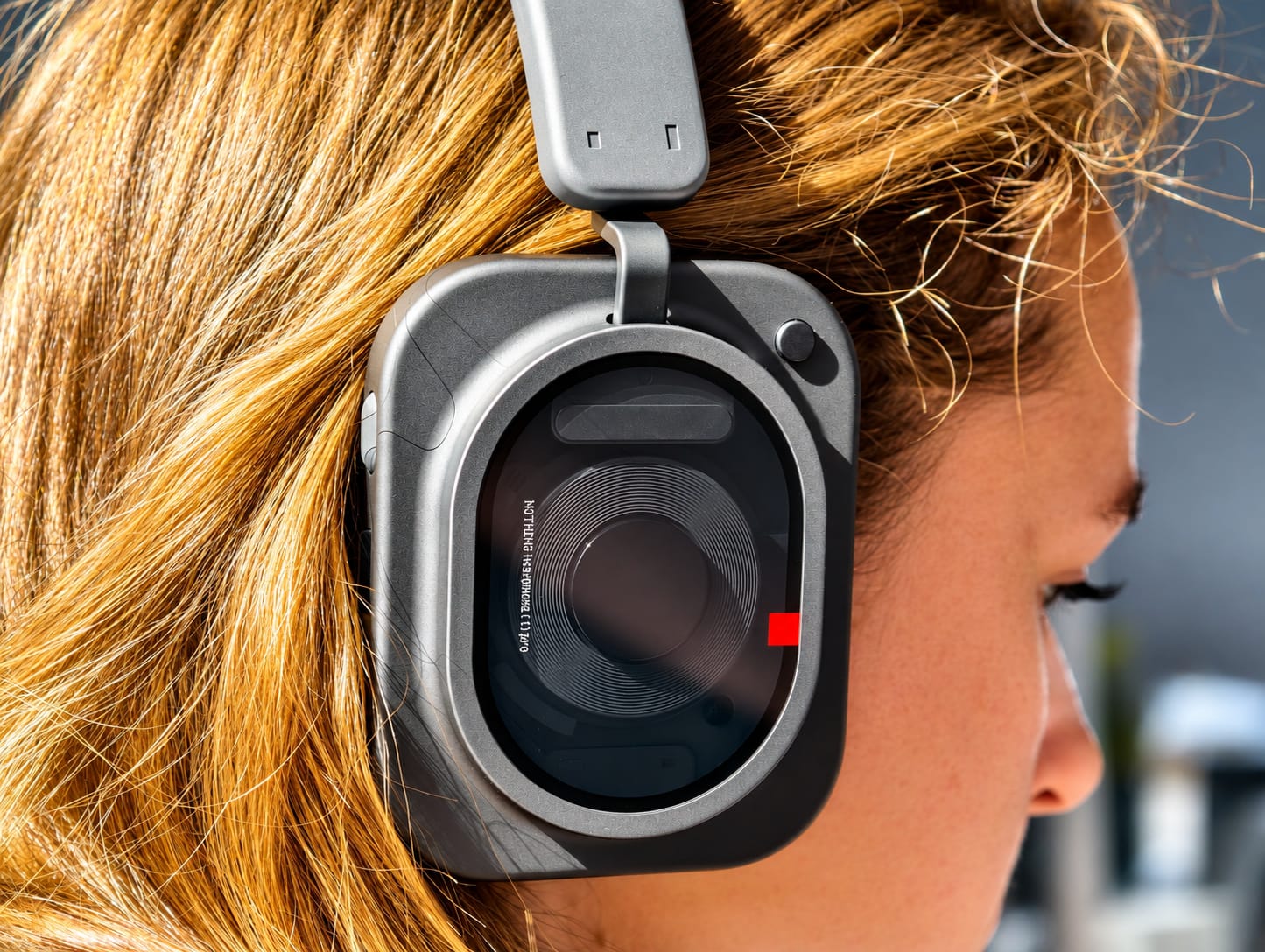
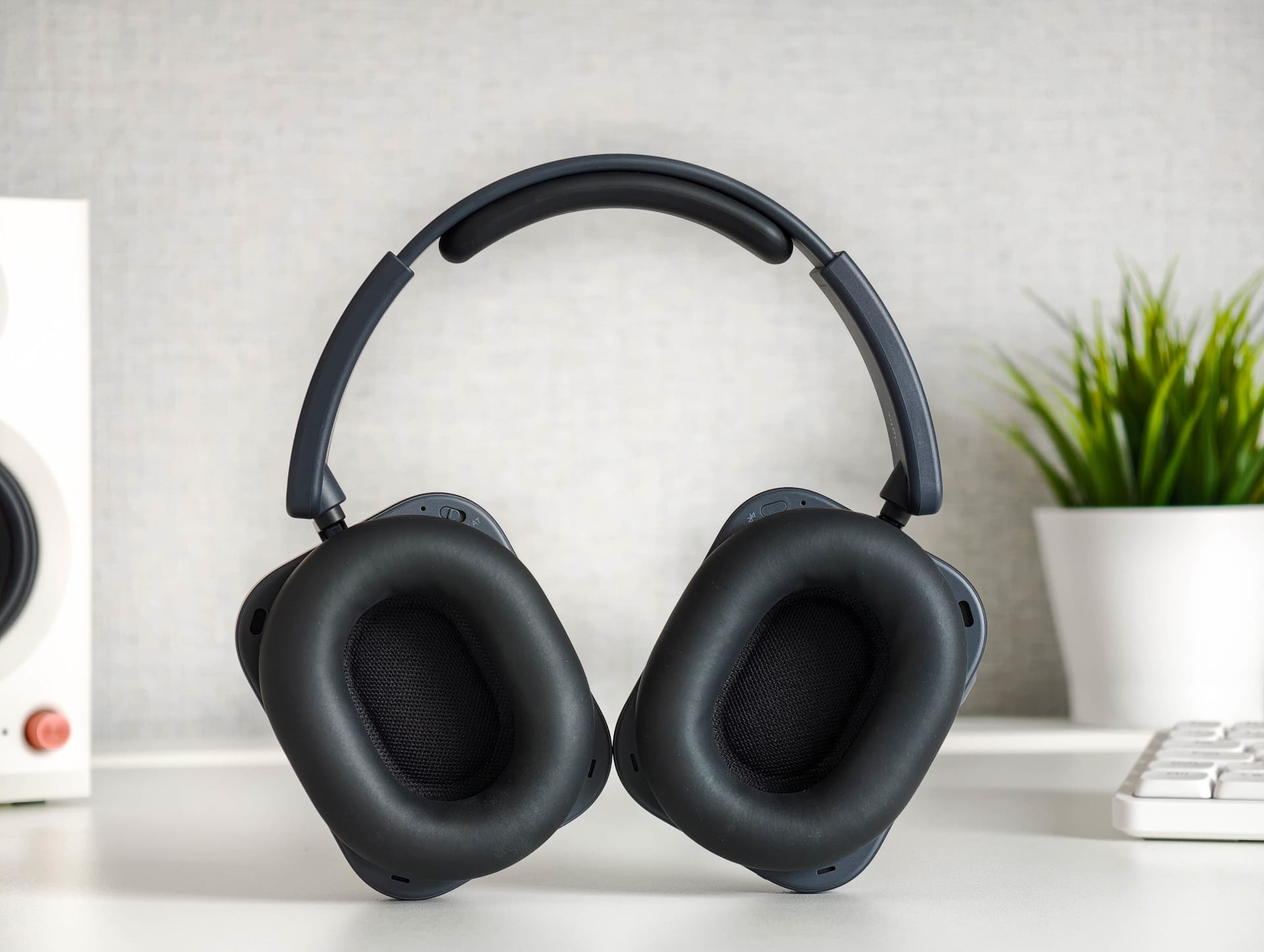
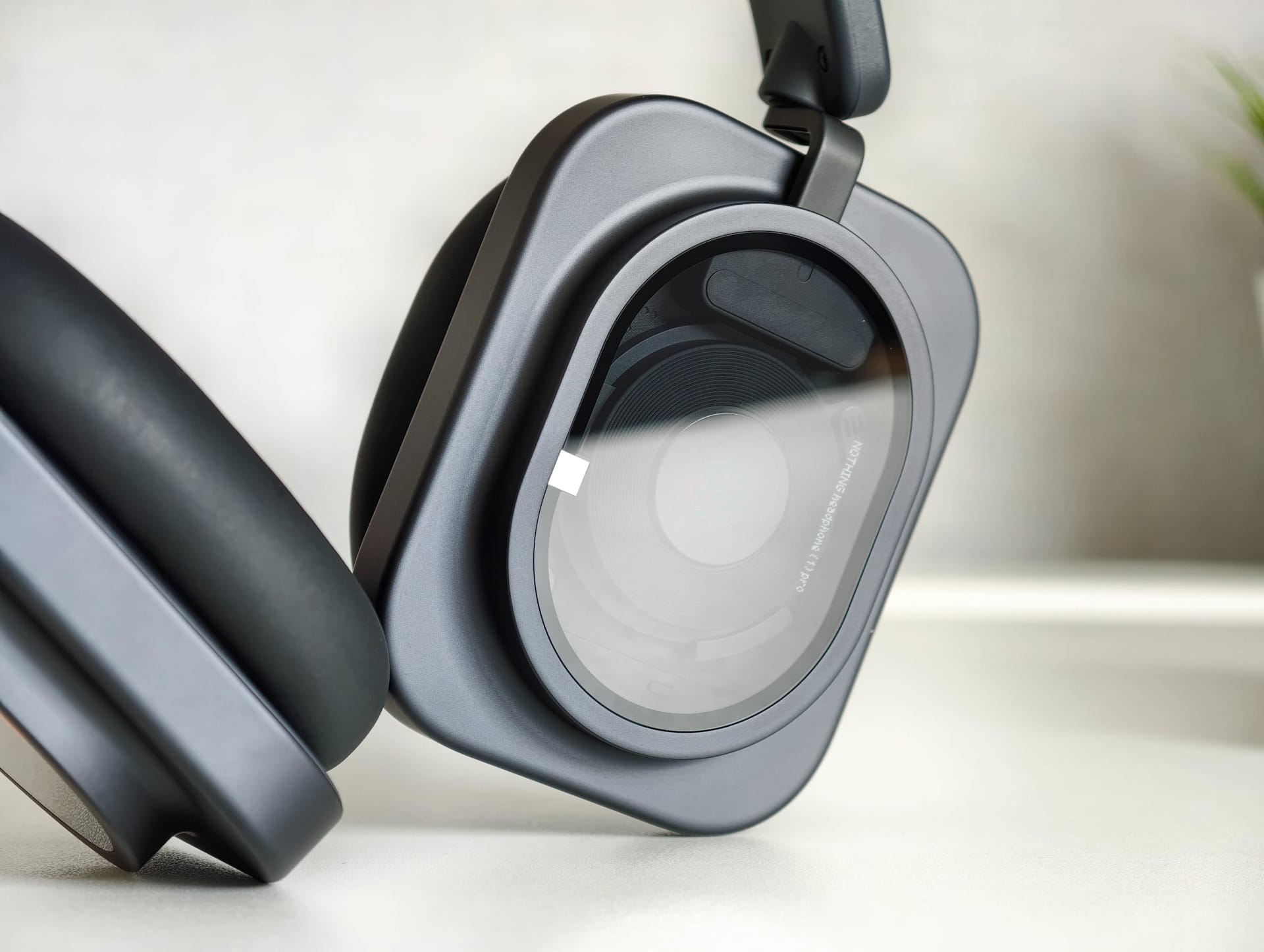
The angular earcups, the transparent elements, and the overall basic shape are almost identical to the Headphone (1). The Pro model doesn't look new, but rather refined. A bit more metal, Panda Glass on the earcups, and a more generously sized headband cushion make the whole thing feel more premium and comfortable. Beneath the glass, the design is calmer and more refined. Where its predecessor resembled a cassette deck, the Pro is more reminiscent of a small vinyl record in a housing.
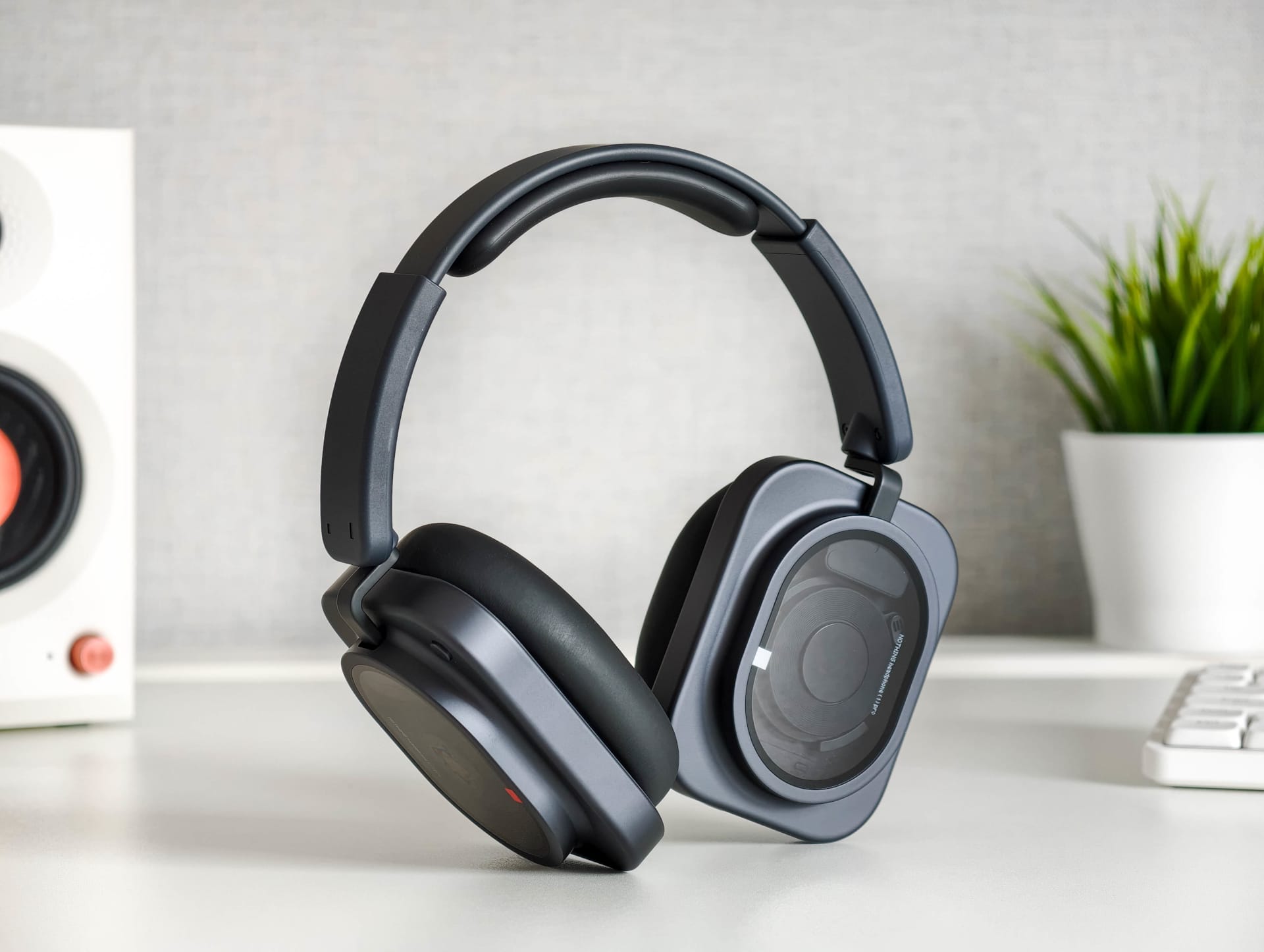
At around 327 grams, the Headphone (1) Pro is still not exactly lightweight, but this is actually less noticeable on the head than one might expect. The slightly wider headband distributes pressure better, the ear pads are soft enough for extended listening sessions, and the clamping force strikes a good balance between a secure fit and a vise-like tightness.
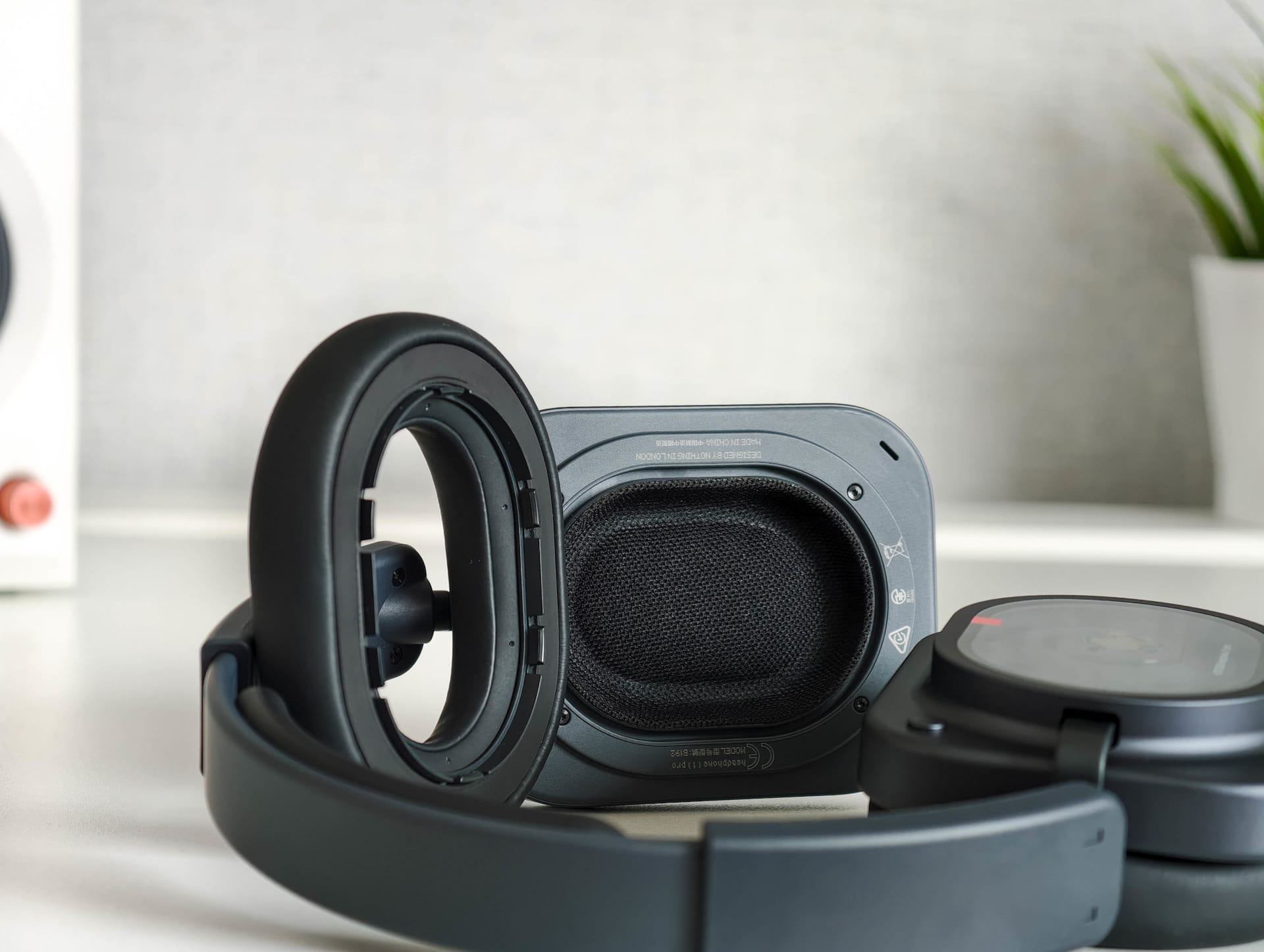
The most important change for me is the replaceable ear pads, because this was unnecessarily cumbersome on the Headphone (1). On the Pro, the pads finally click into place, can be removed and reattached in just a few steps, and thus make the headphones significantly easier to maintain. However, you're not completely free, as the system remains proprietary and compatible pads must come from Nothing. Anyone hoping for velour, other foams, or a wider selection of third-party options will have to wait.
Headphone (1) Pro: A case with its own head
Nothing takes a more experimental approach with the case. Instead of enclosing the entire headphones, the hard shell only protects the earcups, while the headband protrudes from the top and serves as a convenient carrying handle. An optional strap even allows the whole thing to be worn like a small shoulder bag. Unmistakably Nothing, but unfortunately not necessarily unmistakably practical.
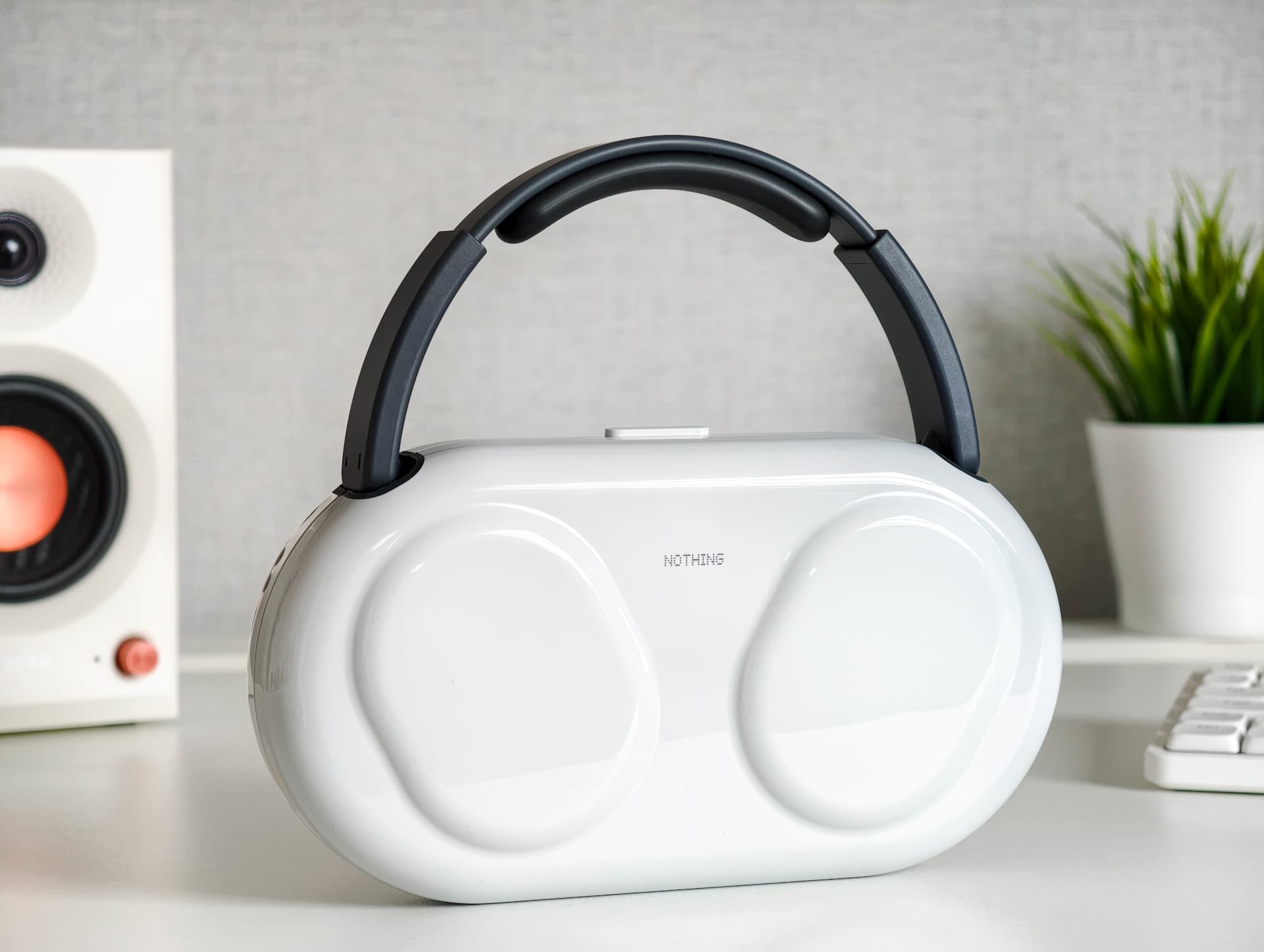
The hard case for the Headphone (1) was bulkier and more conventional, but it protected the entire headphones and also offered additional space for cables. With the Pro, the headband remains exposed, and the USB-C and jack cables have to be stored elsewhere in a backpack. Even more curious is the weight, as the case, at around 383,5 grams, weighs even more than the headphones themselves.
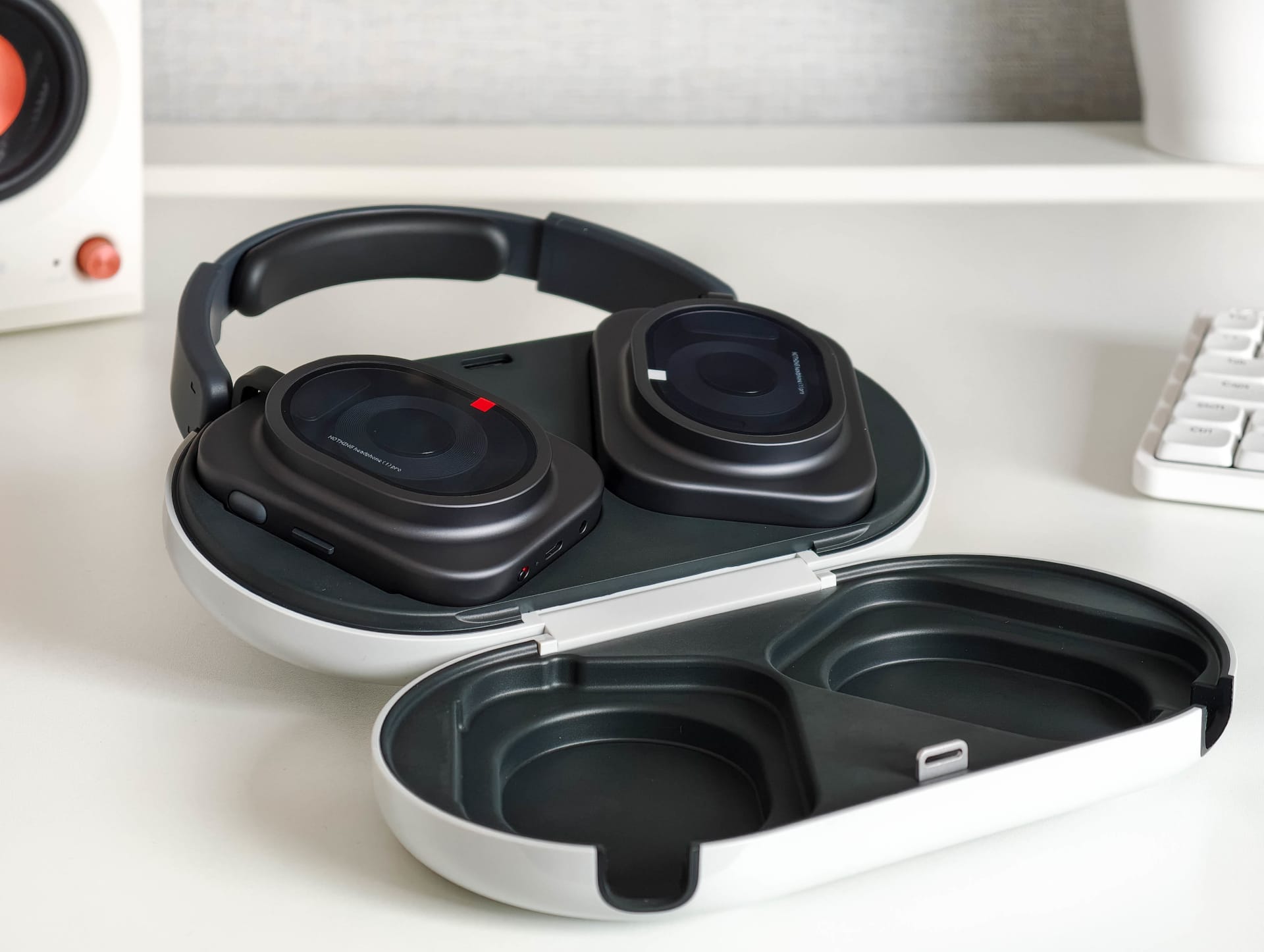
I quite like the idea as a design object, but less so as the only included case. A classic hard case in the box and this version as an optional accessory would have made more sense to me. As it is, you end up with a rather charming headphone handbag, even though you might simply have wanted to store your headphones safely.
Headphone (1) Pro: Operation
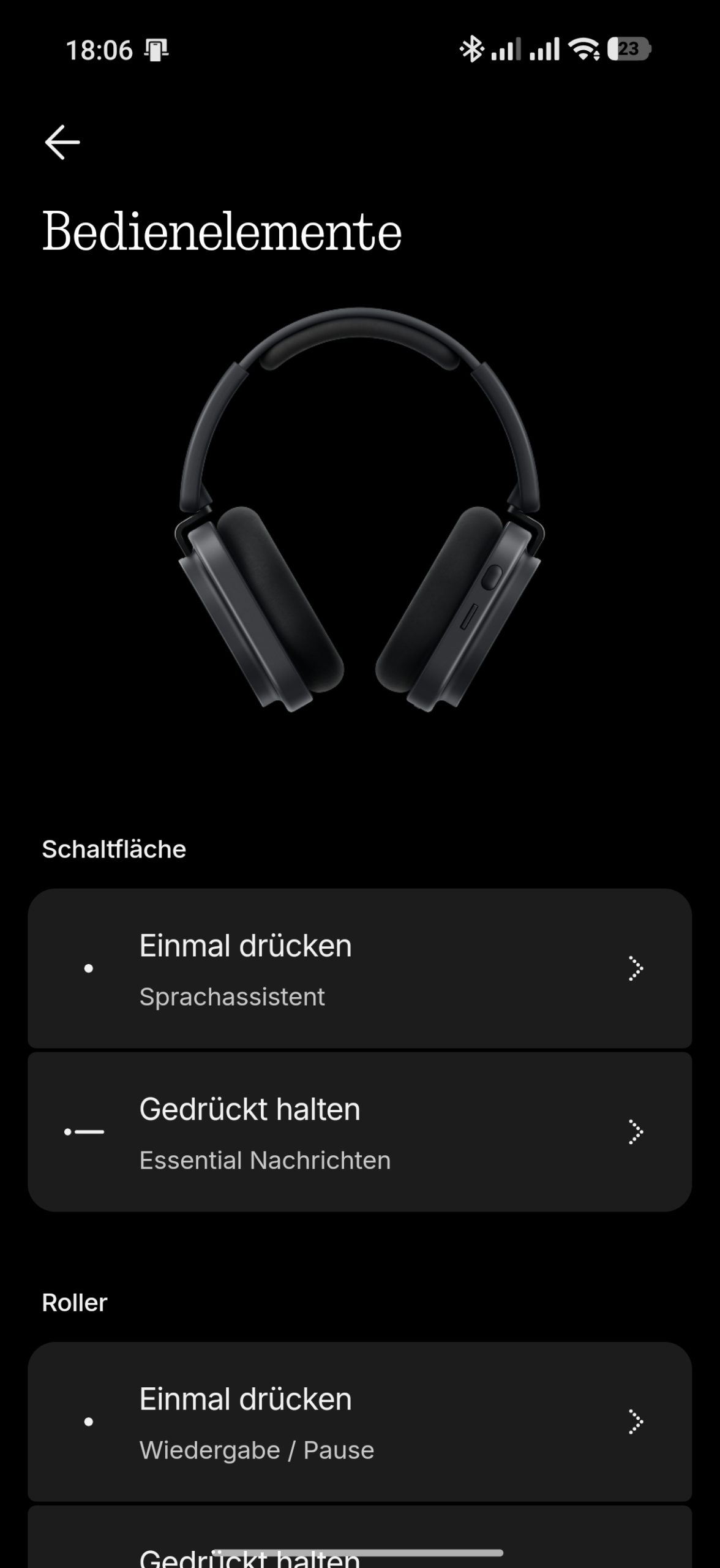
The right earcup again features the roller for volume and playback, the paddle for track skipping, and an additional multifunction button. Those familiar with the Headphone (1) will find it immediately familiar.
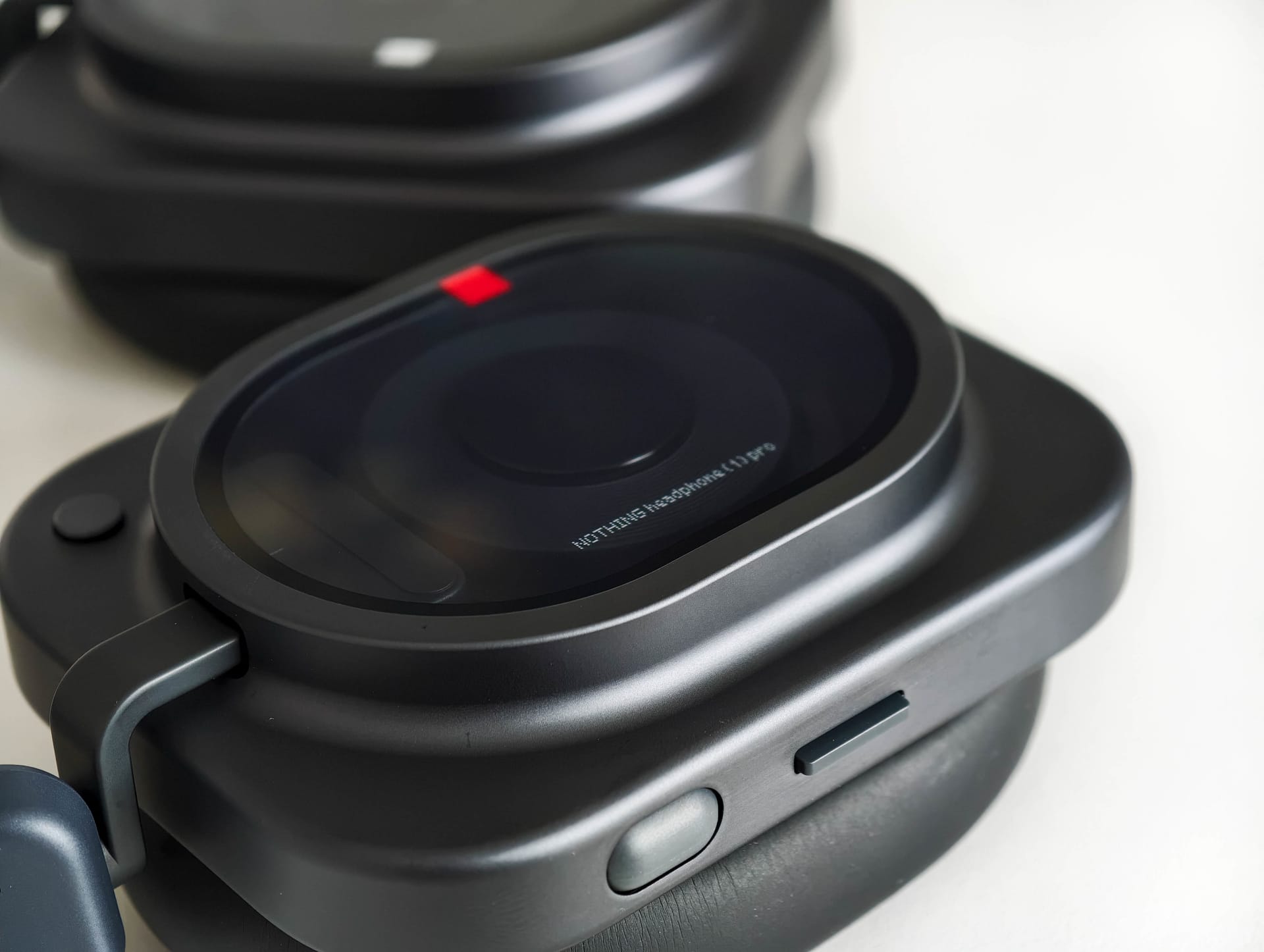
The roller can be easily located by touch, reacts precisely, and feels more reliable than the usual touch surfaces where you often wonder if the swipe has actually registered. The paddle also provides clear feedback and makes the controls pleasantly direct.
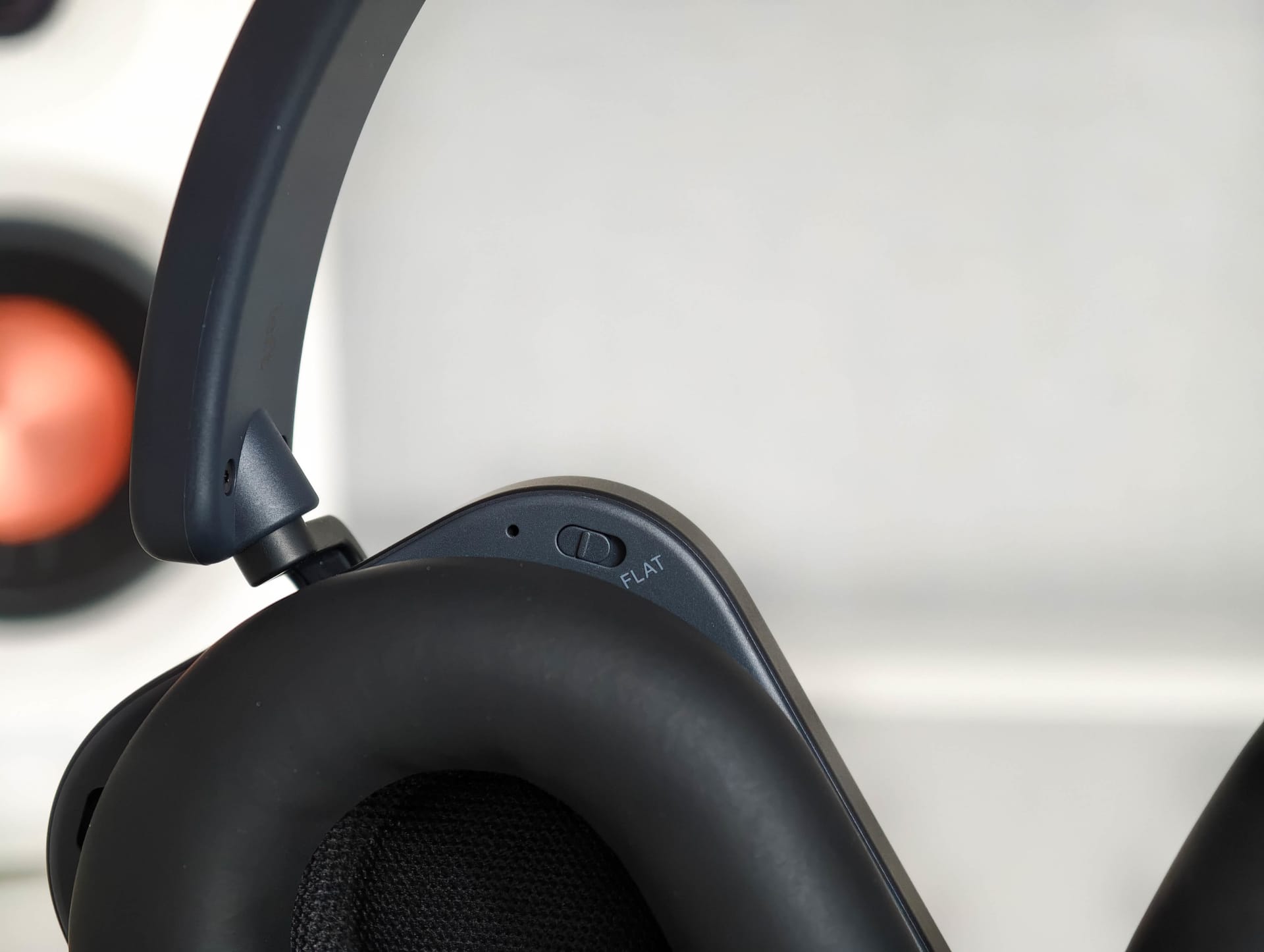
A new feature is a small sliding switch on the inside of the left earcup, which activates the new flat mode. I like the idea of a dedicated hardware switch, but less so its position, as it's not particularly easy to find while wearing the headphones.
Headphone (1) Pro: Connectivity
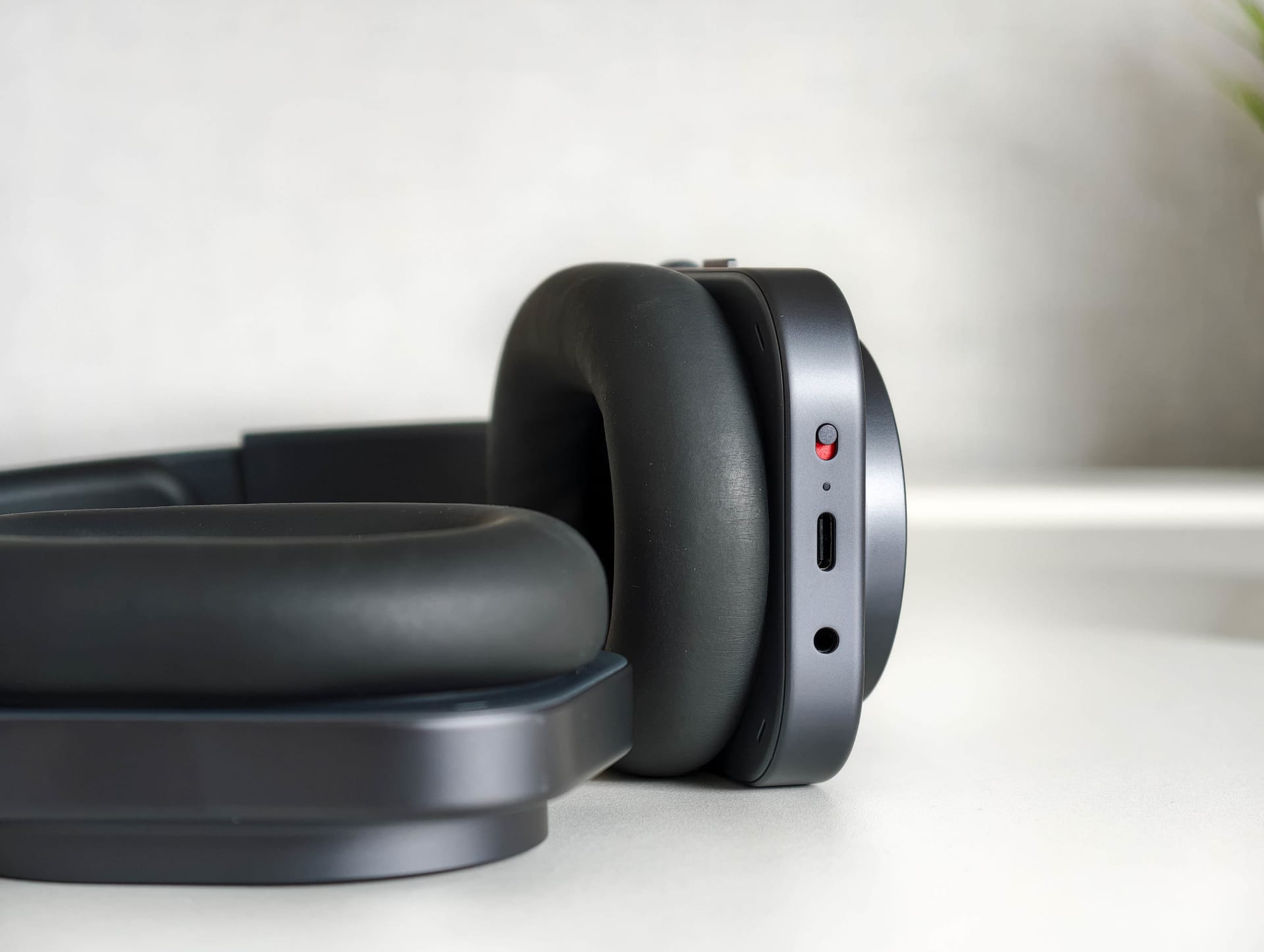
Nothing remains pleasantly flexible in terms of connectivity. Those who simply want to listen to music can connect via Bluetooth and get AAC, SBC, and LDAC support, as well as a multipoint connection for two devices simultaneously. For those who want the most lossless audio experience, USB-C offers support for audio up to 24-bit/192kHz. And for those who still have an old player with a headphone output lying around, a genuine 3,5mm jack is still available.
Auracast is a new addition, allowing the Headphones (1) Pro not only to receive broadcasts but also to start their own. Using the Nothing X app, the currently playing audio can be shared with other nearby Auracast-enabled devices. While this is still a niche feature today, it will likely be one of the features people will appreciate once the technology catches up.
Headphone (1) Pro: Sound and drivers
Three drivers now work together on each side: a 40-millimeter dynamic driver for the bass, an additional dynamic precision driver for the midrange and treble, and an xMEMS driver for the upper high-frequency range.
The vote is more controlled than in the original one. Headphone (1)The bass is deep, yet clean and controlled. Midrange frequencies are clear, vocals stand out well from the rest of the mix, and the Pro brings out more subtle details in the treble without constantly sounding artificial.
The spatial presentation is particularly striking in The Killers' "In the Car Outside." The vocals are at the center, with guitars and drums generously distributed around them, and the treble sounds airy without becoming unpleasantly harsh.
This becomes even clearer with John Frusciante's "Omission." His voice gains more texture, while the tambourine and backing vocals retain ample space. The Headphone (1) Pro doesn't try to artificially bring every detail to the forefront, but rather reveals what's already present in the recording.
I actually prefer the sound signature on more instrumental tracks. Roberto Cacciapaglia's "Universal Dance" sounds spacious, layered, and surprisingly cohesive. Piano notes have definition, subtle details remain audible, and the soundstage appears larger without Nothing having to artificially enhance the width.
However, this doesn't automatically mean that the Headphone (1) Pro is the more exciting choice for every genre of music. With BackRoad Gee - Live in the Flesh, the bass is controlled and clean, but a bit too restrained. Especially with more aggressive hip-hop or electronic music, it occasionally lacks that final punch that the cheaper model delivers. Headphone (a) delivers better with its more energetic tuning.
Even with more modern funk and soul, such as on recent Jungle recordings, the separation between vocals and instruments is pleasing, with the Pro playing in a more analytical than exuberant style. A similar effect can be seen with older recordings by JJ Cale or Creedence Clearwater Revival, where acoustic instruments and vocals sound pleasantly natural.
The strength of the Headphone (1) Pro lies in its ability to reveal details that are easily lost in simpler designs. However, the sophisticated driver design isn't entirely without its drawbacks. The sound is quite sensitive to the fit of the headphones. Even slight changes in position or a less-than-perfect seal can affect the bass, and to some extent the treble as well. This is more noticeable with glasses or longer hair, making the Pro somewhat more sensitive than its predecessors.
Headphone (1) Pro: Nothing X App and sound options
For quick sound adjustments, the Nothing X app still offers simple EQ presets, but the Advanced EQ is more interesting. Here, frequency, gain, and Q factor can be precisely adjusted, instead of just pushing a few fixed bands up or down. Anyone who knows exactly where their sweet spot lies can use this to fine-tune the Headphone (1) Pro's sound considerably in the desired direction.
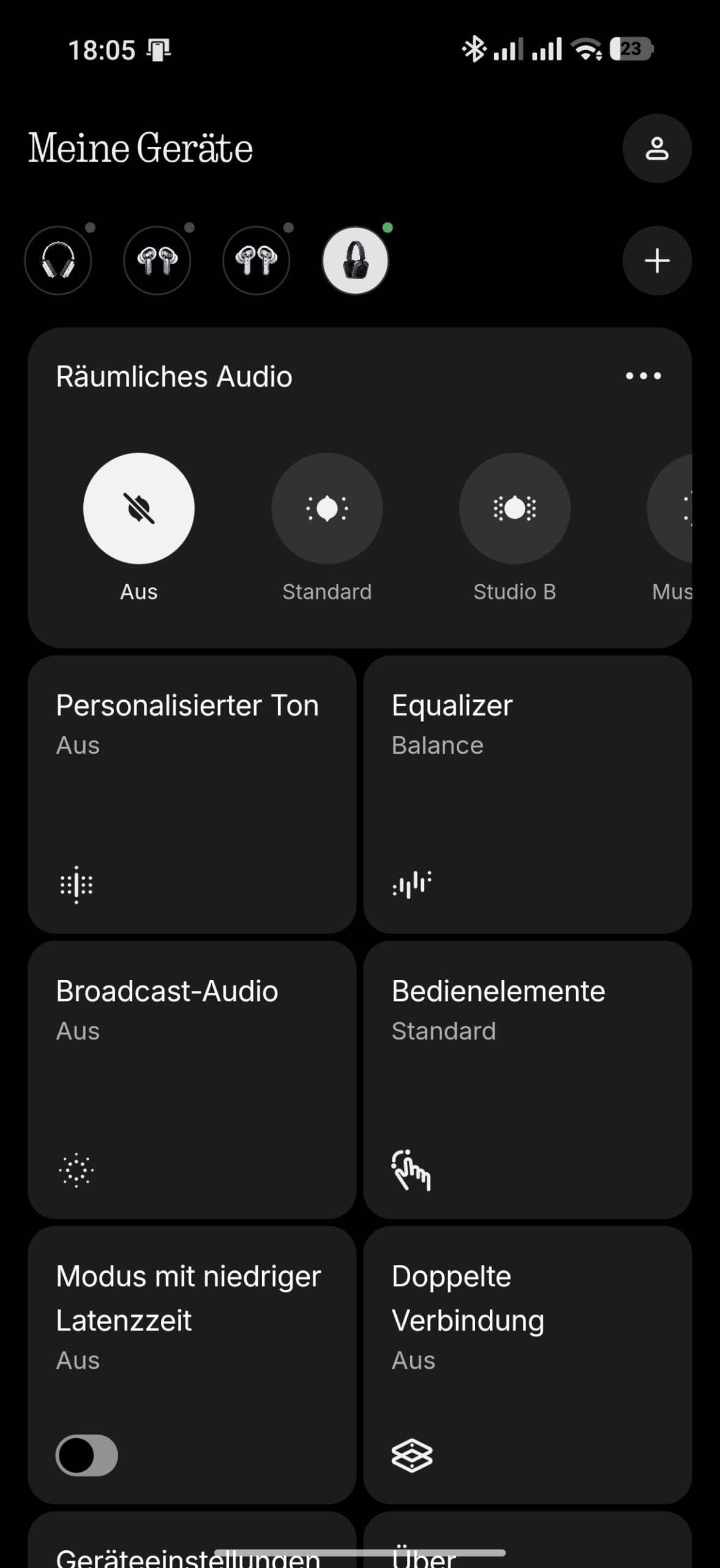
While not new, the Personal Sound feature is useful. The app performs a short hearing test and then creates an individual profile tailored to your own hearing ability.
Instead, several new spatial audio profiles have been added, including Studio B, Live House, Club, and Concert Hall. Head tracking can be enabled if desired. The differences are audible but subtle. The soundstage changes, the room seems larger or more intimate, but the big "wow" factor is missing (at least for me).
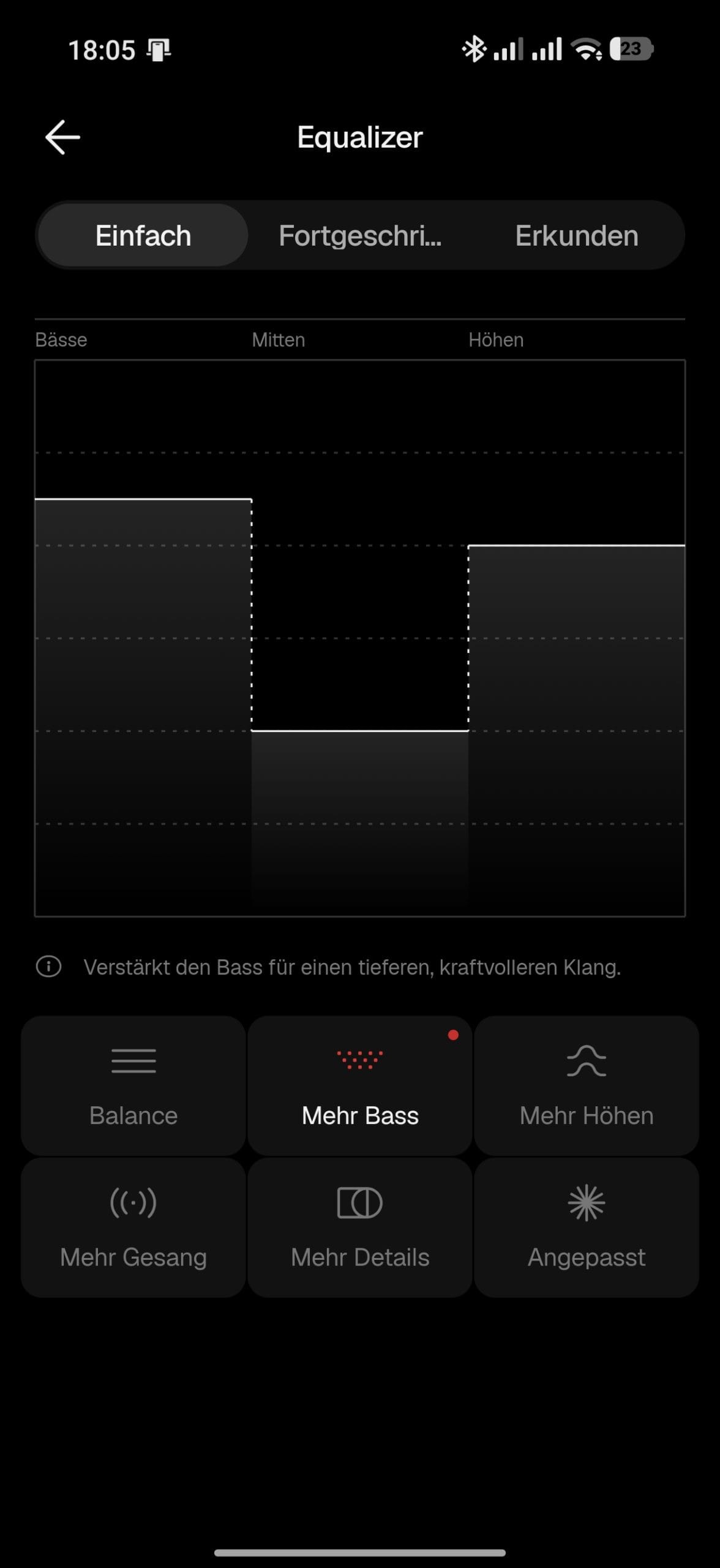
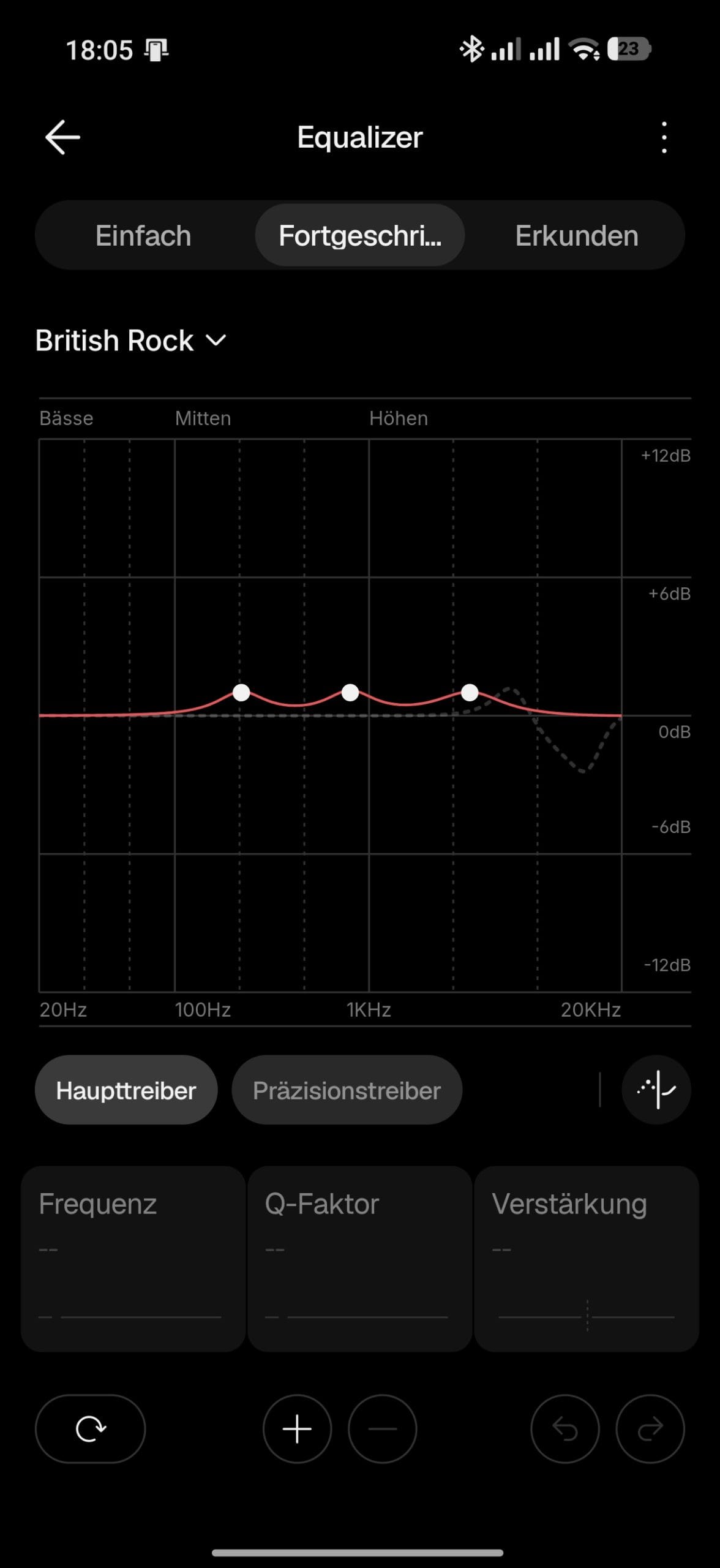
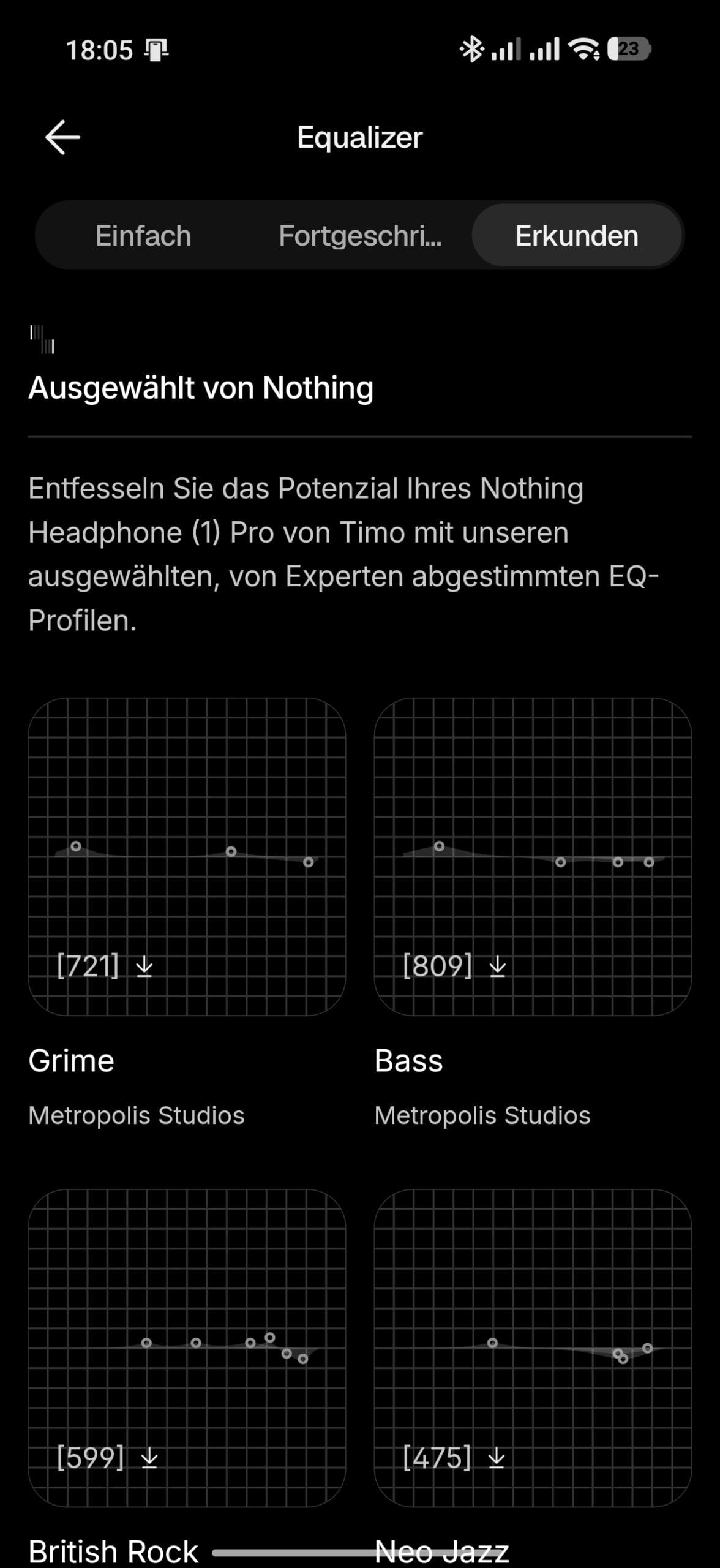
A slightly more specialized mode is the aforementioned Flat mode, which Nothing developed in collaboration with Metropolis Studios. This mode delivers a more neutral sound reproduction, meaning a sound for critical listening rather than maximum musical enjoyment.
Headphone (1) Pro: ANC and Transparency Mode
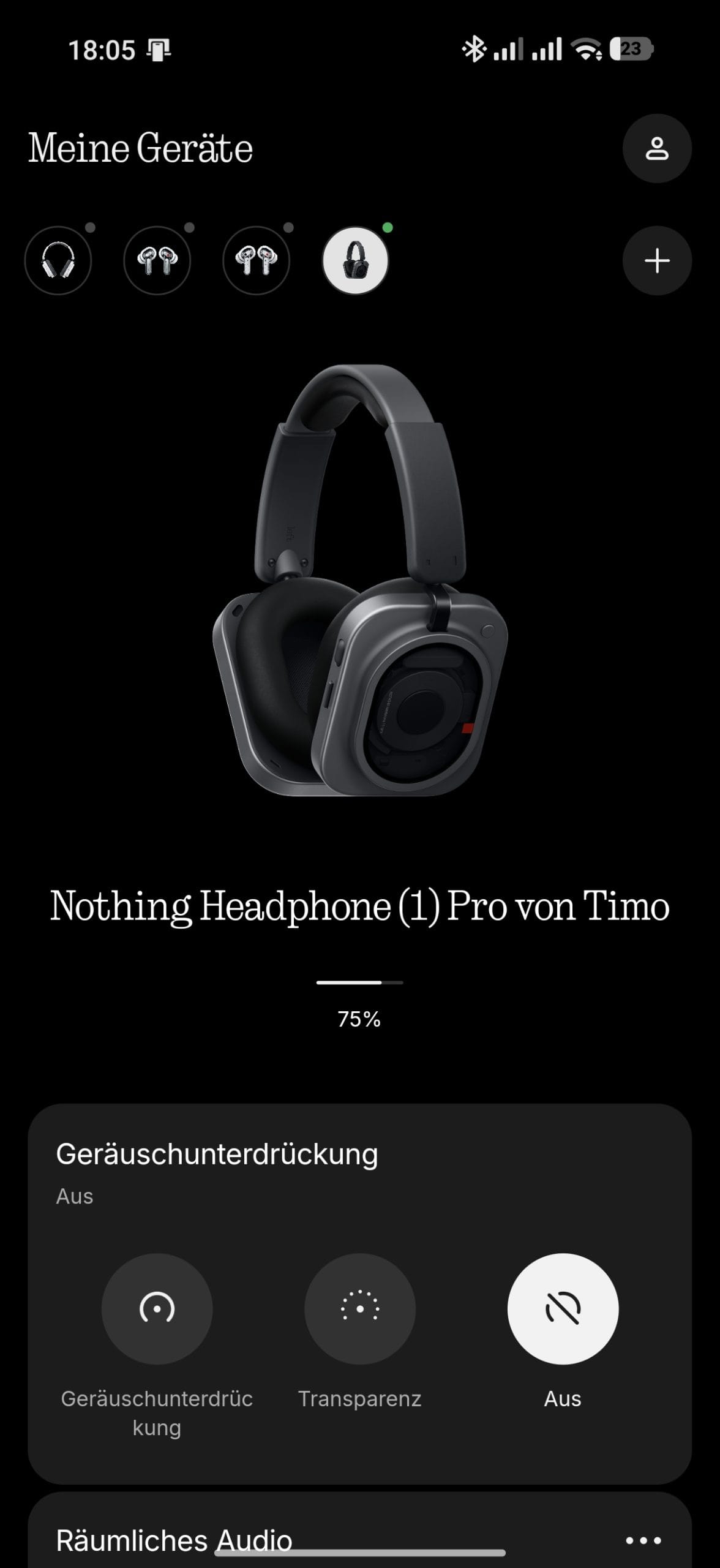
Each earcup now contains five microphones, for a total of ten, designed to capture ambient noise and filter it out more effectively. Driving noise, fans, air conditioning, and the low hum of trains or airplanes are reduced even further than with headphones (1). Voices and higher frequencies are also captured more clearly, without the unpleasant pressure that some ANC headphones can cause. The ANC intensity is adaptive or available in three fixed levels with up to 46 dB of noise reduction.
In transparency mode, voices come through clearly and naturally, ambient sounds are easy to pinpoint, and your own music doesn't immediately sound thin or tinny. This is quite useful for short conversations, announcements at the train station, or walking around town.
Headphone (1) Pro: Battery life
Nothing claims up to 68 hours of battery life without ANC and up to 30 hours with active noise cancellation. Those who also use LDAC can expect around 28 hours with ANC.
On its own, that's perfectly fine and easily enough for several days or a long-haul flight round trip. The problem is that Nothing is compatible with the Headphone (a) It has set the bar very high. It achieves up to 135 hours without ANC and 75 hours with ANC, thus lasting practically twice as long as the Pro model.
The comparison isn't entirely fair, however, because the Pro model has more technology. Three drivers per side, more microphones for ANC, and more sophisticated signal processing all need power. It's therefore understandable that the battery life suffers as a result.