Lexar x IFA 2026
Lexar is using IFA 2026 in Berlin to offer a relatively broad perspective on the future of storage. The focus is initially on the Muse Ultra-Slim Portable SSD, a product aimed at end users and content creators. At the same time, the manufacturer is exploring the increasing importance of local AI models and plans to expand its presence in the B2B and automotive sectors.
The presentation also coincides with the company's 30th anniversary year. Lexar was founded in 1996 and today offers products including SSDs, RAM, memory and CFexpress cards, as well as external storage solutions.
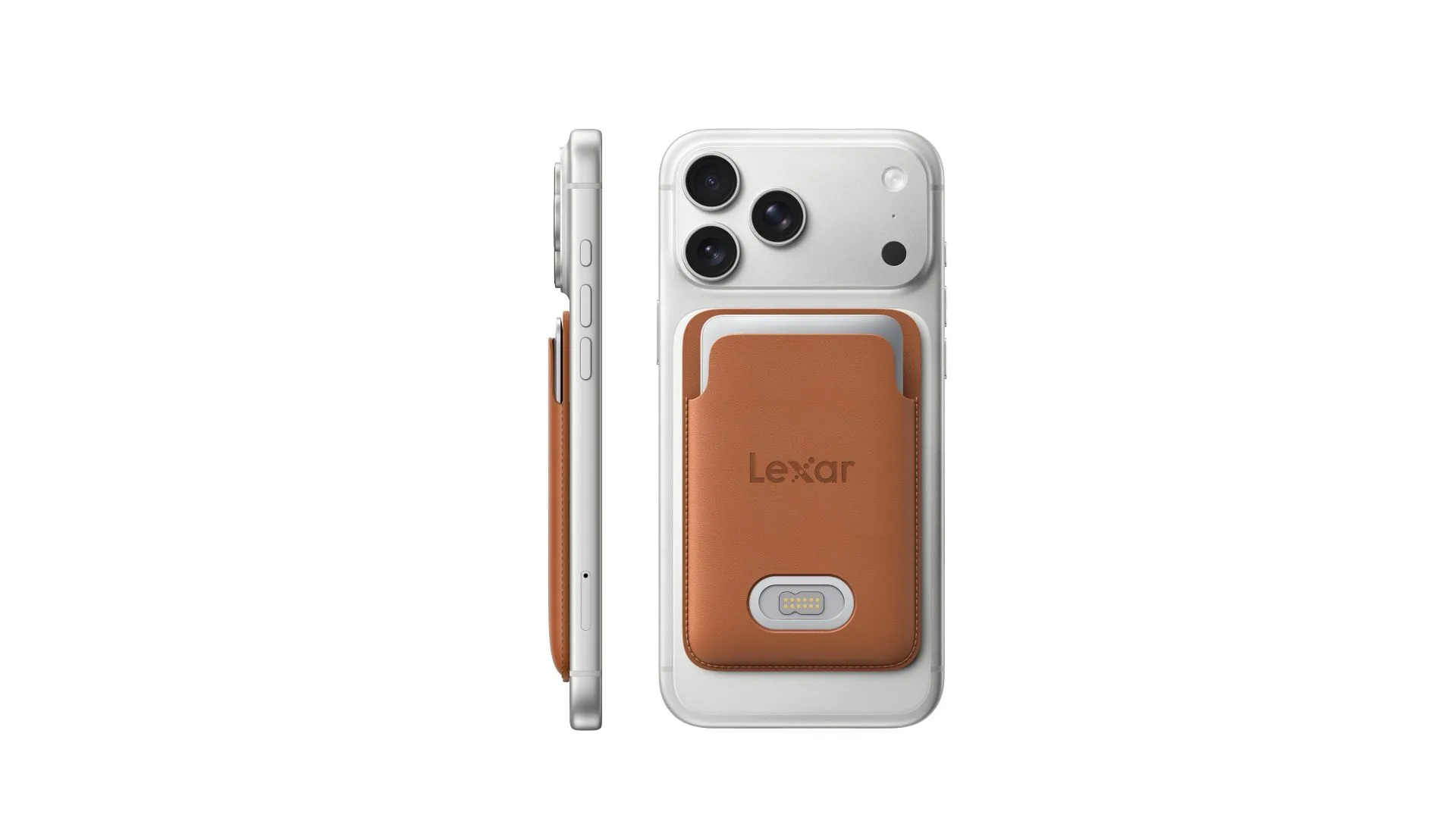
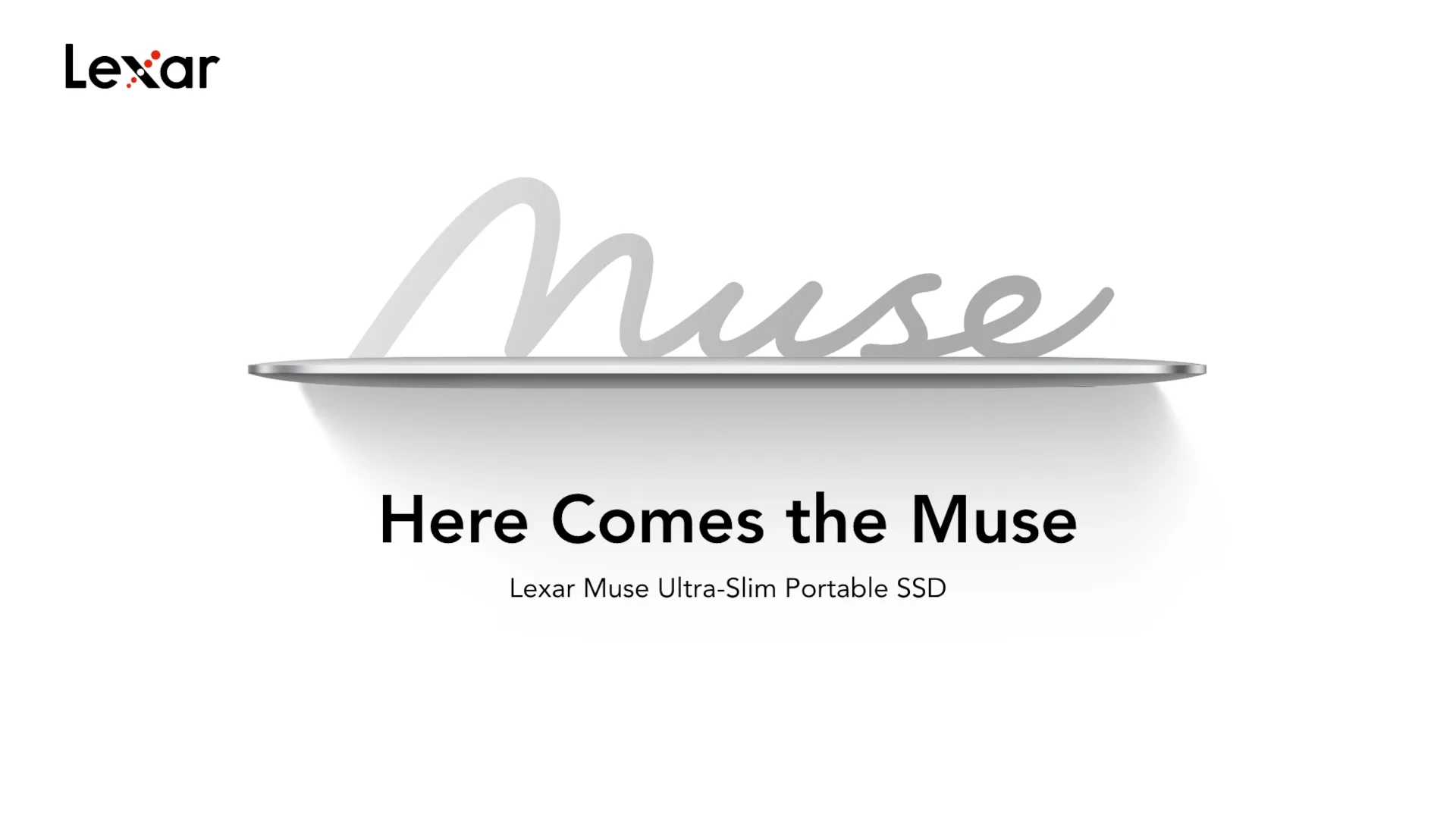
The Muse Ultra-Slim Portable SSD is only 3,8 millimeters thick.
Visually, the new Lexar Muse Ultra-Slim Portable SSD stands out from the existing portfolio. Lexar describes it as the world's thinnest portable SSD. At its thickest point, the metal casing measures just 3,8 millimeters, while the edges taper to approximately one millimeter.
The enclosure attaches to compatible MagSafe devices via a magnetic sleeve. However, Lexar doesn't simply use an exposed USB-C port on the SSD for data connection, but rather its own proprietary magnetic pogo-pin connection.
The included SnapLink magnetic cable connects via these contacts and establishes a connection to USB-C devices on the other end. Lexar uses N52 neodymium magnets for the magnetic attachment. The system is designed for use with smartphones, tablets, and notebooks, as well as for mobile photo and video workflows.
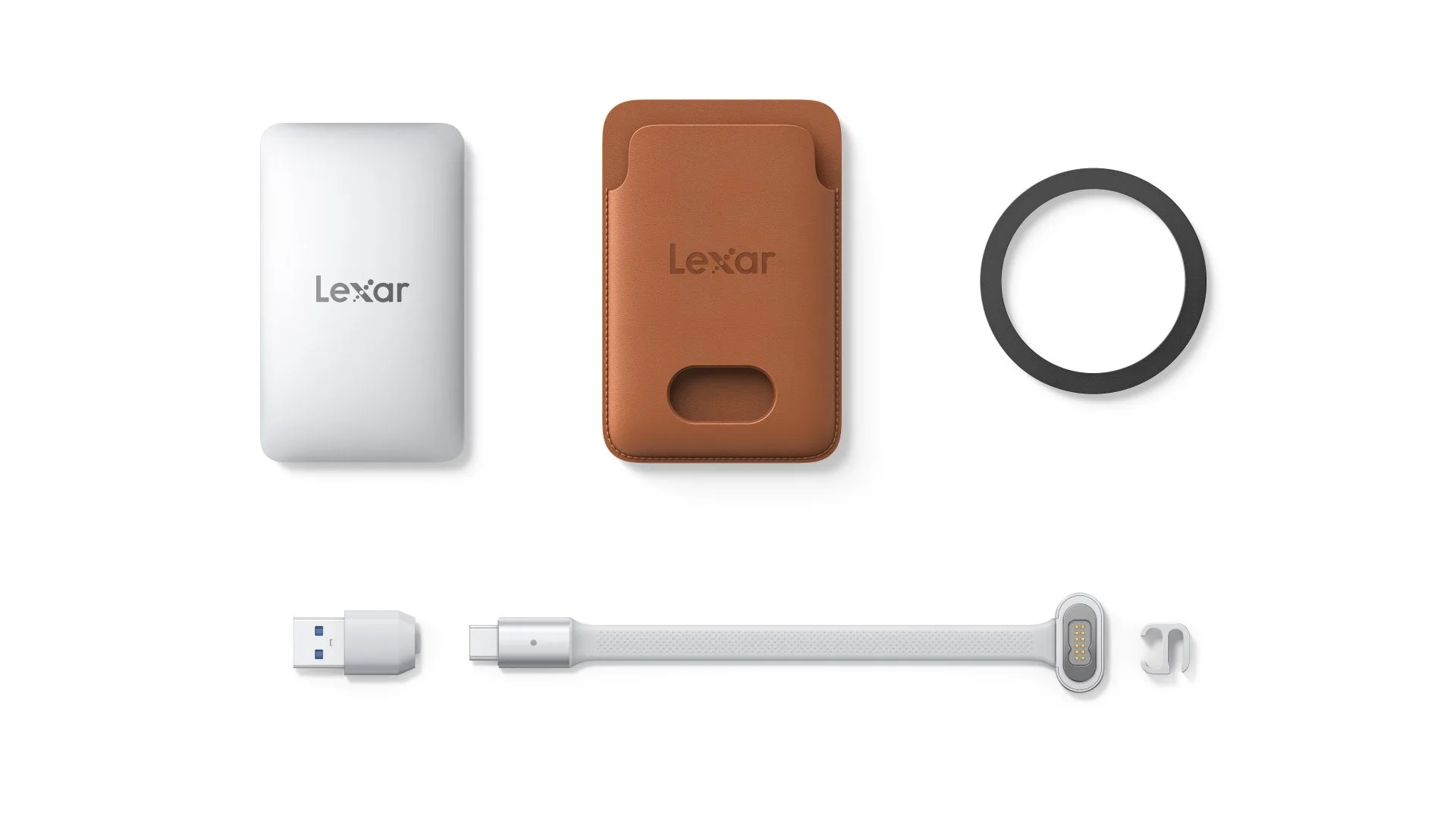
In terms of speed, the Muse performs on par with fast external USB SSDs. Lexar specifies sequential read speeds of up to 1.050 MB/s and write speeds of up to 1.000 MB/s.
This is particularly interesting for video recording with current iPhones. On compatible models, the SSD can be used for direct external recording of 4K ProRes footage at up to 120 frames per second. This requires an iPhone with USB-C from the iPhone 15 series onwards, although the actual available recording modes depend on the specific device and its settings.
Lexar initially plans to offer 512 GB and 1 TB storage capacities. The market launch is scheduled for the fourth quarter of 2026. Pricing information for Germany is not yet available.
New storage is intended to accelerate local AI applications.
The manufacturer's second major IFA topic is considerably more technical. Under the name Lexar AI Storage Core, Lexar is working on a combination of new storage hardware and software optimizations specifically tailored to locally running AI models.
These include a new PCIe Gen5 SSD and a PCIe Gen5-based memory stick. Lexar specifies a bandwidth of up to 11 GB/s. The focus is less on classic gaming or benchmark scenarios and more on processing large amounts of AI data.
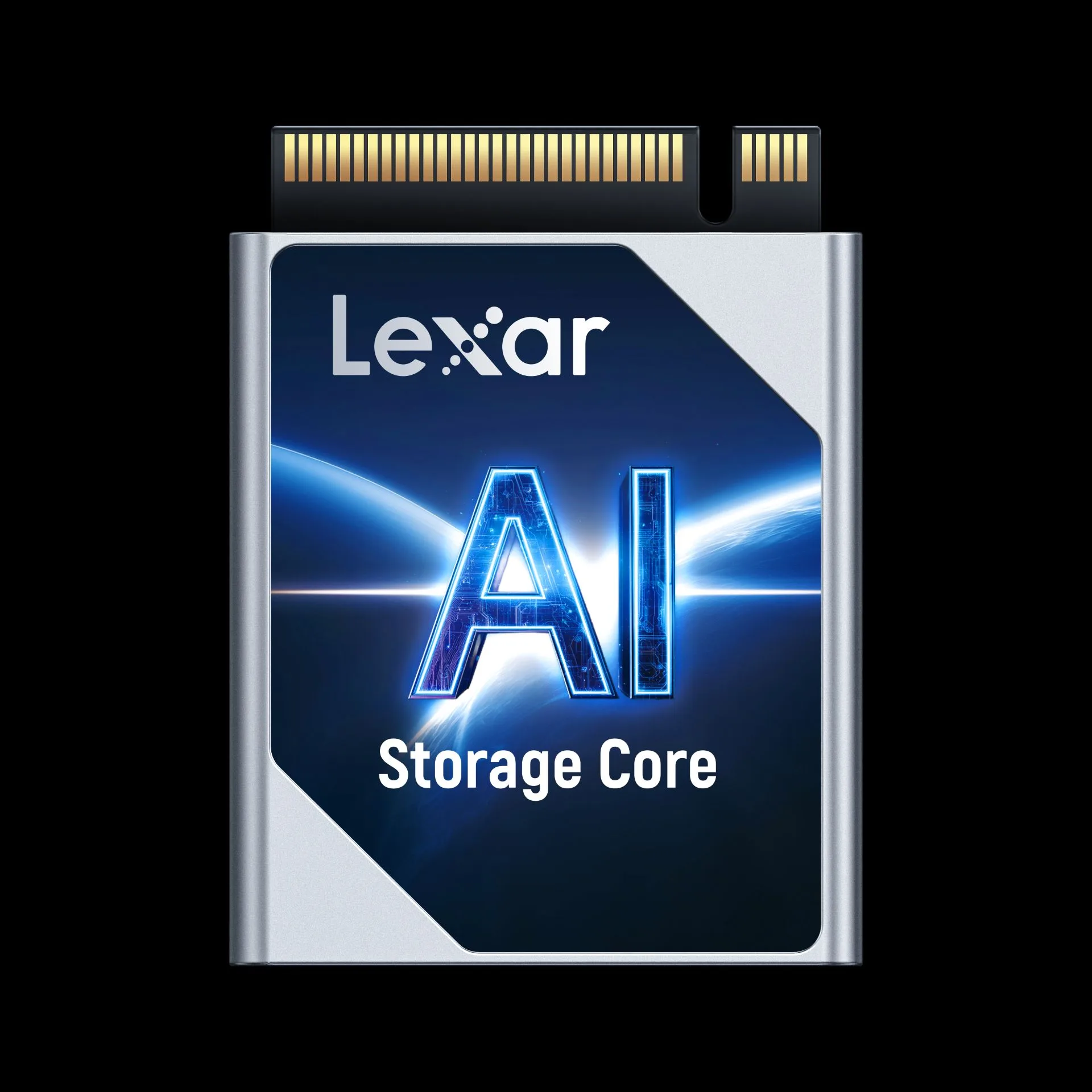
Local AI models have different memory requirements than typical desktop applications. Large amounts of data must be loaded as quickly as possible while maintaining low latency. Fast memory access can be particularly important for so-called mixture-of-experts models, as different parts of the model are loaded and processed depending on the task.
The new architecture's technical foundation includes a Storage Processing Unit (SPU) developed by Lexar's parent company, Longsys. According to the manufacturer, the controller is produced using a 5nm process and does not require its own DRAM. The hardware is complemented by Lexar Luma Bridge.
This technology enables intelligent workload management, predictive prefetching, and cache management. Data expected to be needed next is made available in advance, thereby reducing access times. Lexar states that this can reduce the required DRAM memory by approximately 40 percent for corresponding AI workloads.
However, the extent of this advantage in real-world applications will likely depend heavily on the AI model used and the specific system.
Lexar expands its business into PC and automotive memory.
In addition to traditional consumer products, Lexar intends to focus its storage portfolio more strongly on business customers and specific application scenarios. For system manufacturers and commercial PC vendors, the company is showcasing, among other things, client SSDs with PCIe Gen3 and PCIe Gen4, designed to meet varying performance, capacity, and cost requirements depending on the application.
Another area of focus is electric vehicles. Modern vehicles generate increasingly large amounts of data when parked, thanks to dashcams, multiple cameras, and monitoring functions. Lexar presented its own Dashcam USB Flash Drive Series at IFA to address this need.
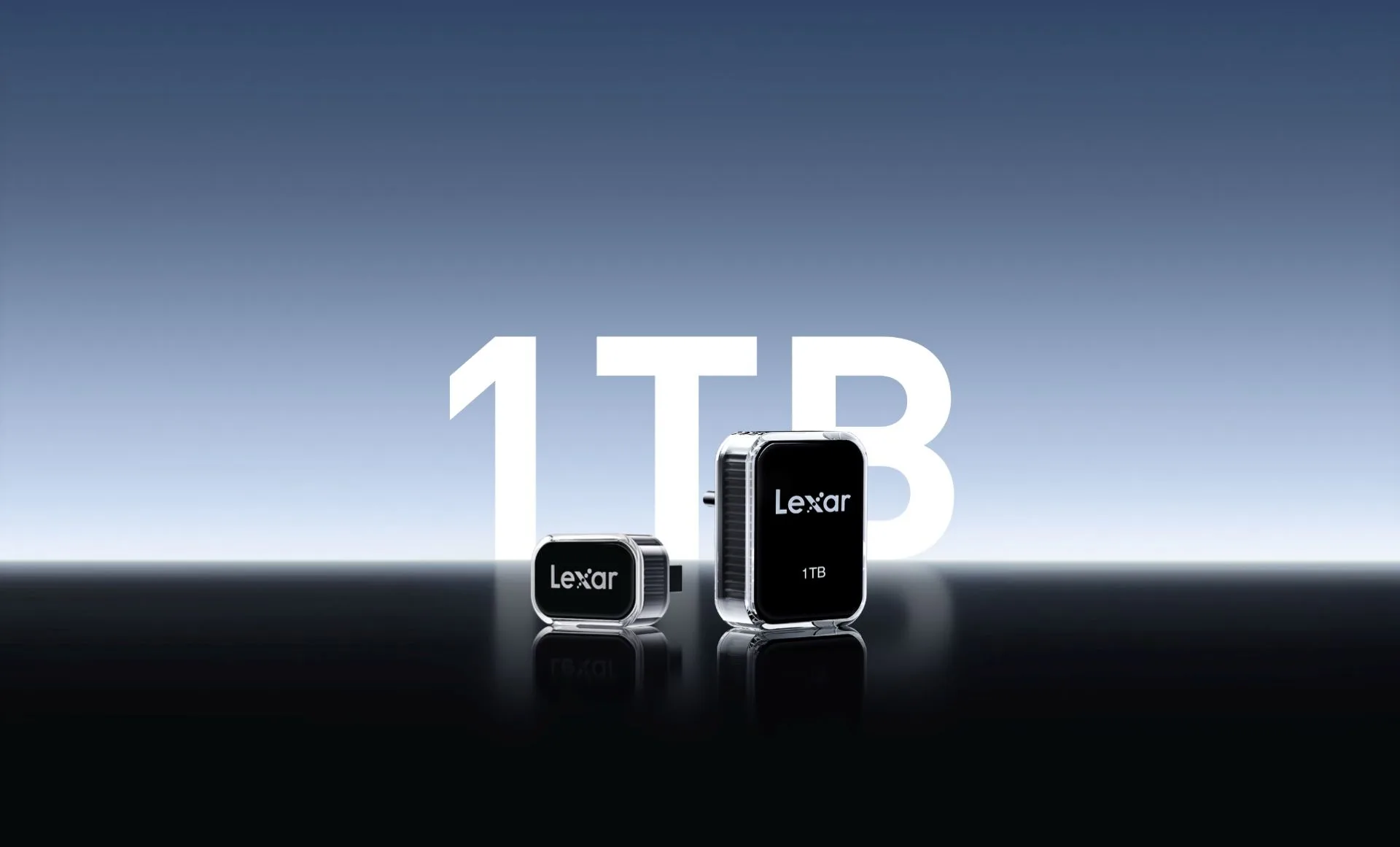
The drives are specifically designed for continuous loop recording and thus differ from ordinary USB sticks, which are not necessarily optimized for continuous writing operations.
Lexar promises, among other things, firmware designed for high durability, broad compatibility with electric vehicles, a compact and flat design, and reliable operation even under strongly fluctuating temperatures.
Source: Lexar press release