ROMO P2 and ROMO A2 at a glance
The second generation of ROMO vacuums initially consists of the ROMO P2 and the more affordable ROMO A2. Both models have a suction power of up to 36.000 Pa, detect obstacles using two fisheye cameras and multiple LiDAR/ToF sensors, and are now designed to detect very thin cables and transparent objects such as glass more reliably.
Also new is the LiDAR-guided mop arm, which swivels up to 123°, allowing it to reach further under furniture and closer to edges and table legs. Mechanical legs help it overcome single thresholds up to 4 cm and two-step obstacles up to a total of 8,5 cm.
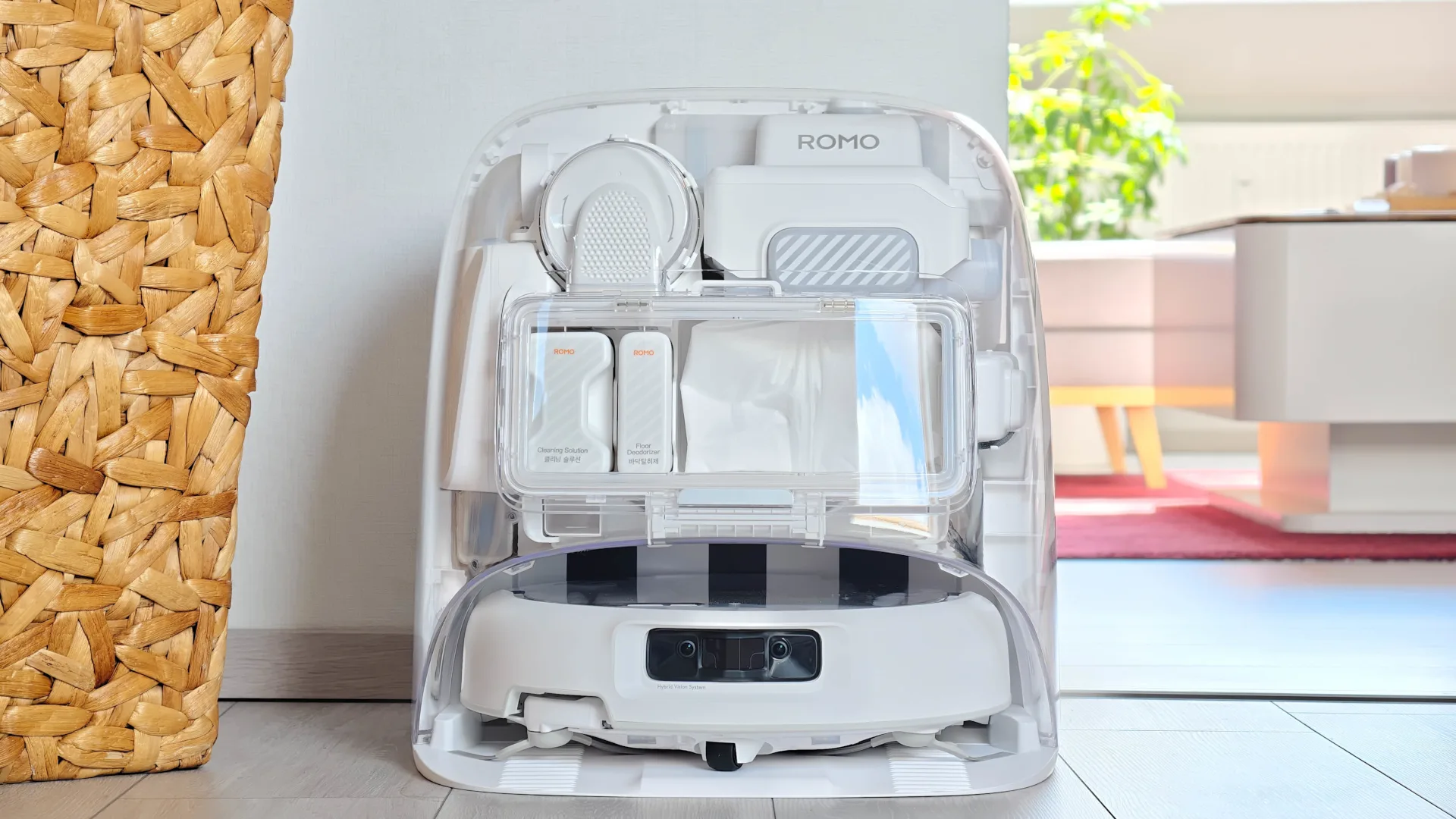
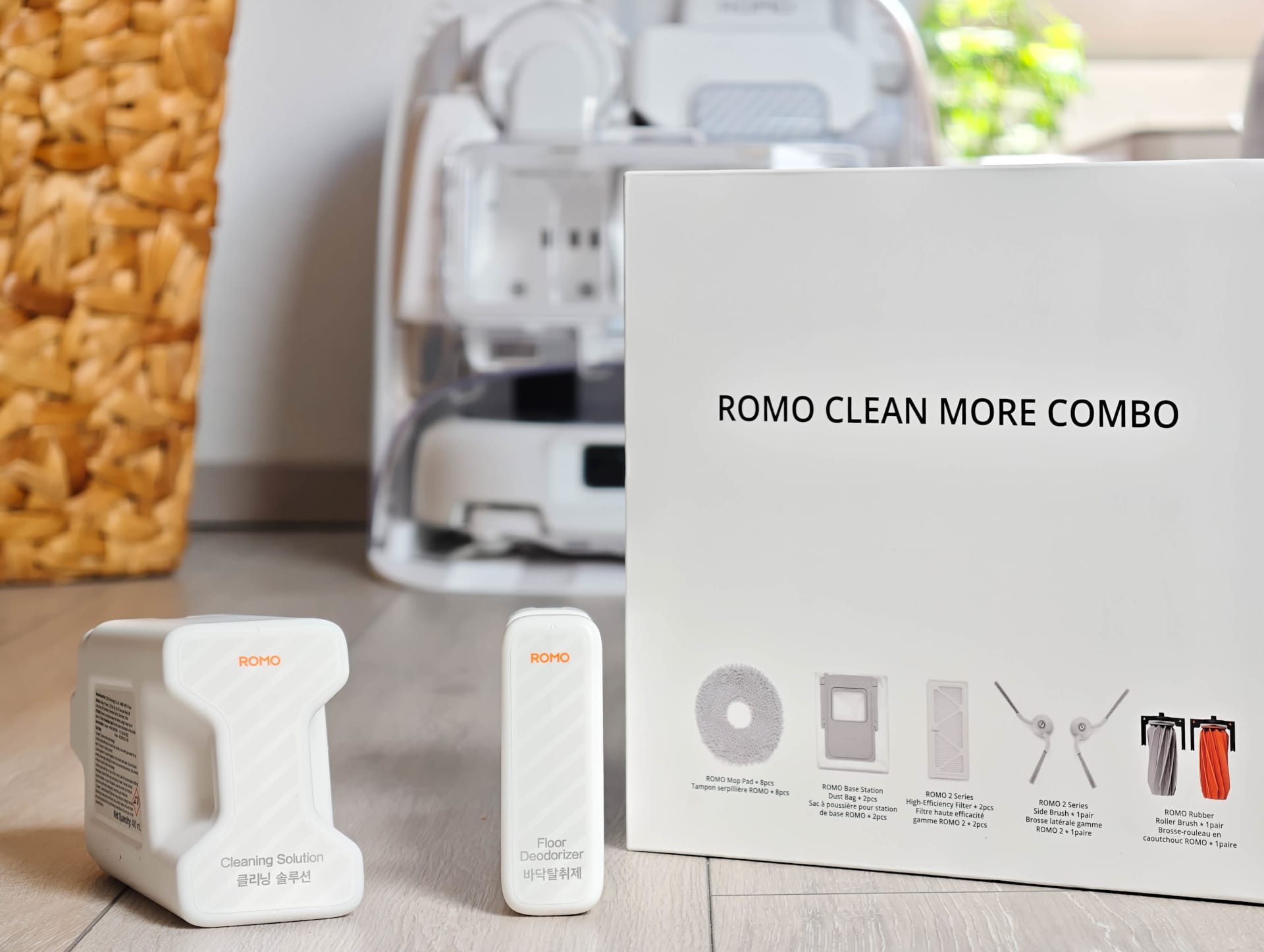
The ROMO P2 is the top model. Compared to the A2, it adds features such as a floor deodorizer, UV light in the dust bag area, and additional drying functions for the station.
DJI ROMO P2: Design and build quality
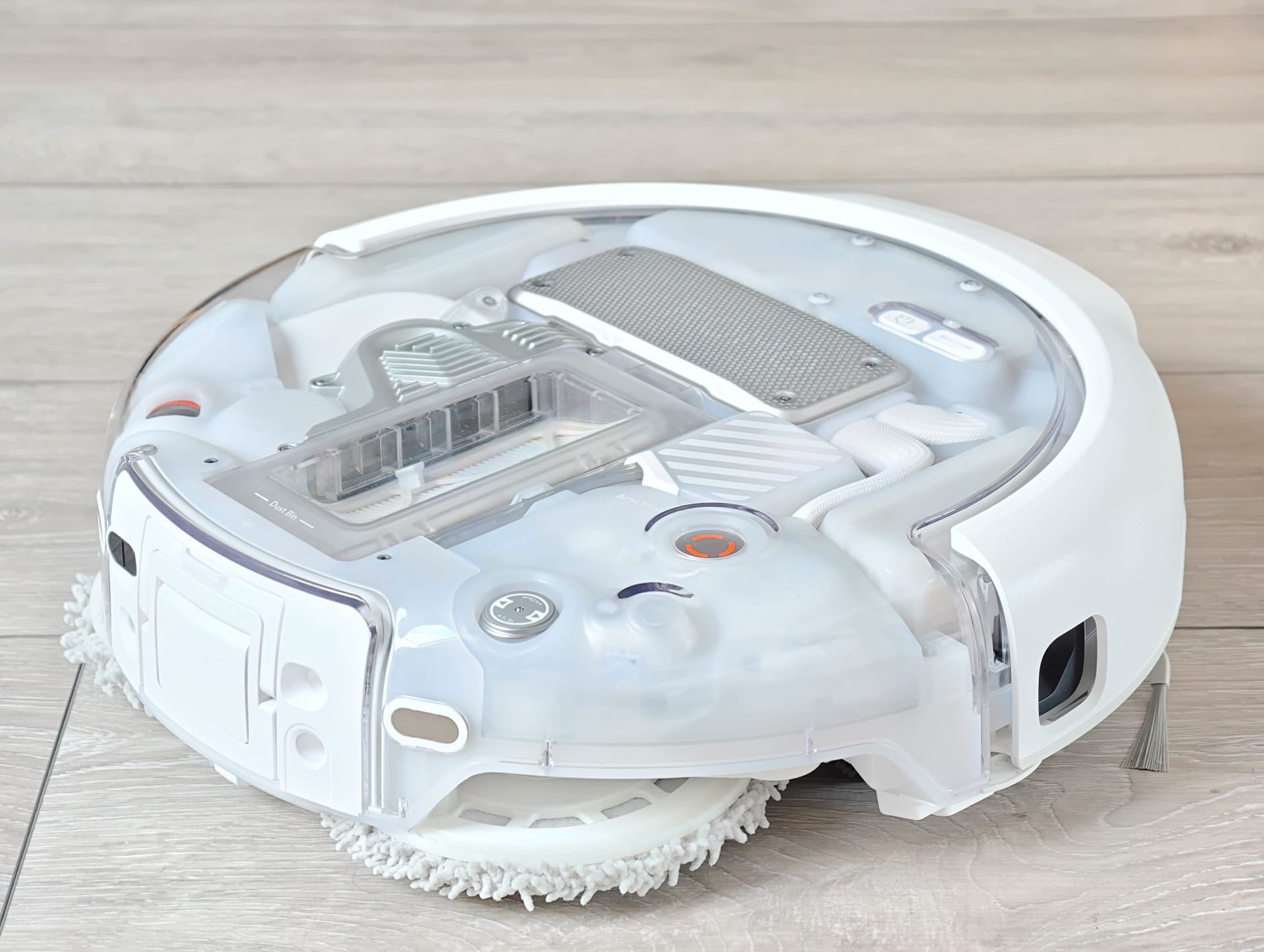
My girlfriend now calls the transparent ROMO models "Space Taxi" and she's not entirely wrong, because the ROMO P2 also looks significantly more futuristic than the classic white or black robot vacuum cleaners.
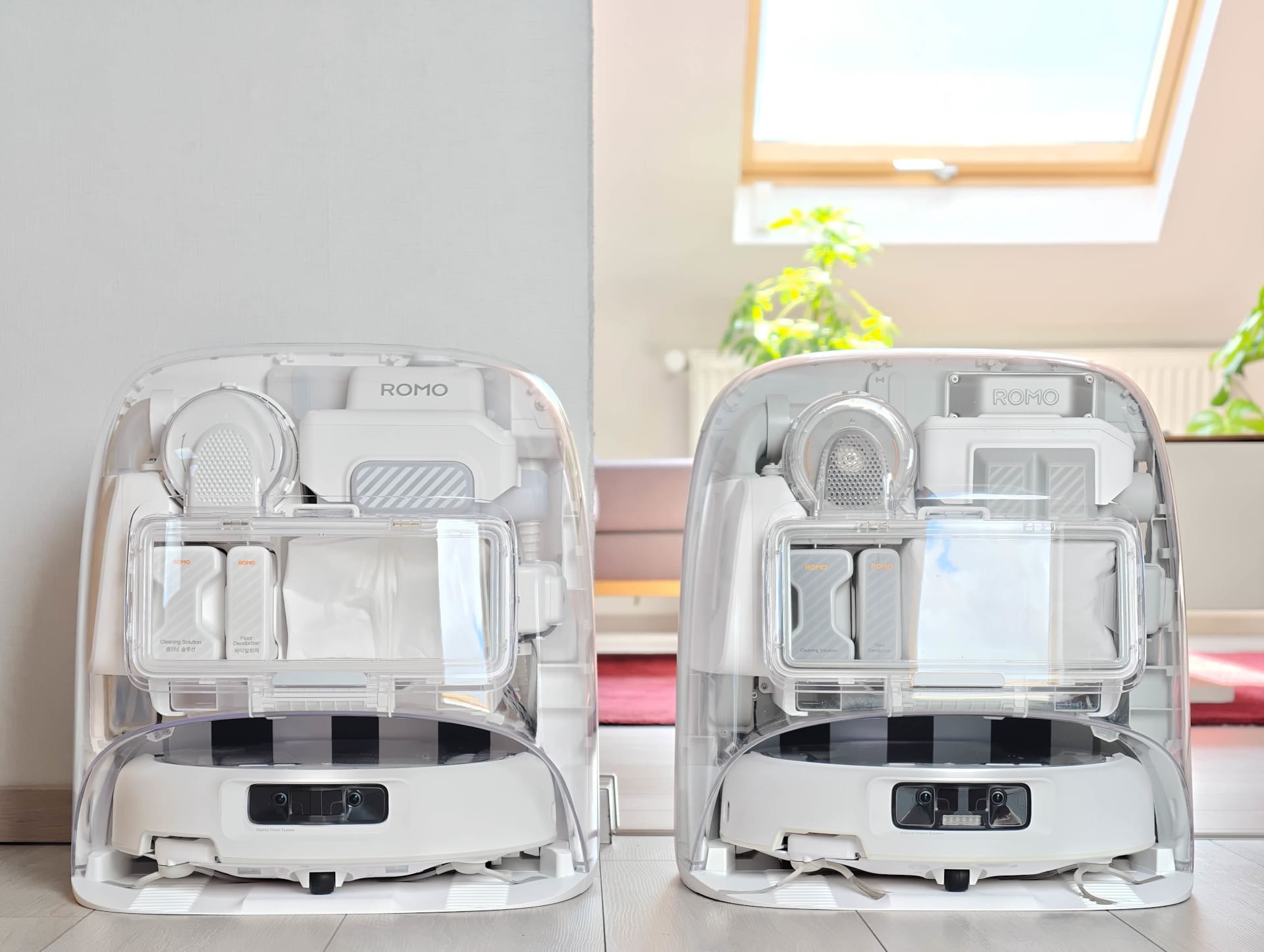
Compared to its predecessor, the P2 appears somewhat more understated. The harsh gray and striking orange accents have been toned down and complemented by lighter shades of white. The basic design, with its visible internal components, remains virtually unchanged.
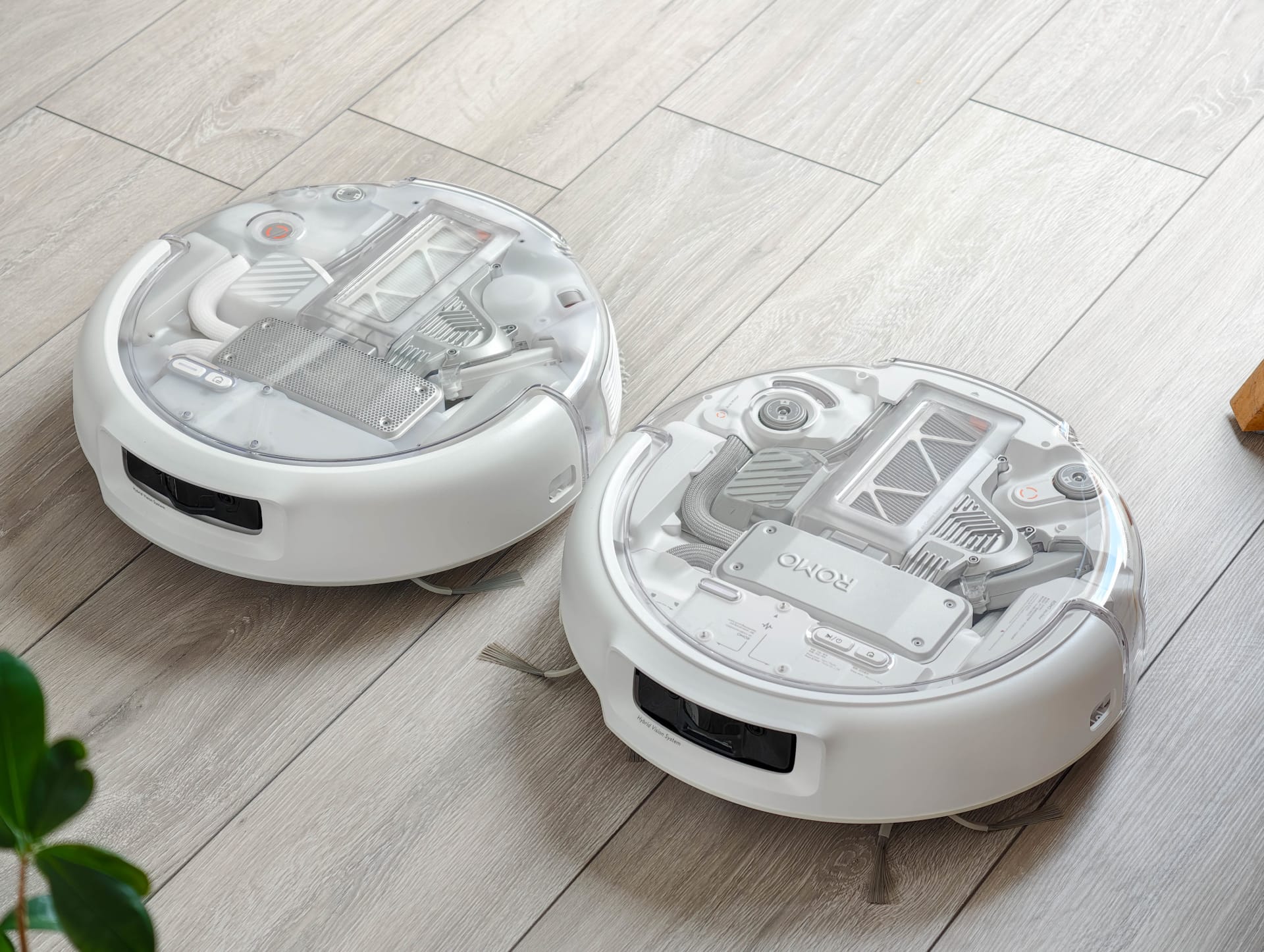
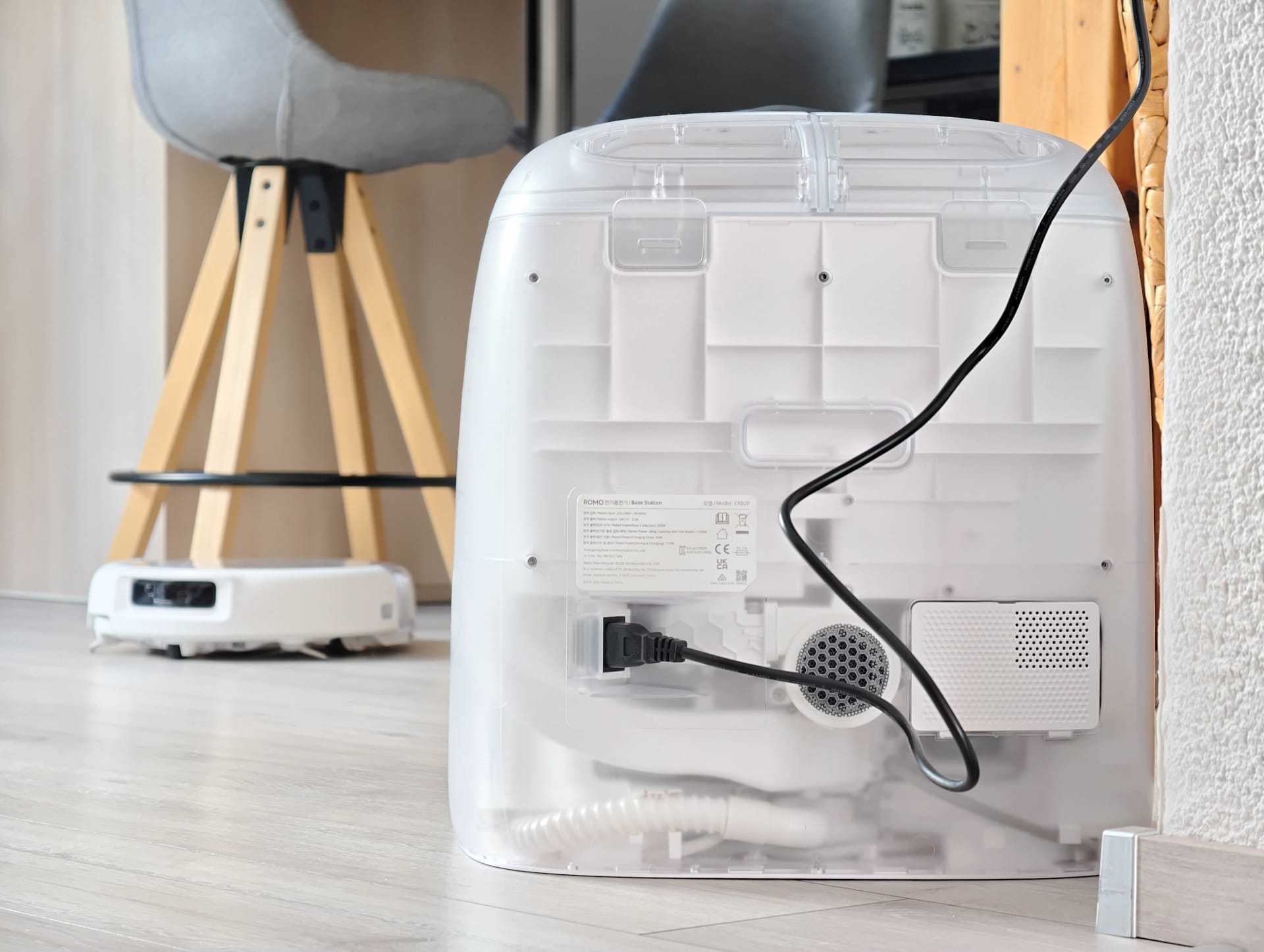
It's a shame that DJI hasn't addressed one of my criticisms of the predecessor. The black power cable of the base station, of which DJI includes three versions for the EU, UK, and Australia, still dangles down the back without any proper routing.
With an ordinary household appliance, this wouldn't bother me much. But with a product that places such a strong emphasis on its design, the freely dangling black cable is all the more noticeable.
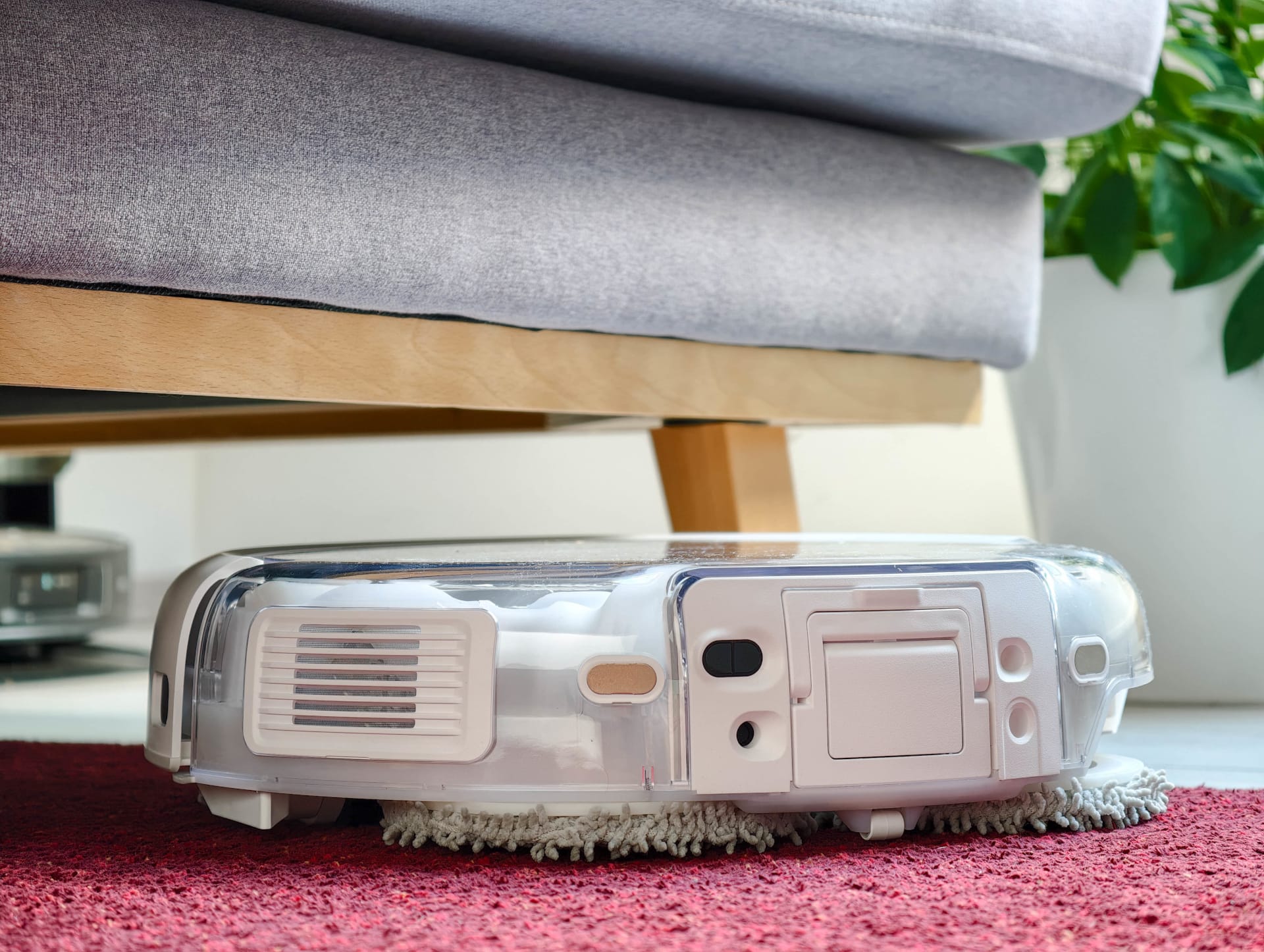
The robot itself is still 9,8 centimeters tall. There are now significantly slimmer premium robot vacuums available, but the height wasn't an issue in my apartment. Those with a lot of IKEA furniture at home will likely also find the height of just under ten centimeters perfectly adequate. However, with very low sofas or cabinets, a few millimeters can ultimately make all the difference.
DJI ROMO P2: Setup and DJI Home App
After switching on, the ROMO P2 is quickly recognized by the DJI Home App and is guided clearly through the individual steps.
While many robot vacuums still communicate exclusively via 2,4 GHz networks, the ROMO P2 also supports 5 GHz. This eliminates the need for the usual fiddling with the router or temporarily disabling the 5 GHz network.
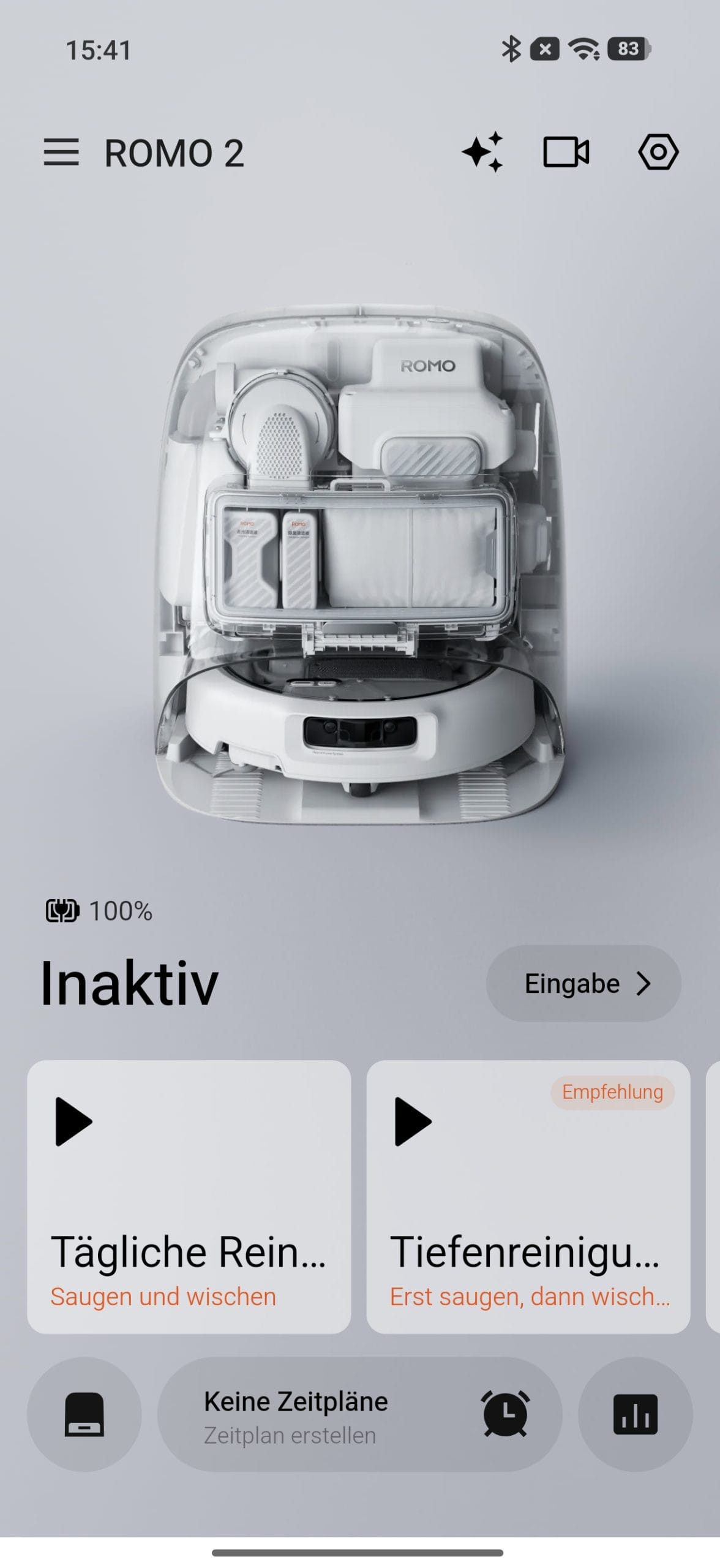
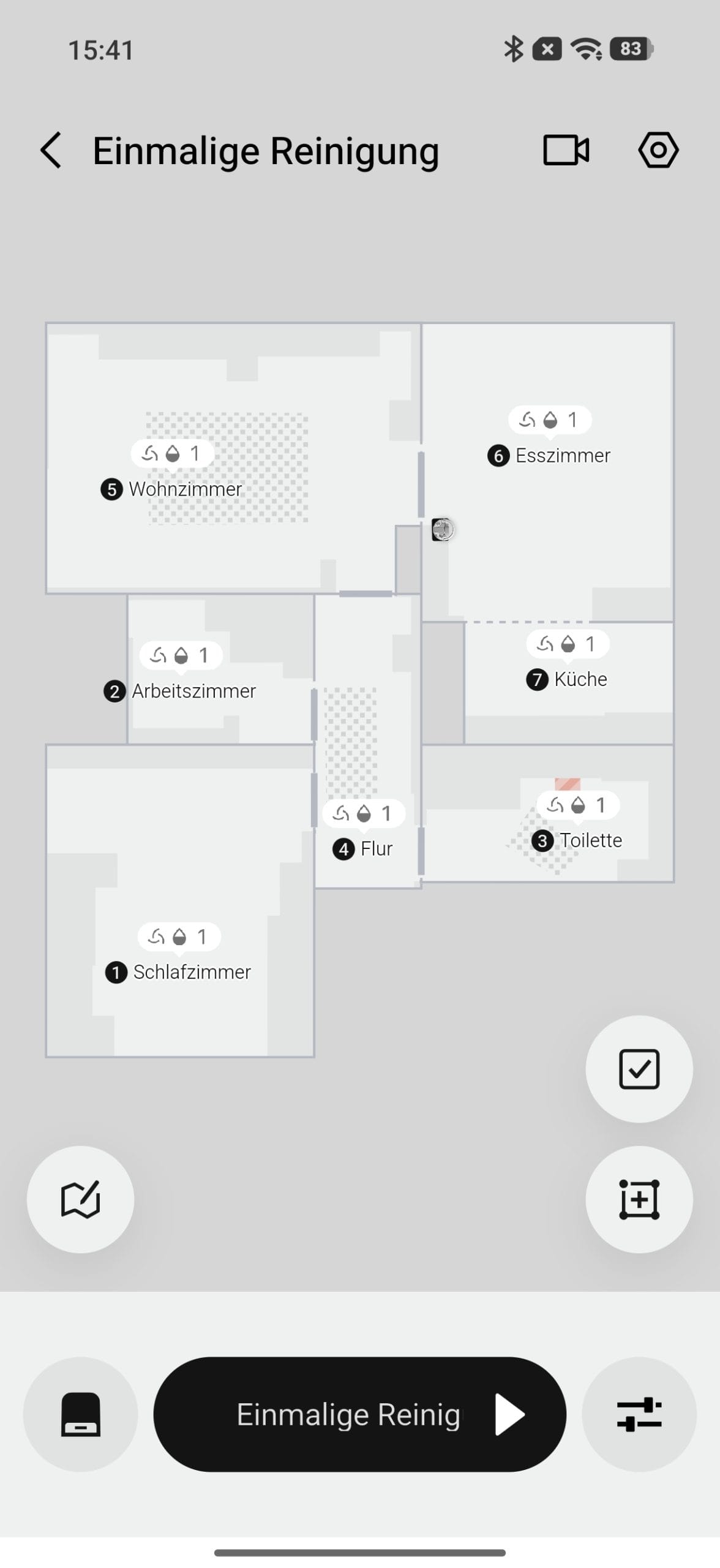
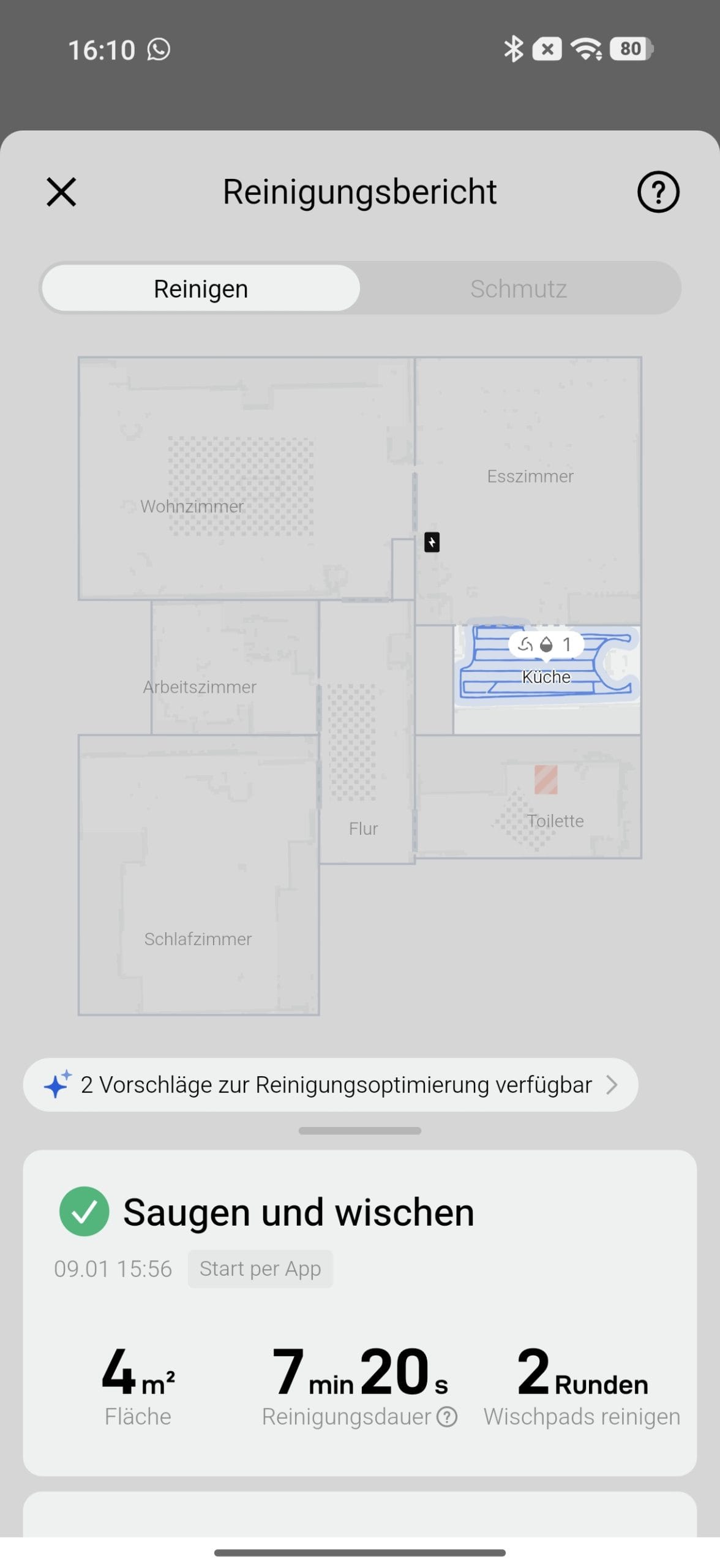
The app itself remains clearly structured and offers the familiar functions for room cleaning, zones, restricted areas and multiple maps.
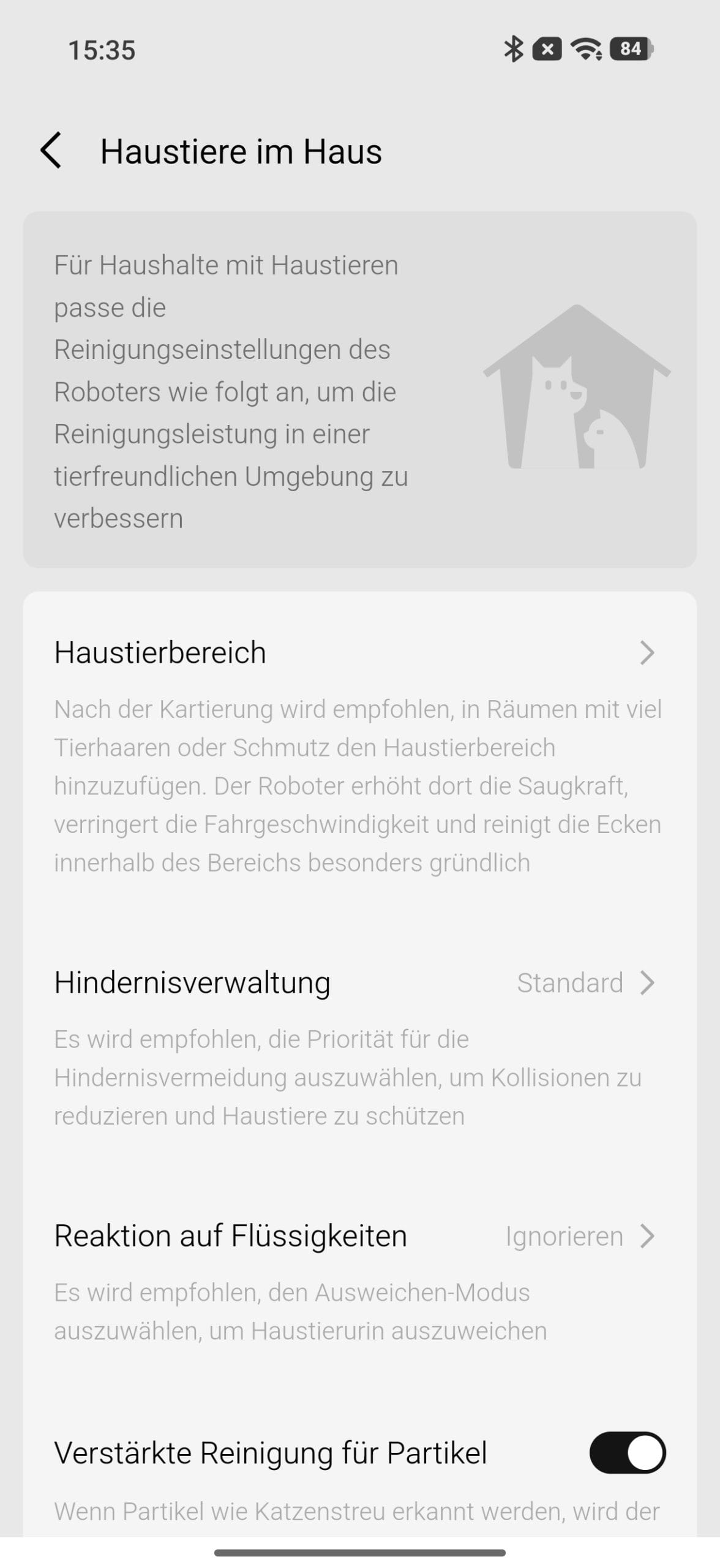
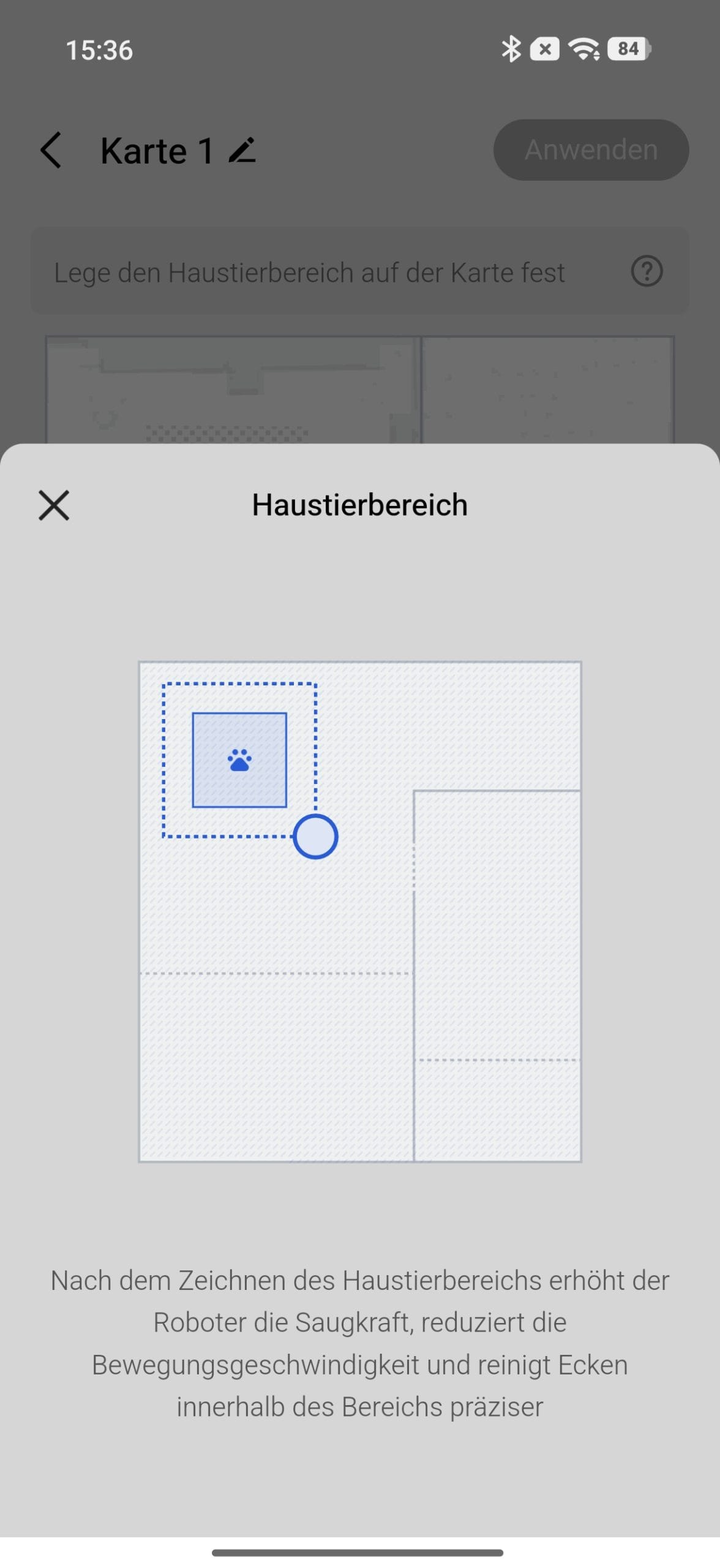
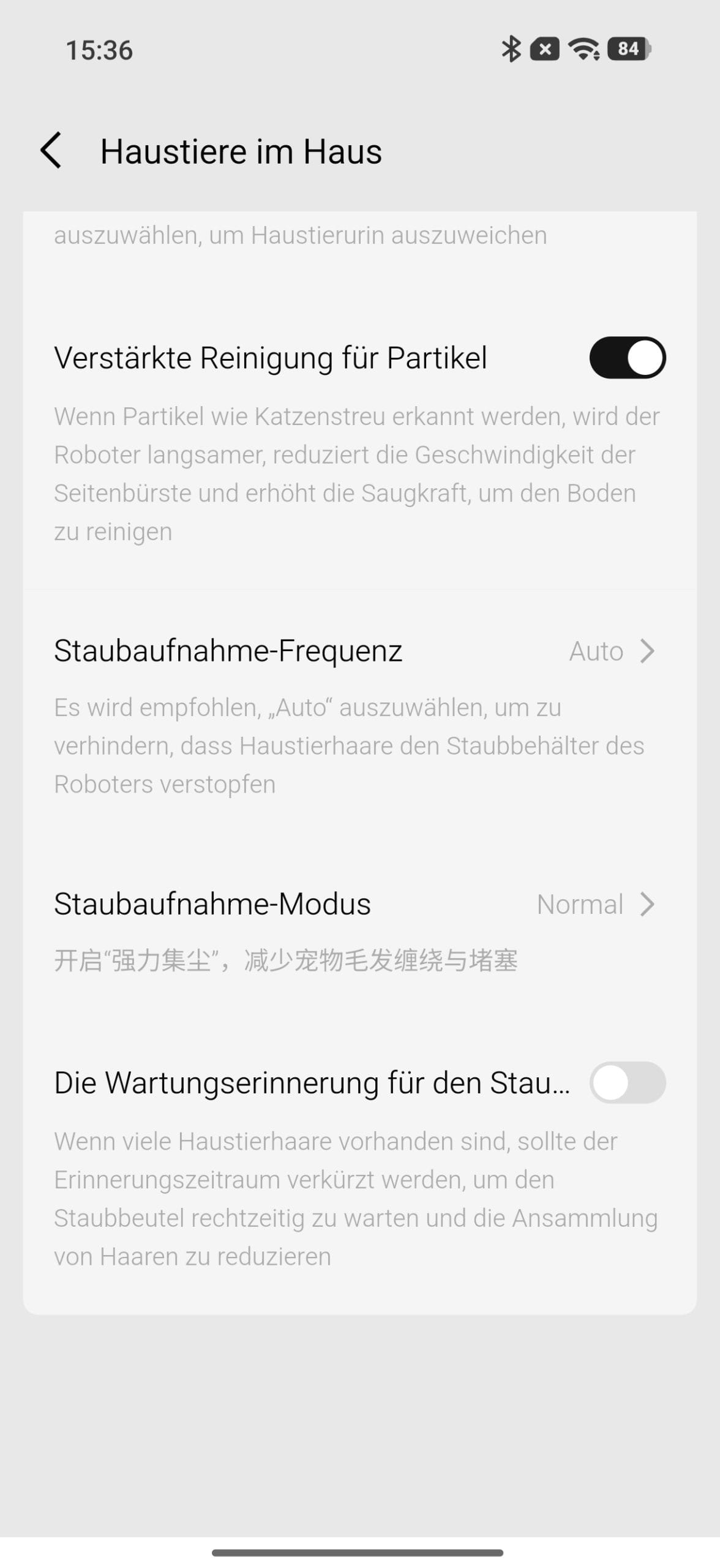
For households with pets, there are additional settings. These allow you to mark pet areas, adjust obstacle avoidance, and activate enhanced cleaning for particles like cat litter. The vacuuming frequency and maintenance instructions can also be adjusted to accommodate a higher amount of pet hair.
In my test, the video function reacted somewhat more slowly than its predecessor. Establishing a connection and transmission sometimes seemed slightly delayed. However, the test was conducted using a beta version of the DJI Home app, so I wouldn't attribute this to the robot itself at this time.
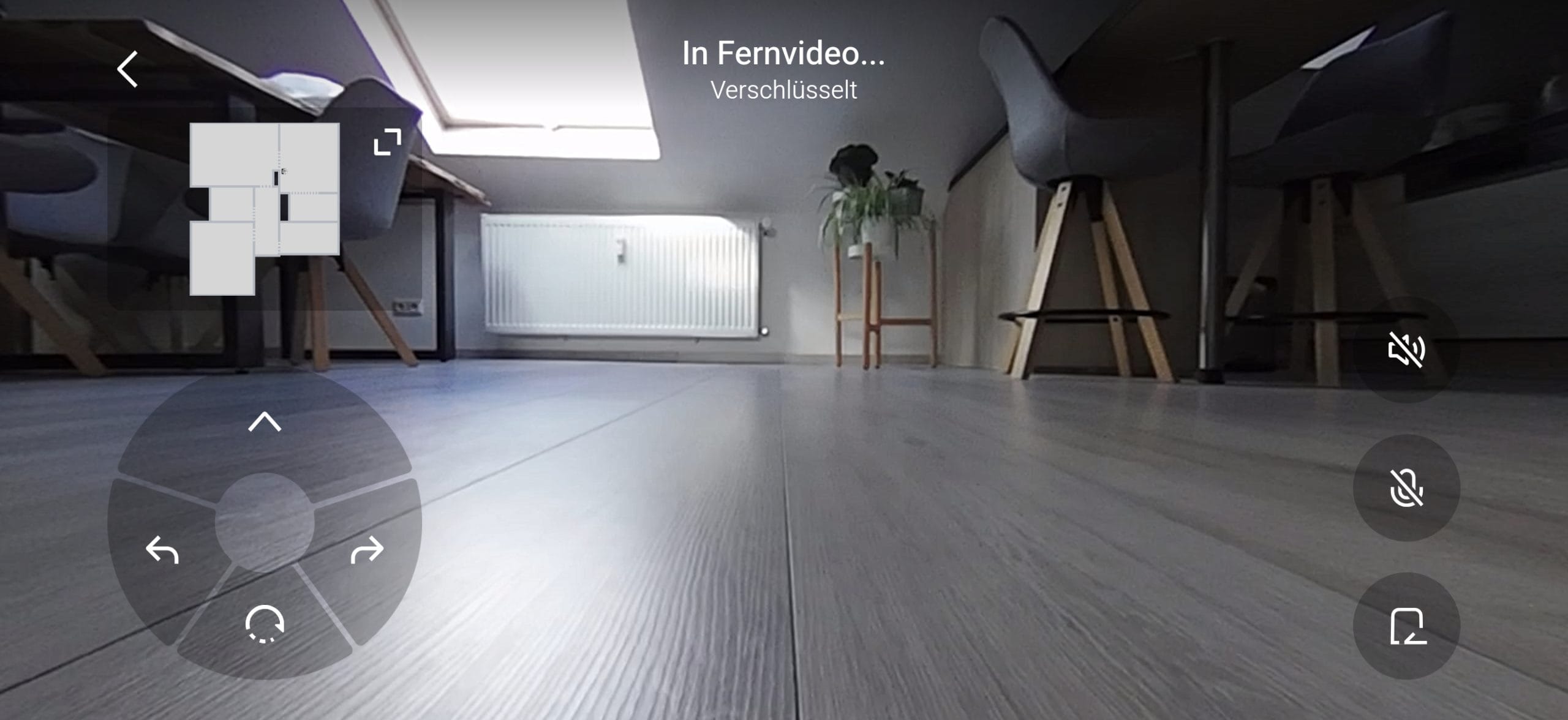
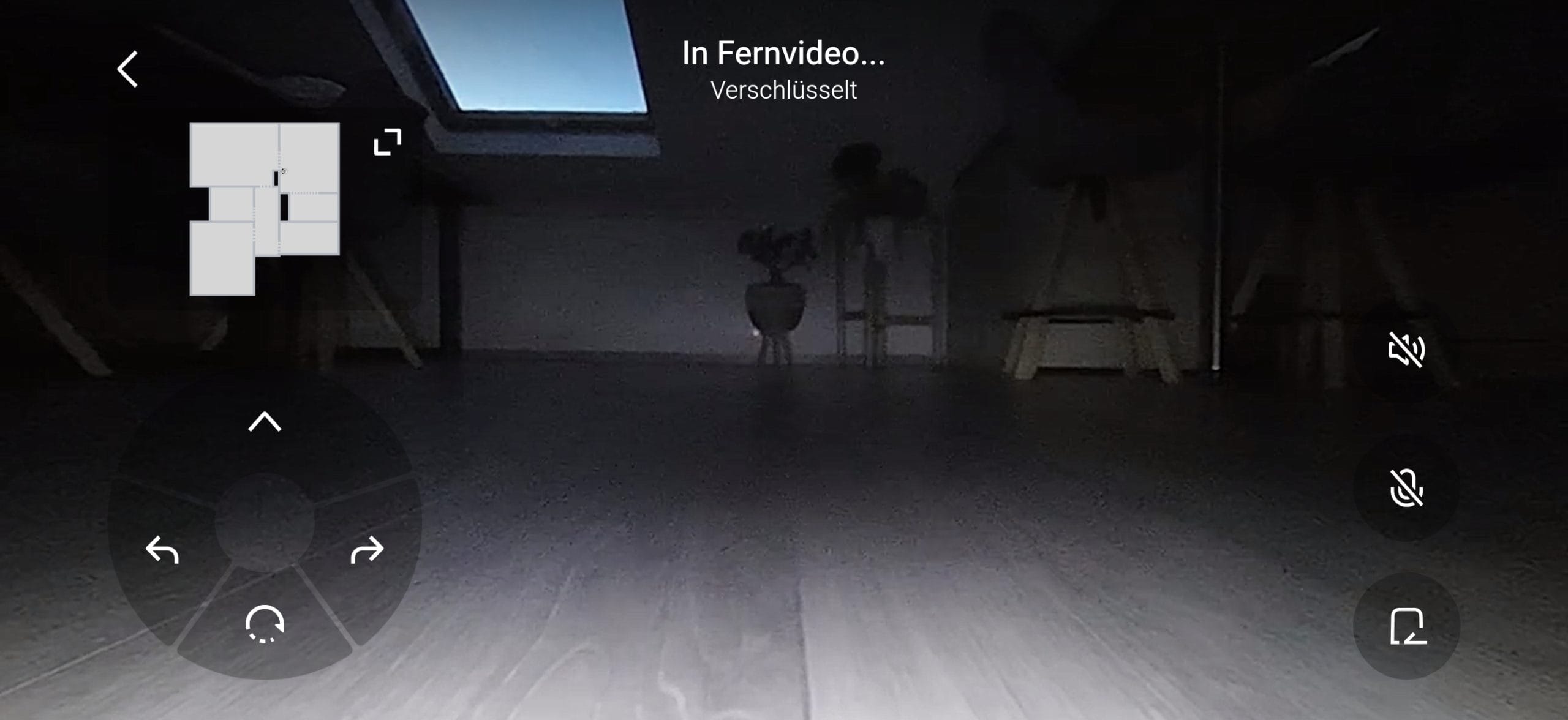
This time, camera access isn't simply protected by a PIN, but requires a password. DJI also announces a local data mode for the end of 2026, in which the app can be used without an internet connection and data will remain local.
DJI ROMO P2: Mapping and Navigation
If there's one thing DJI excels at, it's spatial orientation. The ROMO P2 creates its map quickly and with astonishing accuracy. It recognizes room boundaries better than virtually any other robot vacuum I've tested so far.
The kitchen, bathroom, and bedroom were automatically and correctly identified and named during testing. Naturally, things get more complicated with more specialized rooms. I had to rename the dining room and study myself, which was done quickly.
During operation, another change becomes apparent, one that is difficult to express in the data sheet. The P2 moves more smoothly than the first generation. The drive wheels move with significantly less resistance, and the typical electric motor noise during operation is almost completely gone. On wooden floors, the actual rolling noise of the robot is more noticeable, while the drive itself is barely audible.
DJI hardly needed to change anything regarding the fundamental precision. The robot still drives very close to furniture, baseboards, and other obstacles without constantly bumping into them with its bumper.
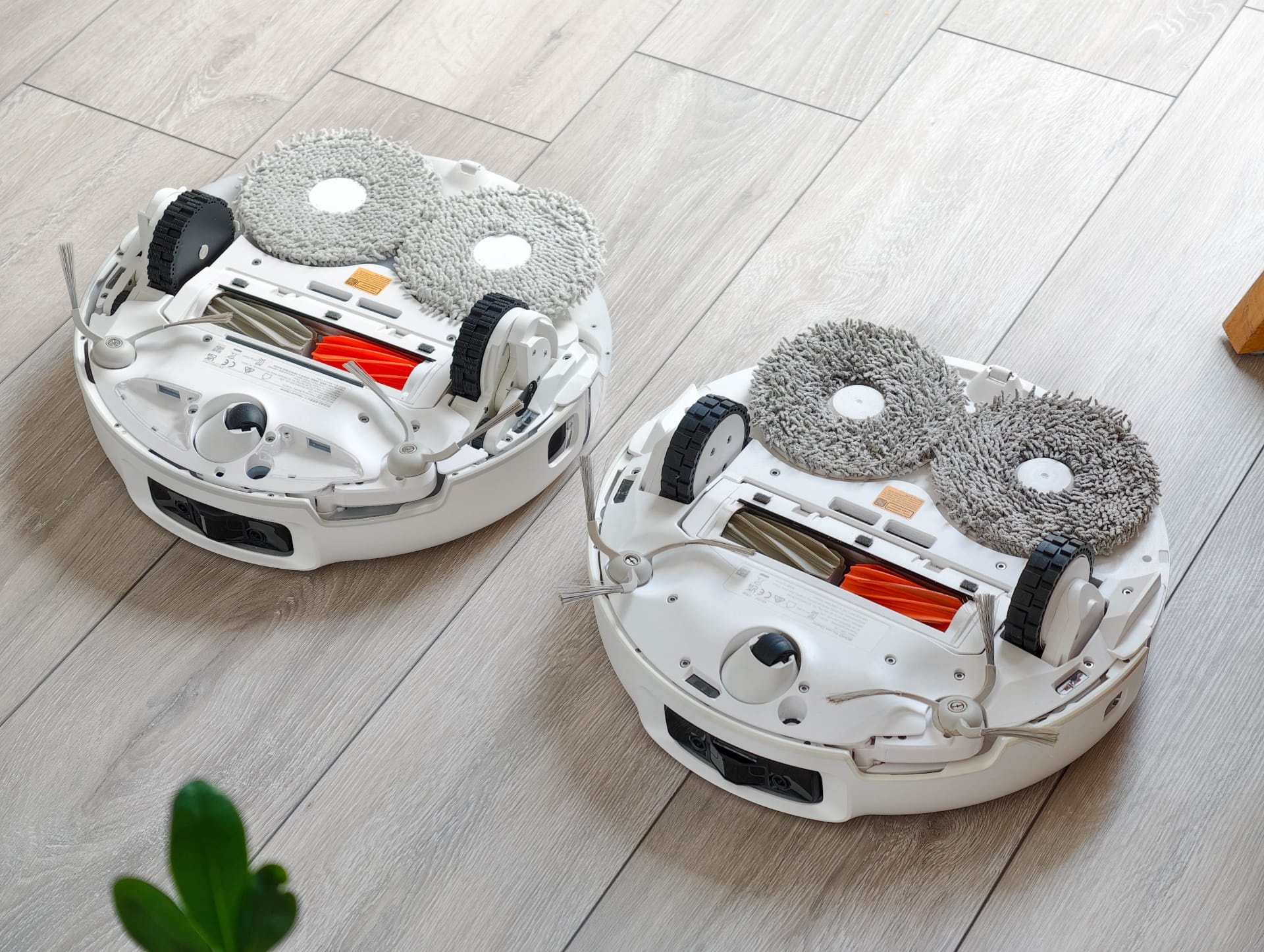
The ROMO P2 handles door thresholds with significantly more ease thanks to its mechanical legs. It's supposed to be able to overcome single thresholds up to 4 centimeters and double thresholds up to 8,5 centimeters. In comparison, its predecessor only managed 2,5 centimeters. The P2 easily cleared my standard, and therefore rather low, door thresholds during testing.
DJI ROMO P2: Obstacle detection
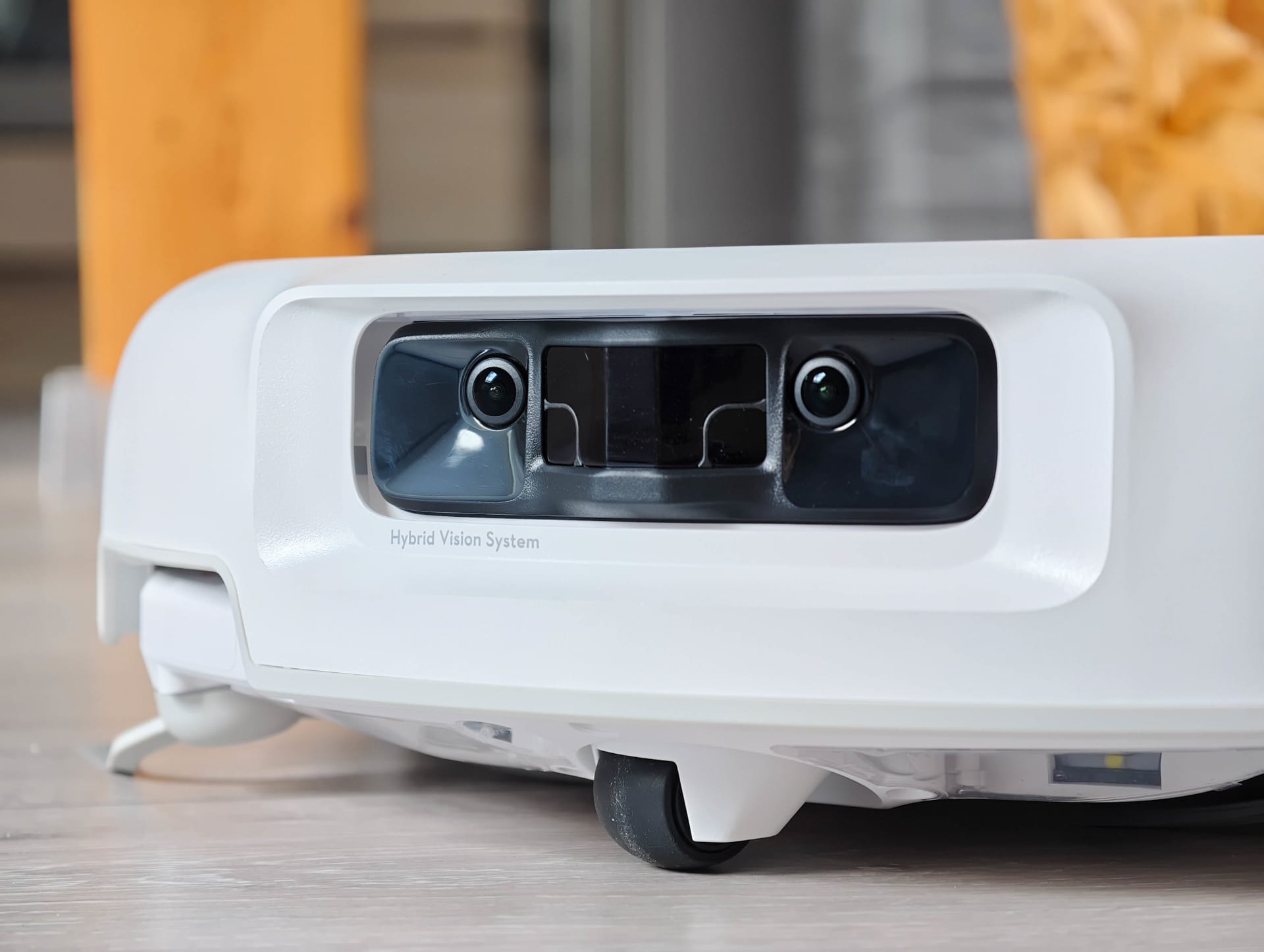
The dual fisheye cameras now work together with multiple LiDAR or ToF sensors, which should allow even very thin and, more recently, transparent objects to be detected better.
In everyday use, the obstacle detection works exceptionally well. The ROMO P2 reliably detected classic problem areas such as light-colored cables, as well as stray socks or a clothespin that had fallen on the floor.
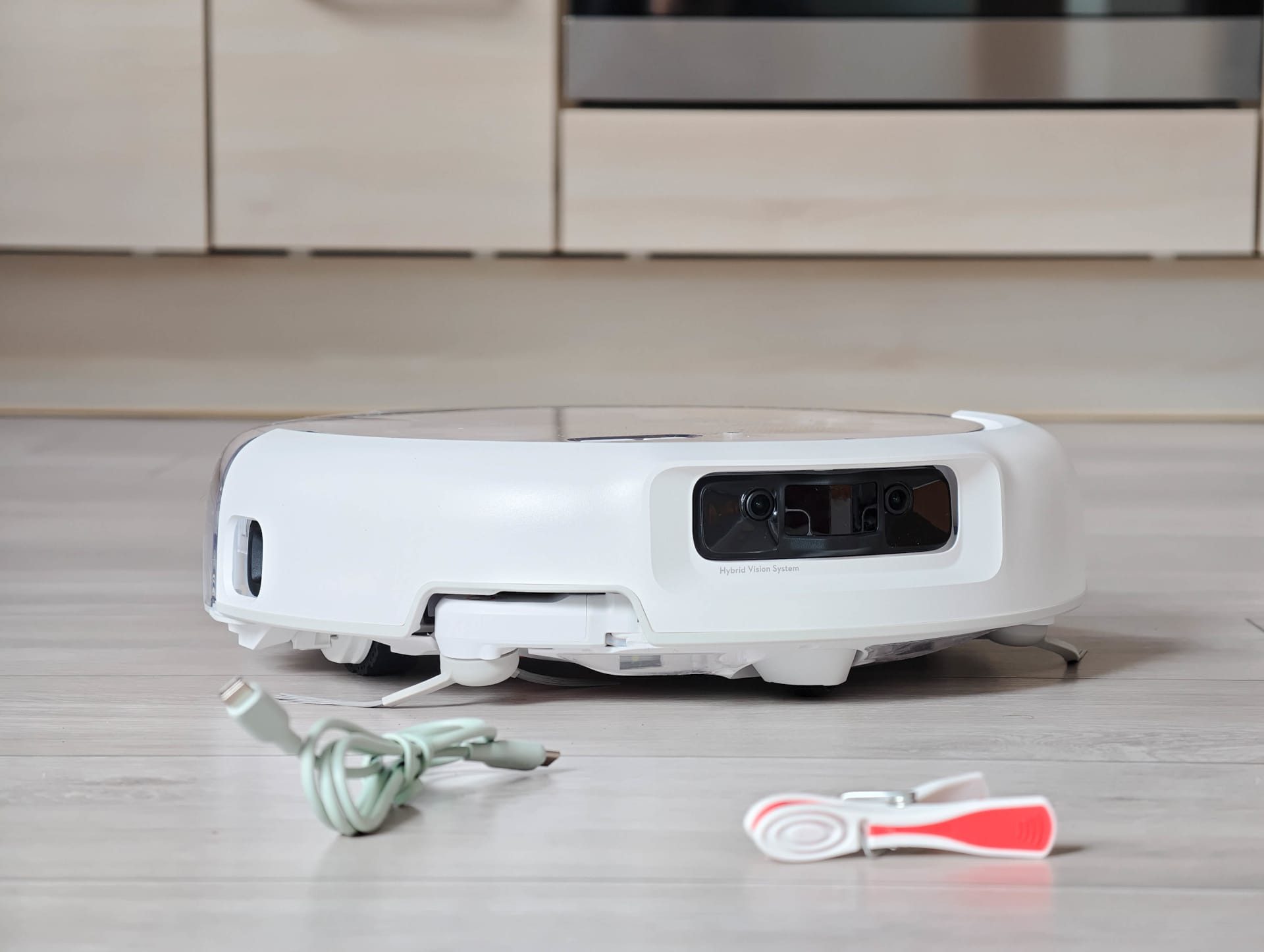
However, even DJI's sophisticated sensors aren't entirely infallible. The ROMO P2 repeatedly tried to squeeze under my wall-hung toilet. Due to its sloping shape, the distance to the floor decreases until the robot's top would scrape along the plastic surface. I was forced to mark this area as a no-go zone.
However, this problem isn't specific to DJI. Robot vacuums from other manufacturers have also encountered difficulties in this exact location. The geometry of such bathroom fixtures is simply unsuitable for sensors that only face forward.
Apart from that, I didn't have to rescue the P2 even once during the entire test. It reliably found its way back to the station and never got stuck anywhere else.
The repositioning of the LED headlight improves visibility in the dark. On the previous model, the additional LED was clearly visible on the front, directly below the camera. On the ROMO P2, it has been moved downwards and is practically invisible to the naked eye.
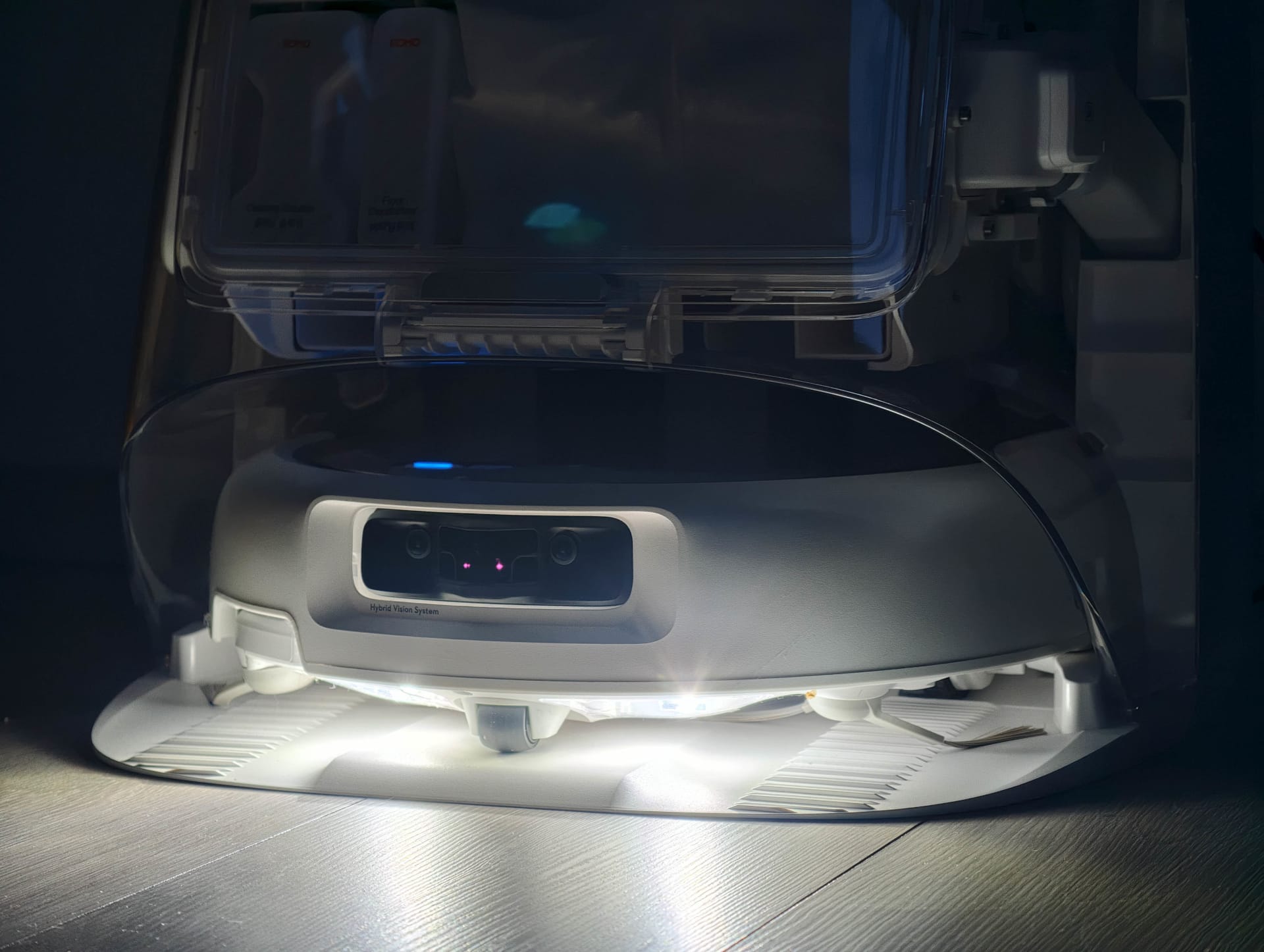
The light is now distributed very evenly across the floor. In the dark, you can clearly see how the area directly in front of and to the sides of the robot is evenly illuminated. This is intended to provide the sensors with additional information, especially when dealing with fine particles and dark cables.
suction and wiping performance
With a maximum suction power of 36.000 Pascals, DJI has significantly improved the suction performance on paper. The predecessor only managed 25.000 Pascals. In everyday use, however, the difference is considerably less dramatic, as the first generation was already exceptionally powerful.
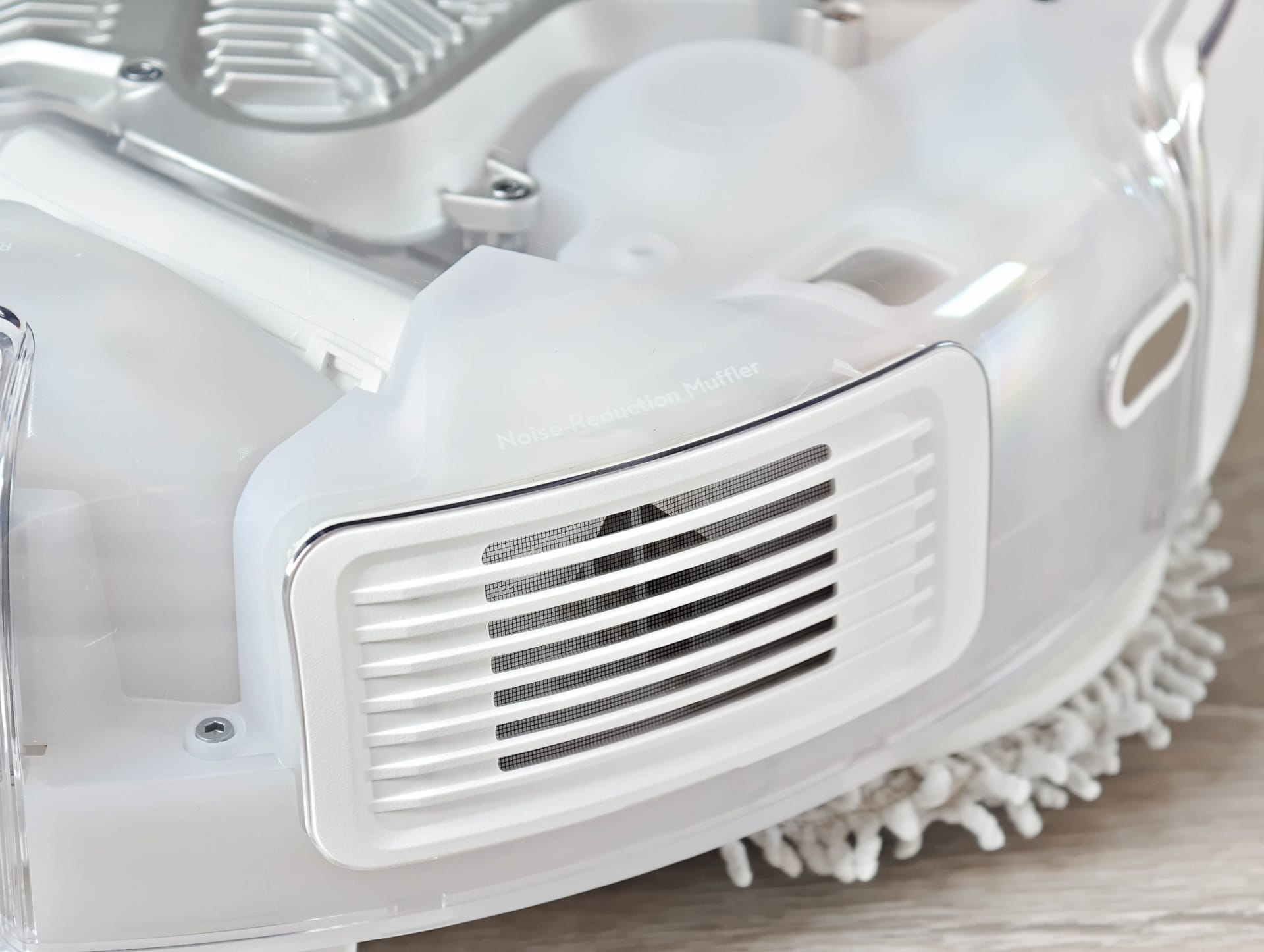
Both the ROMO P and ROMO P2 clean my hard floors and carpets very thoroughly. I couldn't discern a clearly visible advantage of the P2 when dealing with ordinary dirt. What is new is that it adapts its cleaning strategy more effectively to the type of dirt detected.
The P2 reacts extremely quickly on carpets. It detects the change in surface almost as soon as it drives onto them and switches directly to the enhanced carpet mode.
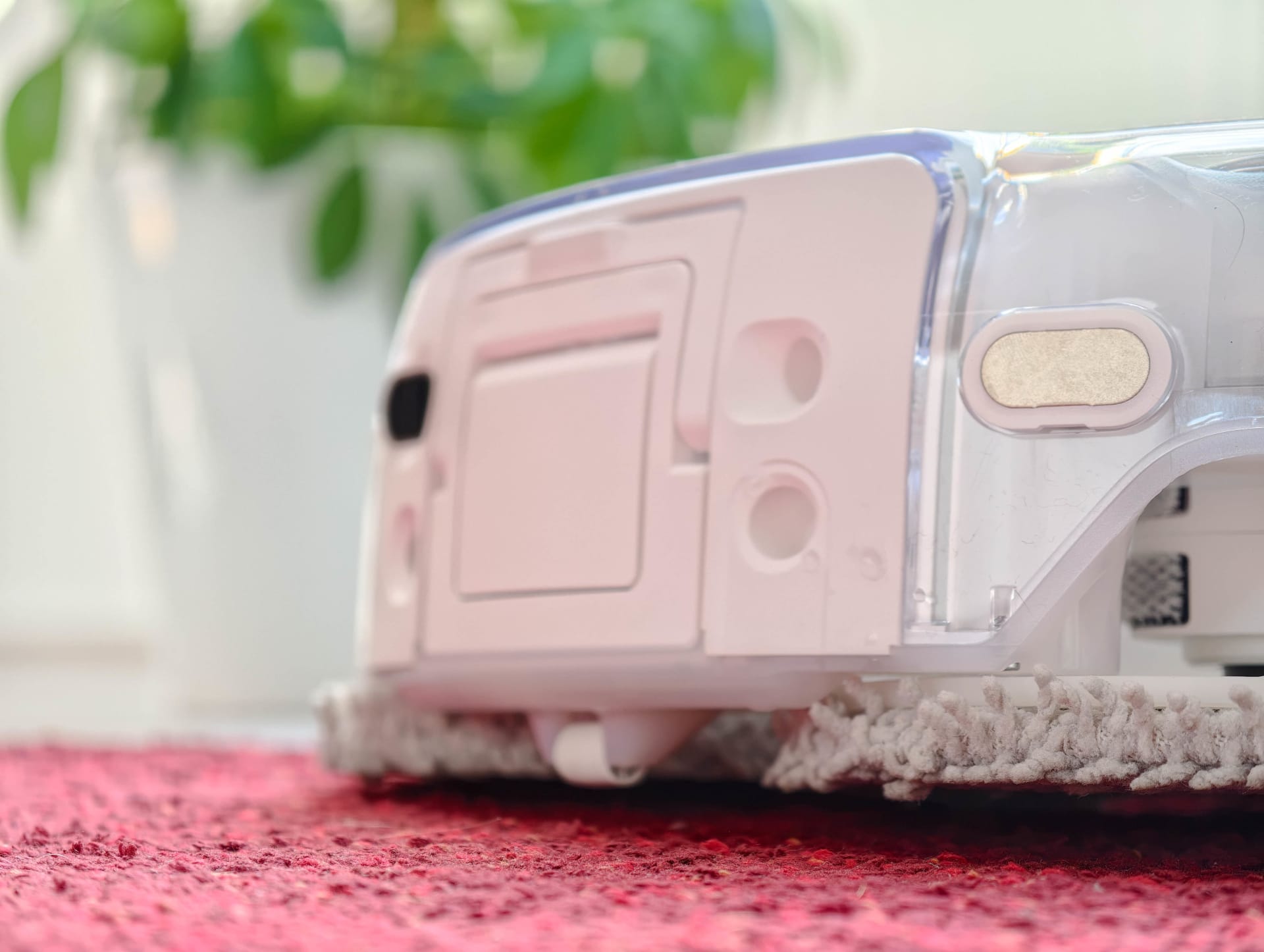
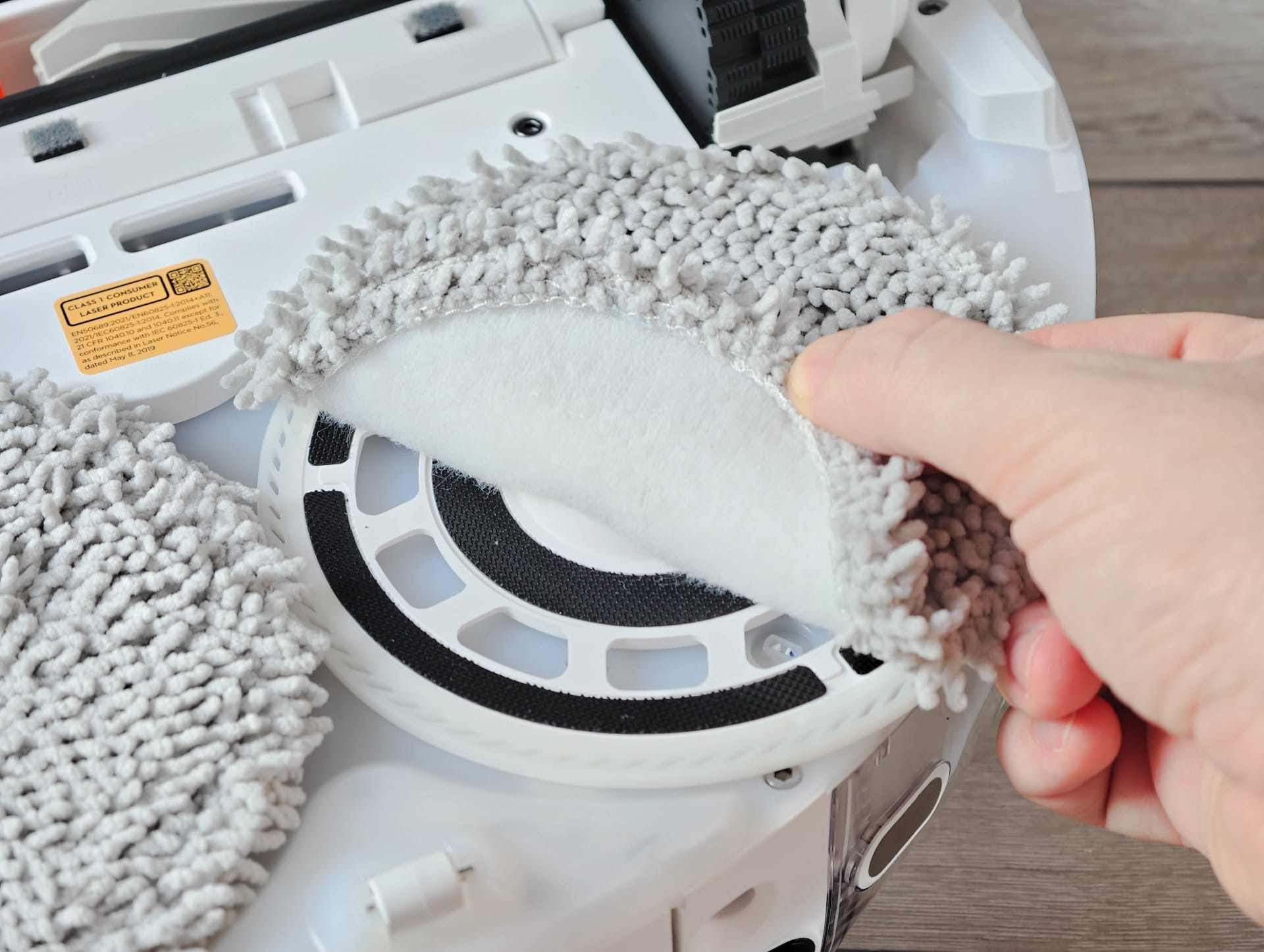
While the new generation of mops still doesn't place them in the charging station, they are raised high enough to keep the fibers dry. With the first ROMO, the mop heads could sometimes slightly brush against the carpet on high-pile carpets. This doesn't happen with the new model.
The P2 handles even long hair well. After several weeks, no significant amount of hair had gotten caught in either the main brush or the side brushes. The main brush is divided in the middle and features soft fiber bristles on the outer sections, ensuring that hair is guided cleanly towards the suction instead of wrapping around the shafts.
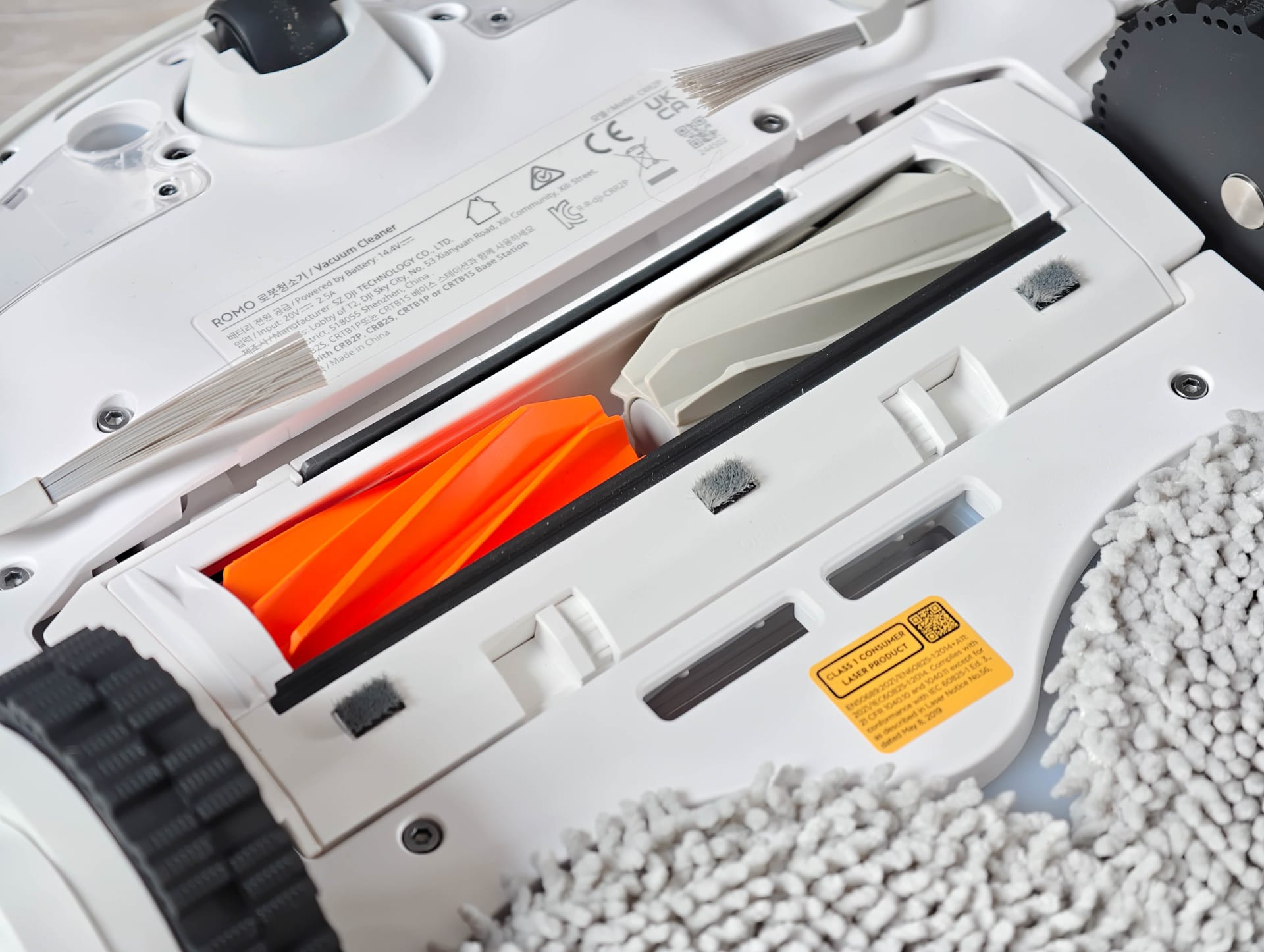
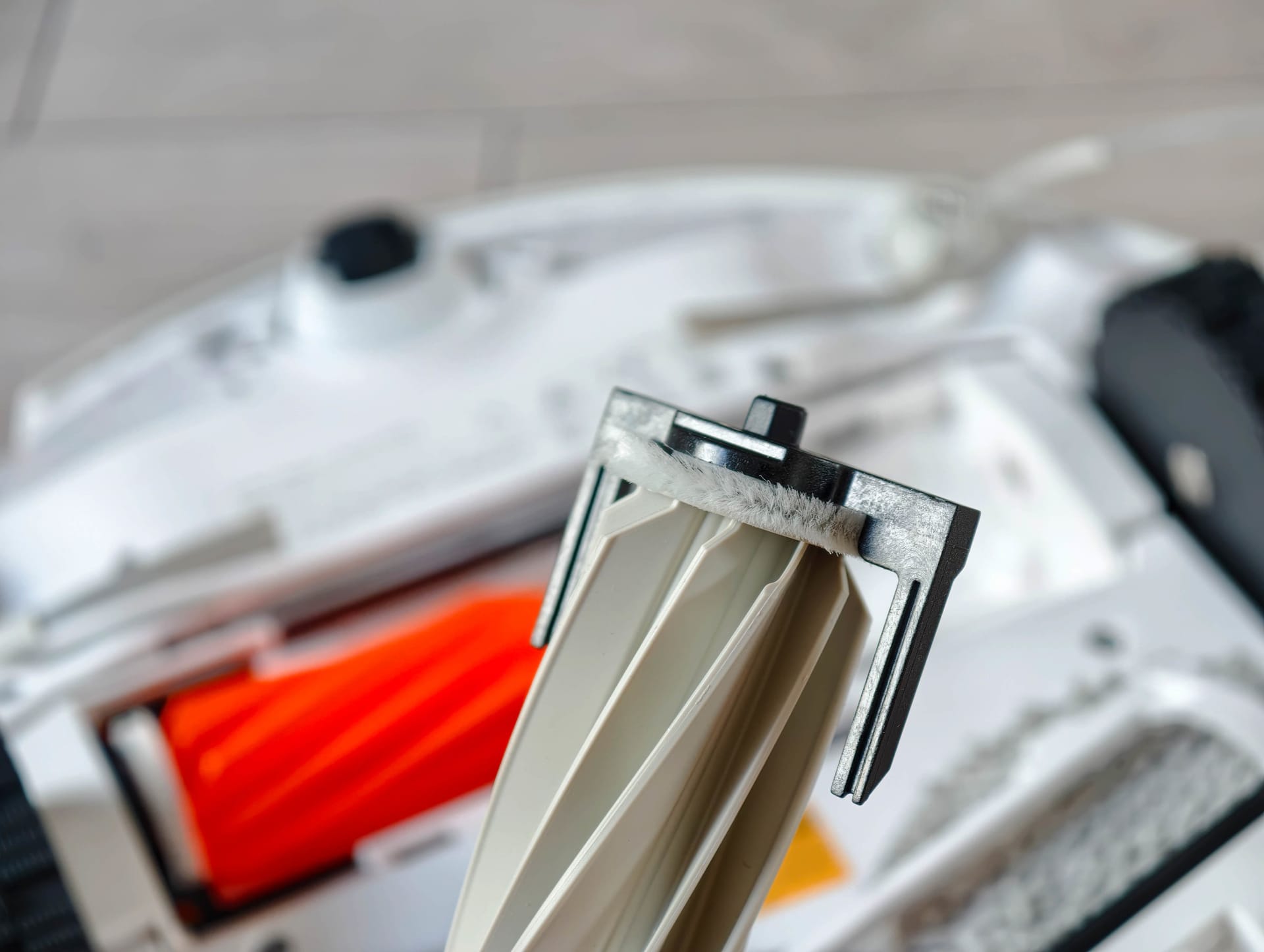
The new swivel arm makes all the difference.
The biggest improvement for me is in the mopping function. Even the first ROMO could extend its right mop head outwards, allowing it to clean very close to baseboards. With the P2, the mop head is now mounted on a significantly more flexible swivel arm with its own LiDAR sensor. This arm swivels up to 123 degrees and extends up to 12,4 centimeters outwards. That's 7,8 centimeters more than its predecessor.
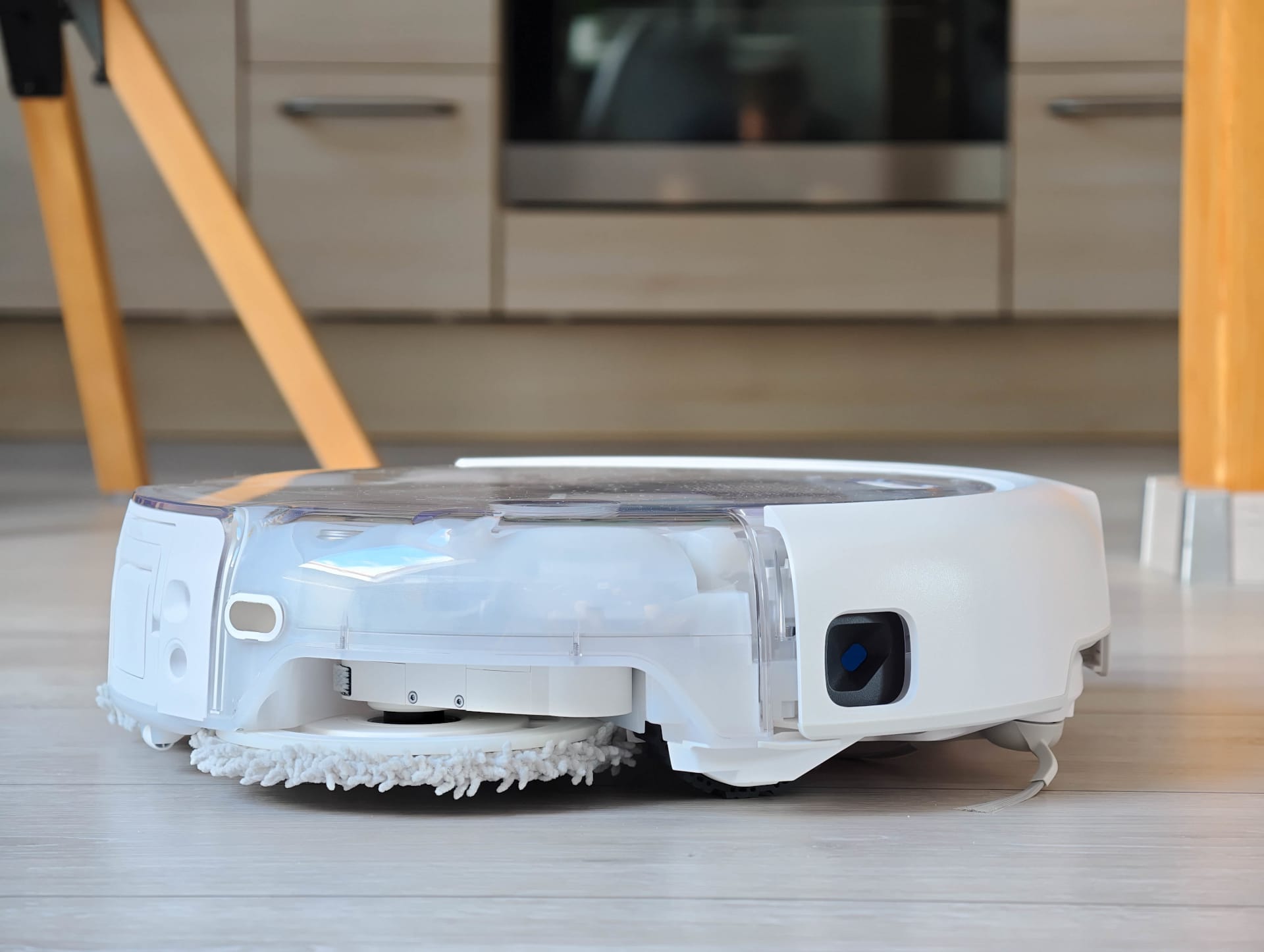
As the robot moves along a wall, the mop head moves with millimeter precision right up to the edge, continuously adjusting its distance. You can literally watch the arm follow the contour.
This was particularly noticeable on my refrigerator. There's only a narrow gap between the floor and the refrigerator door. The robot itself obviously couldn't fit in there, but it simply pushed its extended mop head under the door and cleaned the area anyway.
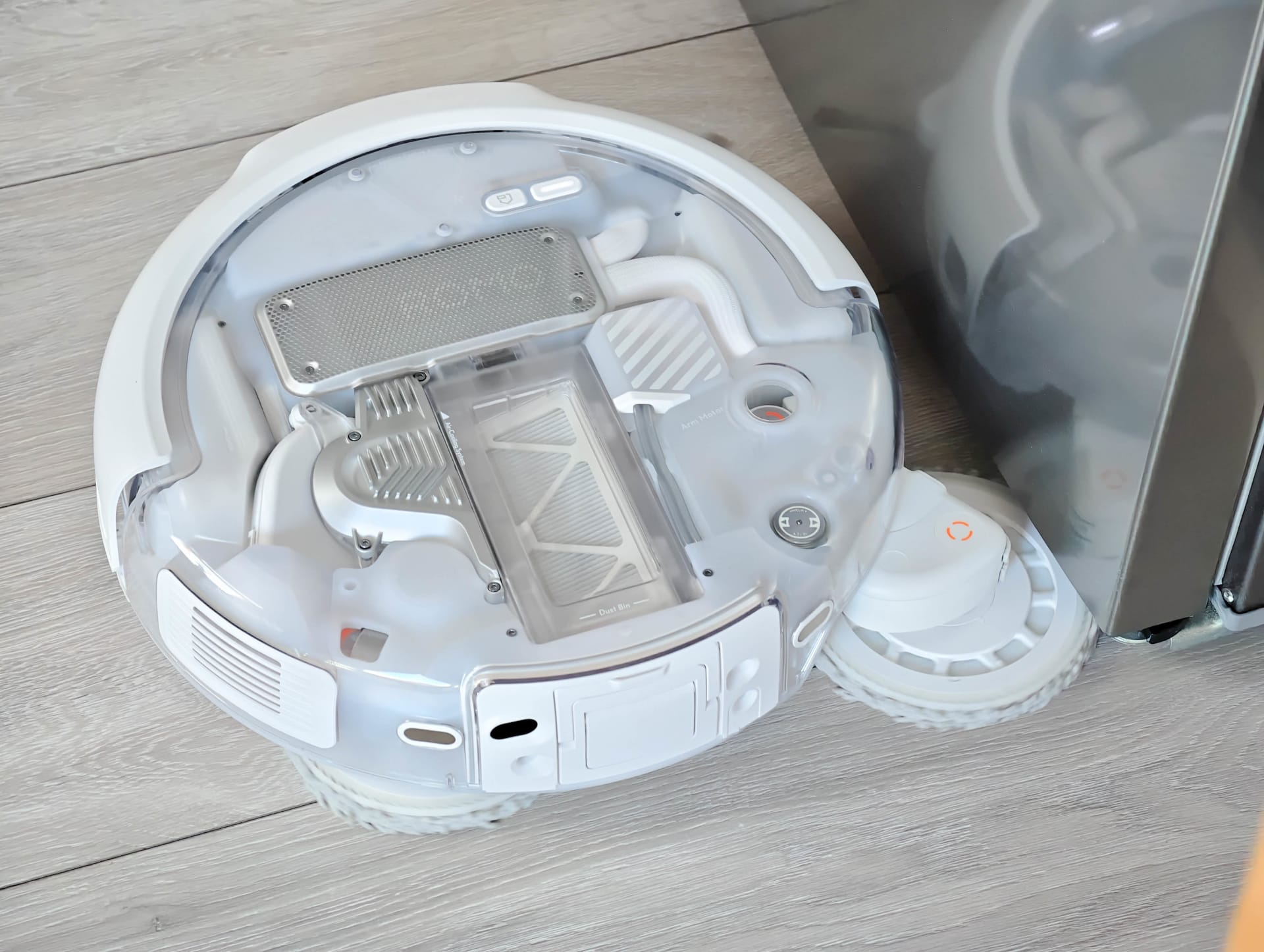
The arm works very precisely around table and furniture legs. Only in sharp right-angled corners does it occasionally leave something behind. Even an extendable mop head can't completely overcome the robot's rounded shape.
In terms of the actual mopping performance, I couldn't detect any major differences compared to its predecessor. The ROMO P2 mops with even moisture distribution and handles normal dirt well. It requires more frequent passes over stubborn stains, and for truly stubborn cases, manual cleaning with a mop is ultimately the only solution.
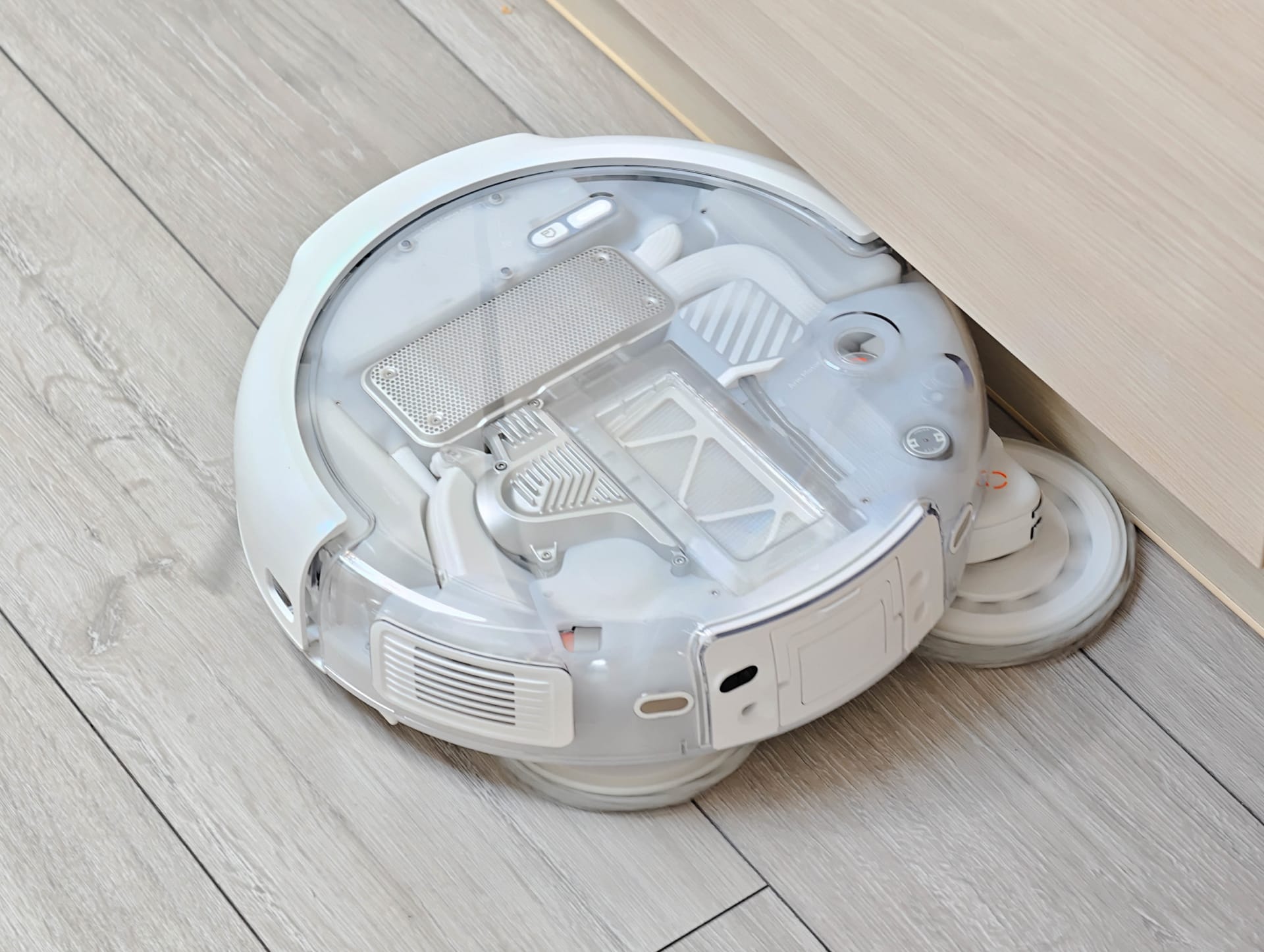
However, it consumes water relatively quickly. For larger areas and frequent mopping, the fresh water tank needs to be refilled often, sometimes even after just one cleaning cycle.
The P2 also reliably detects liquids. The software can treat such areas separately, preventing the robot from simply driving through the liquid with its brushes and wheels and spreading it further.
DJI ROMO P2: Station and Maintenance
After several weeks of almost daily use, the area around the base tray remained remarkably clean. According to DJI, the new base tray features a "nanocrystalline surface" to which dirt adheres less readily. Four high-pressure nozzles rinse the area, while an enlarged drain removes dirty water, hair, and larger particles.
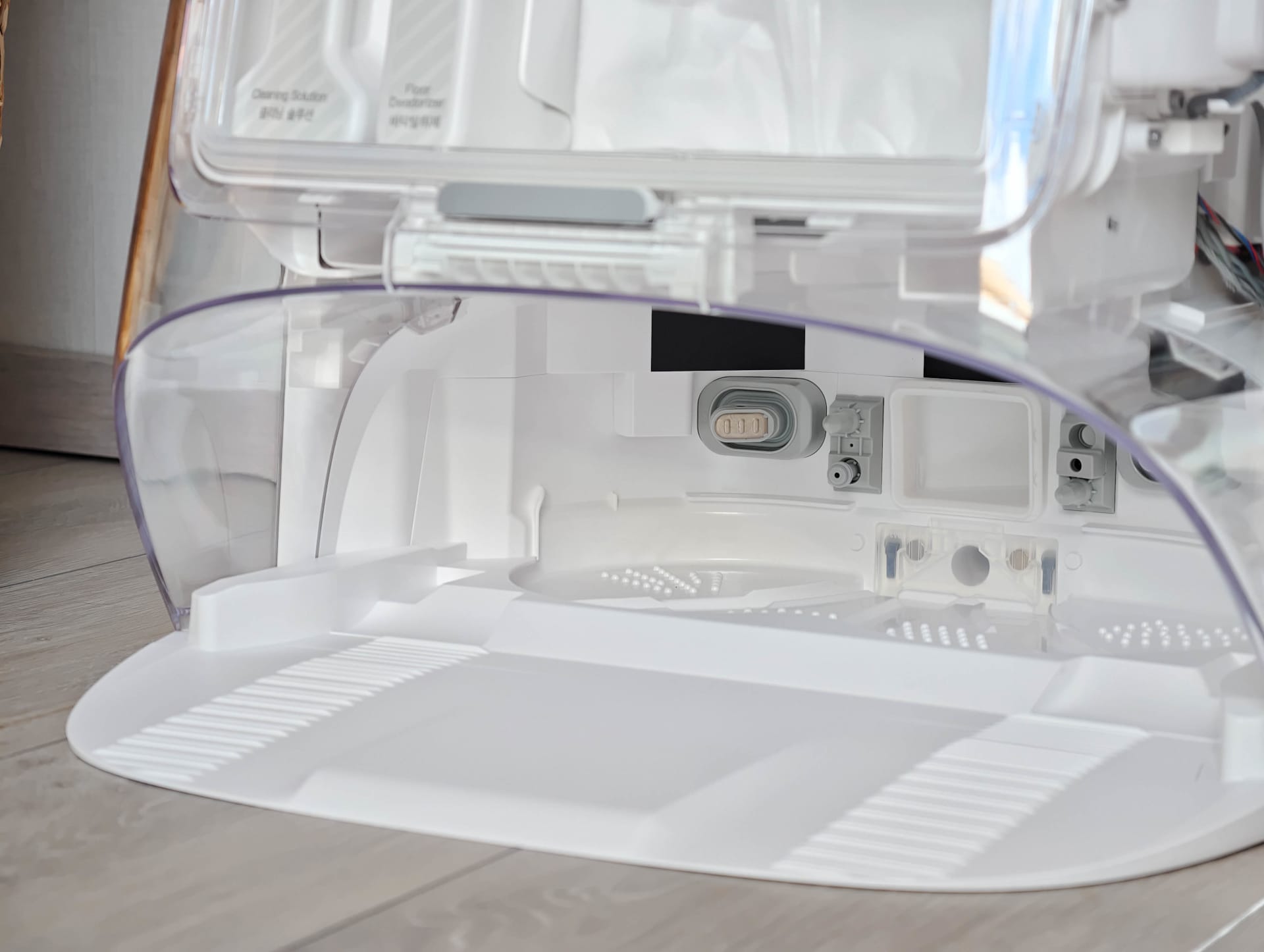
According to DJI, this should allow the washing area to operate for up to 365 days without manual cleaning. However, this only refers to the base tray itself. Refilling fresh water, emptying dirty water, and changing consumables will still be necessary.
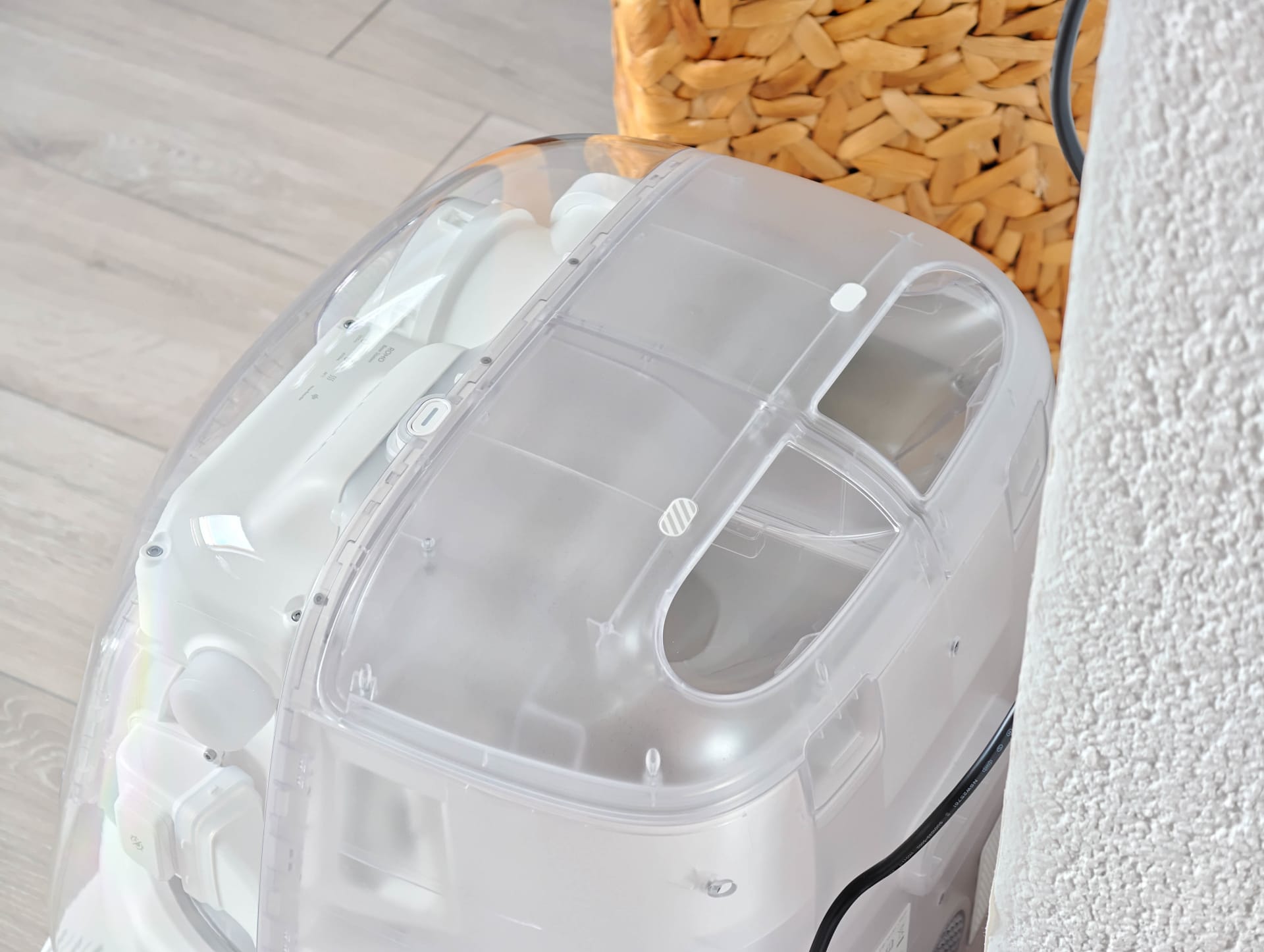
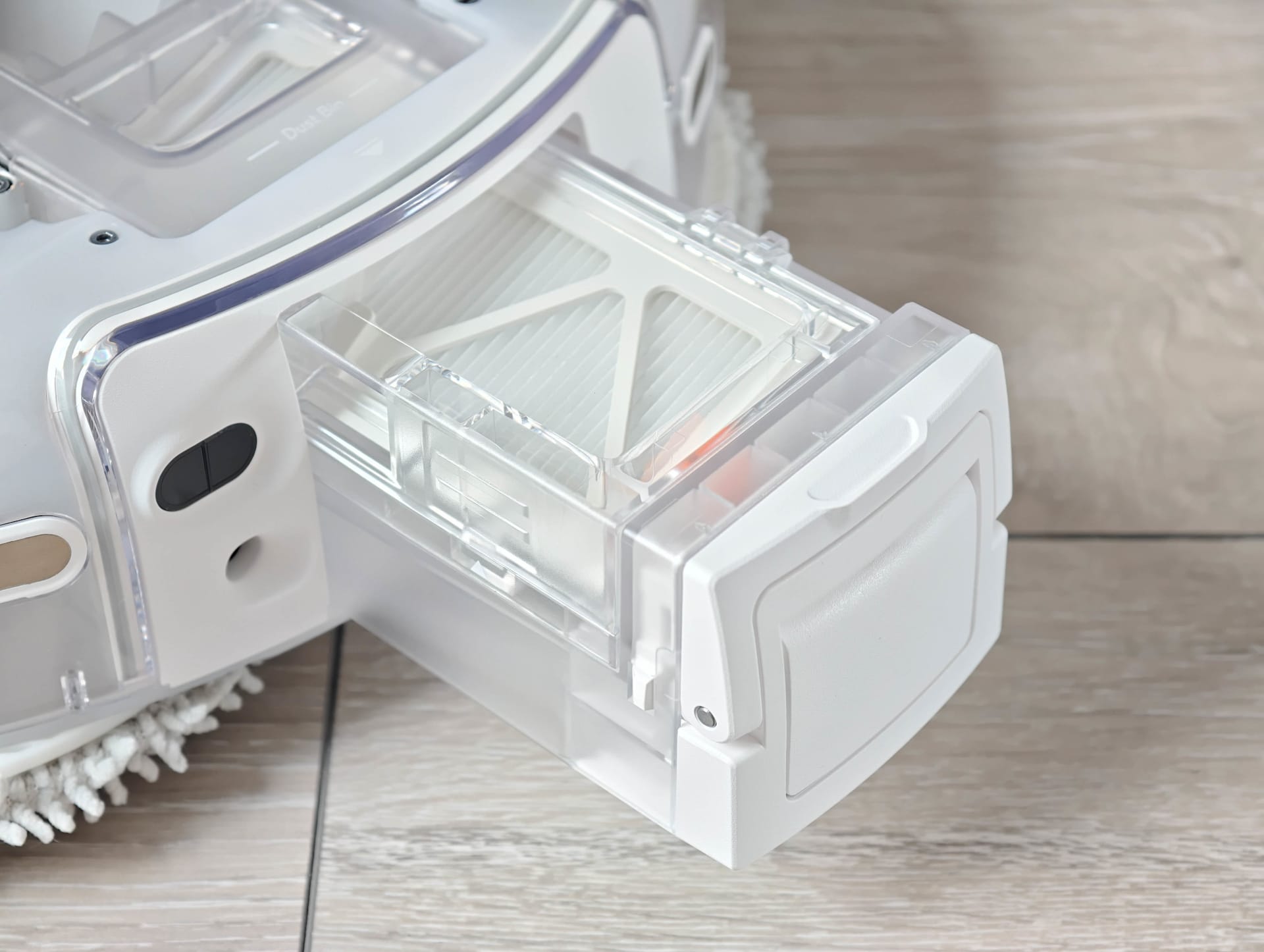
Over time, only a light film formed, and occasionally small dust particles remained. This was similar with the previous model and can be easily removed from under the sink.
After mopping, the station automatically cleans the mops and then dries them. For me, drying takes about three hours. I haven't noticed any unpleasant odors, even after several weeks. The automatic emptying of the dust container is just as loud as on the previous model.
DJI ROMO P2: Battery life
My apartment is about 75 square meters. The robot takes approximately 90 minutes for a complete cleaning cycle in standard mode. After that, the battery still has about 50 percent charge. For larger apartments, this leaves enough power for at least one complete cleaning cycle in one go.
Charging is done at up to 55 watts, meaning a full charge takes around two and a half hours. Additionally, the P2 recharges slightly each time it returns to its charging station during a cleaning cycle to wash its mop heads.